Frankenheimer’s brainwashing thriller is a spy film, a political satire and a horror story about one family, run together at speed. The middle sags and one subplot goes nowhere, but Angela Lansbury alone is worth the evening, and the dream sequence is worth two.
Korea, 1952, and a patrol is sold to the enemy by its own interpreter. That is where John Frankenheimer’s film of Richard Condon’s novel begins, and within ten minutes it has jumped to a homecoming and a nightmare. George Axelrod’s screenplay is a spy thriller, a satire on the red-baiting politics of the 1950s and a horror film about one family, and it runs all three at once without visible strain. It is one of the best American thrillers of its decade, and we recommend it with one reservation about the middle stretch.
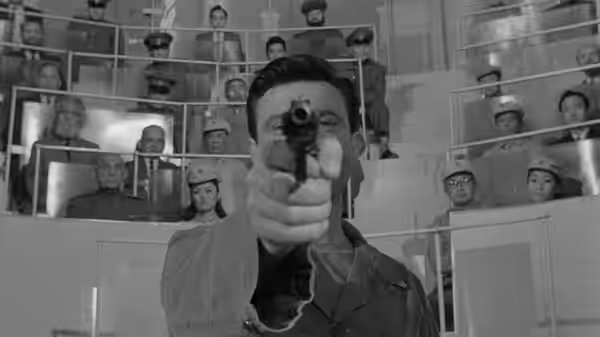
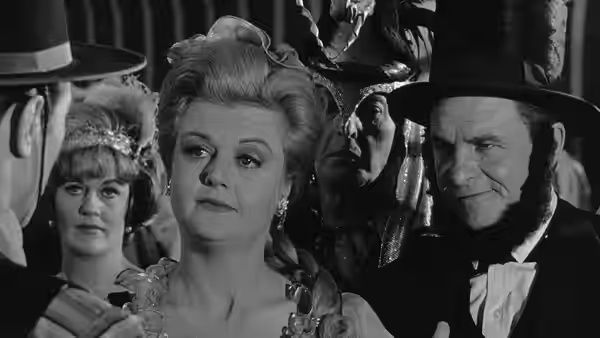
The nightmare is the film’s great sequence. Major Marco (Frank Sinatra) dreams of a ladies’ garden club in a New Jersey hotel, and as Lionel Lindon’s camera pans slowly round, the speaker becomes Dr Yen Lo (Khigh Dhiegh), demonstrating his handiwork to a hall of Soviet and Chinese officers, and the ladies keep smiling. Ferris Webster cuts between the two audiences so that a woman in pearls asks a question and a general answers it, and Raymond Shaw (Laurence Harvey) sits through it as politely as a boy at a recital. Then he is told to kill one of his own men, and does, with no change in his face. We were horrified, and what horrified us was not the killing but the manners: everyone present, victim included, behaves as though nothing rude is happening. Lindon shoots it in deep-focus black and white, and the flat, even light of the ballroom makes it worse.
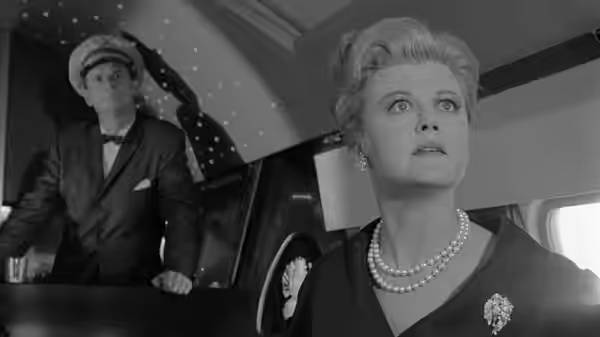
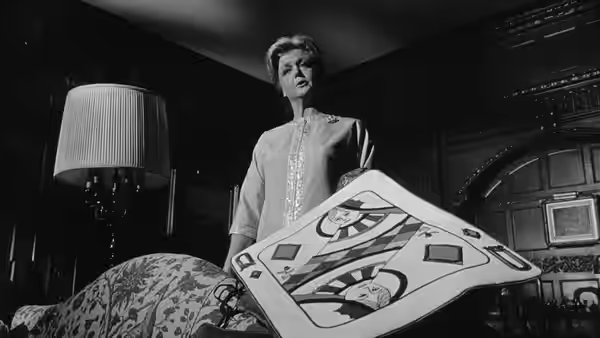
Angela Lansbury plays Raymond’s mother, credited only as Mrs Iselin. She runs her husband, Senator John Iselin (James Gregory), a booming fool who cannot remember how many communists he has claimed are working in the Defence Department until she settles the number for him off a ketchup bottle. Fifty-seven. Gregory plays Iselin as a man delighted to be told what to think, and Lansbury plays a woman who has never been told anything. She is on screen for perhaps twenty minutes and we could not look anywhere else while she was. Harvey plays a man nobody likes and has the nerve to play him as unlikeable, stiff and cold and faintly disgusted by his own medal. It is the right choice and it costs the film some warmth.
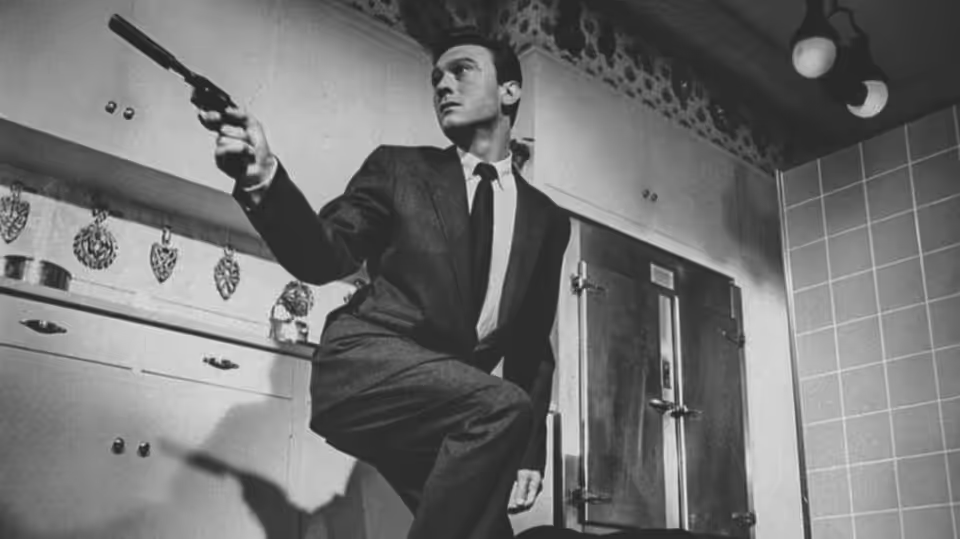
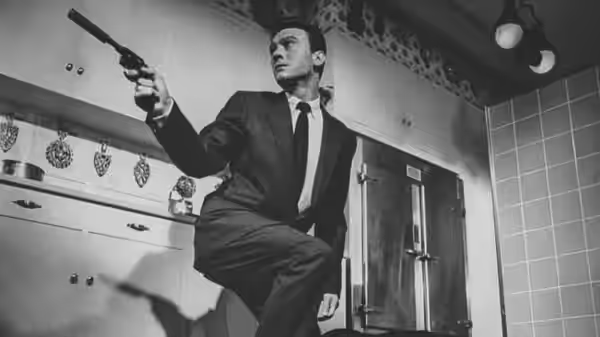
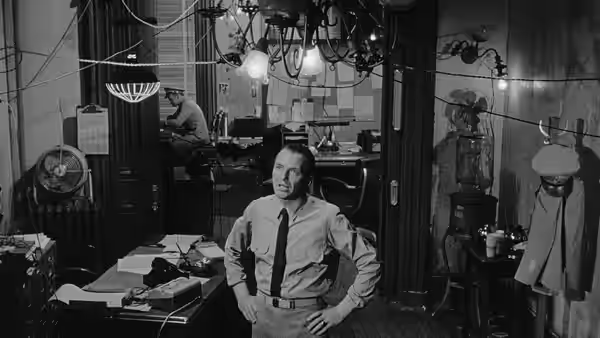
Sinatra gives Marco a sweating, wrecked exhaustion, a man who has read every book trying to fall asleep. His fight with Chunjin (Henry Silva) in a New York flat is short and ugly, and the film’s only conventional action scene. David Amram’s score stays out of the way, a few nervous brass phrases and long silences. Richard Sylbert’s production design puts Abraham Lincoln everywhere in the Iselin house, portraits and busts and a lamp, so that the family’s patriotism is part of the decor. Frankenheimer films Iselin’s press conference off a bank of monitors in the same shot as the man himself, so we watch the lie and its broadcast at once.
Not all of it holds. Janet Leigh’s Eugenie Rose Chaney meets Marco on a train and conducts a conversation about Maryland and railway lines and her address, and the film never explains why she is there or what she wants. It is a loose end, not a mystery. The middle third, in which Raymond takes up with Jocelyn Jordan (Leslie Parrish), daughter of Iselin’s enemy Senator Thomas Jordan (John McGiver), is the slackest stretch, told partly in flashback with a narration the rest of the film does without. And the mechanics of the plot do not survive inspection. The film knows it and keeps moving.
Most critics put it around 90 and we are just behind them. Set against the conspiracy thrillers that came after it in the 1970s, and against the remake of 2004, this one looks stranger, because it does not think the machinery is the frightening part. The frightening part is that the people running it would be welcome at the garden club.
The last act takes a turn we will not describe. Do not read about it first, and do not watch it in pieces; it is 126 minutes built to be sat through. See this before the remake, which explains everything where this one has the sense not to.