Emmy Rossum gives Joel Schumacher’s musical a welcome sincerity, and the costumes reward a look. But the relentless music and uncertain central romance make this a tiring adaptation that gives us too little reason to care.
Joel Schumacher approaches The Phantom of the Opera as though a large enough orchestra and enough fabric will make its romance convincing. The effort is sincere, and the result is mixed at best. Andrew Lloyd Webber’s music supplies an almost continuous urgency, while the people singing it too often seem to be waiting for their next musical cue. There is pleasure in the theatricality, particularly when the supporting players are allowed some humour. Across 141 minutes, though, the central attraction never becomes compelling enough to sustain all this solemn attention.
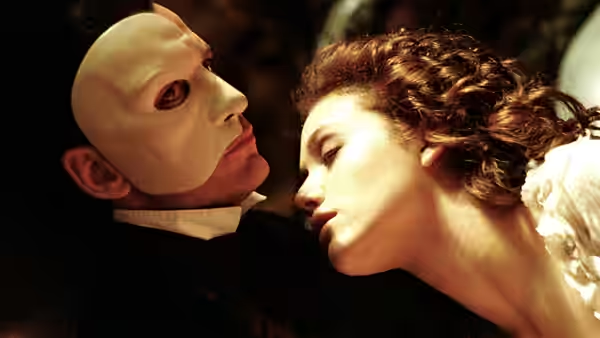
Emmy Rossum is the strongest reason to persevere. Her Christine sings with a clarity that makes the melodies easy to follow, and her seriousness gives the romance its most credible moments. She treats the feelings as worth having, without constantly asking us to admire how deeply she has them. The difficulty is that Joel Schumacher seems content with a narrow range of expression, leaving her voice to provide too much of what we need to understand about her.
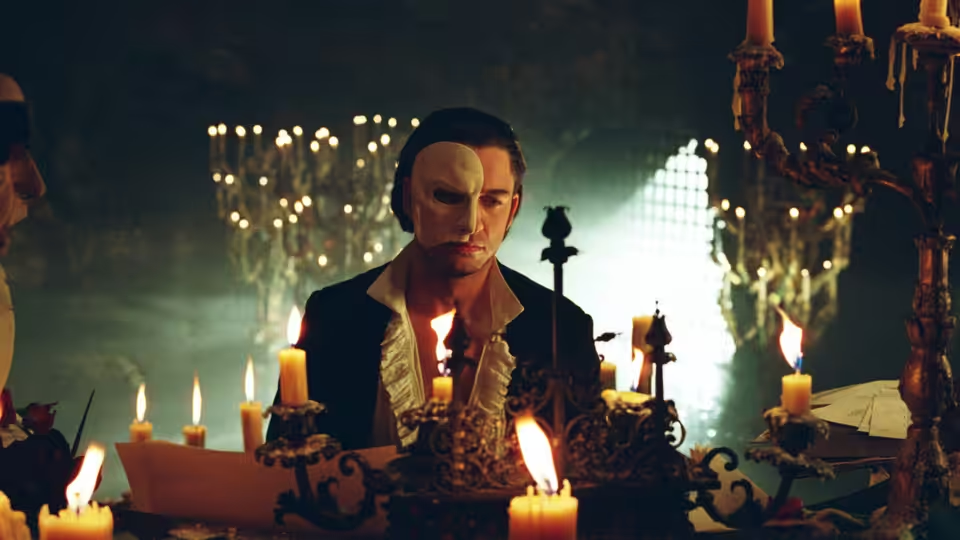
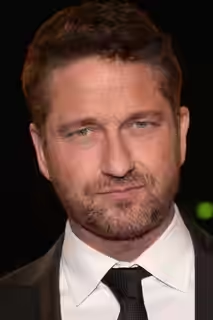
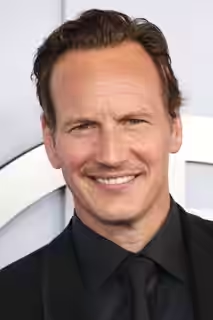
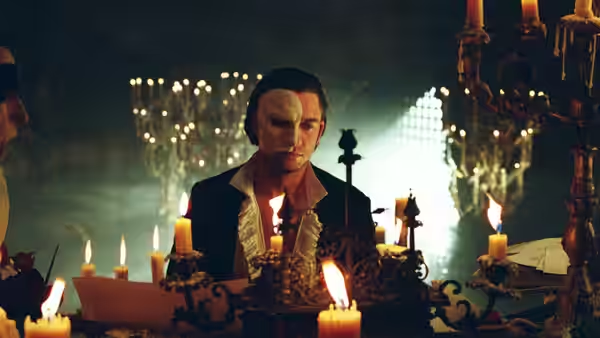
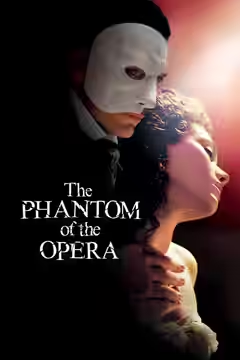
Gerard Butler’s performance as The Phantom presents the larger problem. His physical presence suits the scale of the production, but the singing lacks the assurance that such commanding music needs. More damaging is the shortage of menace: the wounded longing is apparent, yet the danger feels largely supplied by the surroundings. Patrick Wilson’s Raoul does little to disturb the prevailing stiffness. That leaves Emmy Rossum doing too much of the work of making the attraction matter.
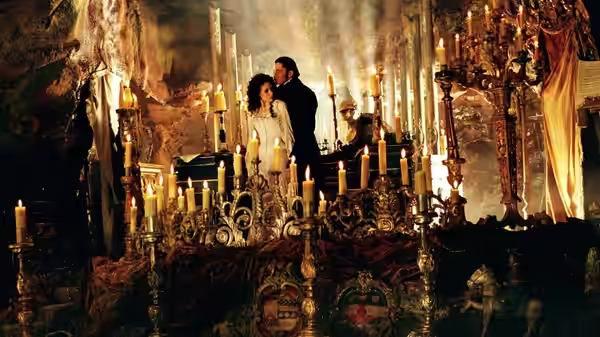
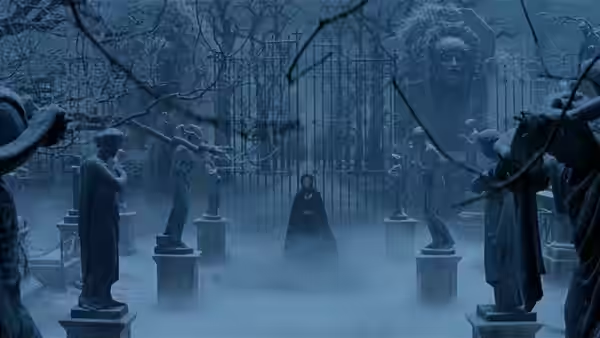
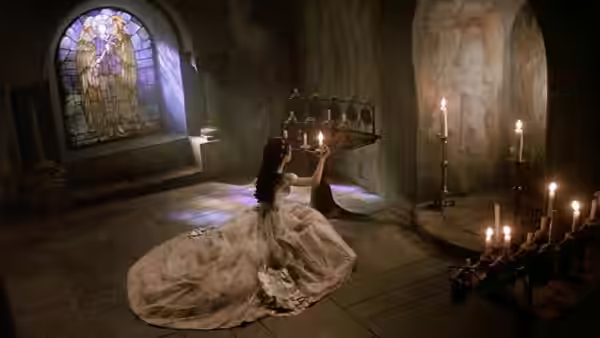
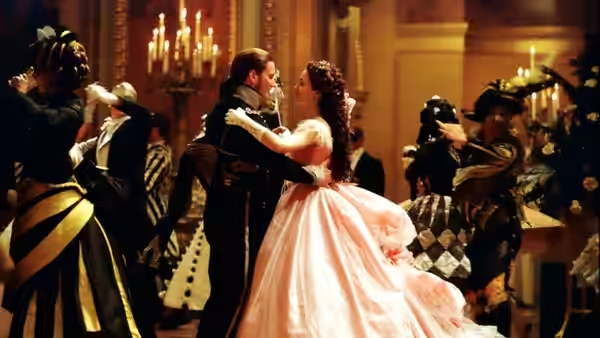
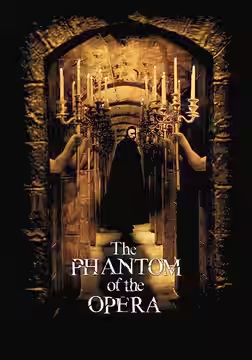
Anthony Pratt’s production design gives the film an abundance of ornament and brocade, often at the expense of a sense that anyone lives here. Alexandra Byrne’s costumes are easier to enjoy: their extravagance suits the performers’ self-importance and gives the frame something to look at when the drama stalls. John Mathieson’s sweeping camera adds useful movement to these crowded compositions. The mist softens the elaborate decoration, though it also makes the surroundings feel less substantial. Almost every image insists on the same degree of grandeur, leaving the eye little opportunity to rest.
Terry Rawlings’s editing does not help the repeated melodies feel fresh, and the film gives their returns more patience than the drama can afford. The orchestral treatment of Andrew Lloyd Webber’s music has weight and force, but so much emphasis makes it difficult to hear differences in emotional urgency. We were exhausted by the repeated swells, because they kept demanding a response the performances had not earned. The songs can be memorable individually; heard in this unrelenting succession, they begin to make one another less effective.
Minnie Driver’s Carlotta is a relief because there is some comic life in the performance, and the film briefly seems aware that grandeur can be funny. Those touches give the solemnity a welcome interruption. Gothic musical romance can accommodate extravagance, absurdity and a considerable amount of singing; restraint would not automatically improve this material. What it needs is stronger acting between and within the songs, so that the music has something particular to express.
Anyone already attached to these melodies may find enough here to forgive the casting and the length. The film takes that attachment for granted, offering few persuasive reasons for anyone else to acquire it. We would not choose it for an evening of romance, despite the care evident in the sets and clothes. Approach it for the songs, with modest expectations of the people singing them.