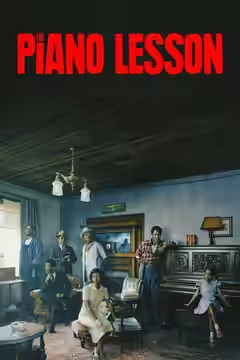
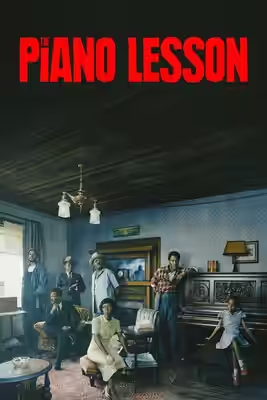
Malcolm Washington’s first film puts a fine cast in a cramped Pittsburgh parlour and lets August Wilson do the talking. Danielle Deadwyler is remarkable, the middle hour is slow, and the ghost, when it finally comes, is the best thing here.
Malcolm Washington’s first film is the third August Wilson play Denzel Washington has produced for the screen, after Fences (2016) and Ma Rainey’s Black Bottom (2020), and it is the one that works hardest to be a film rather than a filmed play. It opens in the past, with a theft in the dark and a house burning, and it ends in a place we will not describe. In between is a parlour in 1936 Pittsburgh, a piano, and a brother and sister who cannot agree what it is for. The film is well acted and handsomely built, it is slow through its middle hour, and its last third turns into a ghost story with more nerve than anything before it. If Wilson is yours, it is worth the evening.
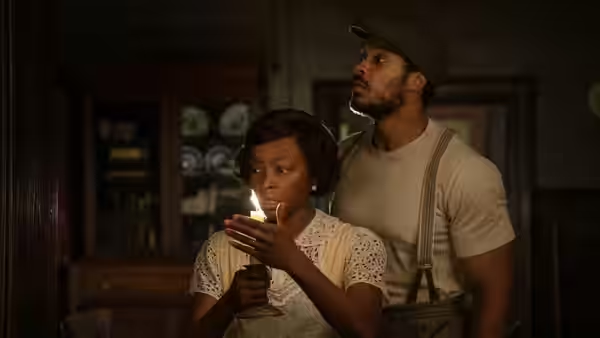
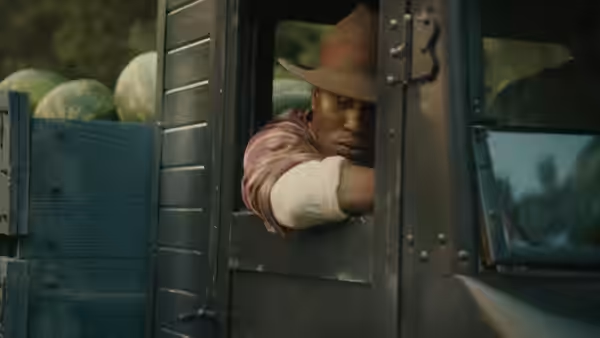
Boy Willie talks, and John David Washington plays him at full volume from the moment he bangs on the door at dawn, a man who fills the house so it cannot say no to him. It is a performance of great energy and one setting, and after an hour we wanted him to sit down. Danielle Deadwyler does the opposite. Berniece stands still, keeps her arms folded, and when she finally tells her brother what the piano cost their family, the film stops to listen to her and so did we. That speech is where the film got at us: a woman explaining why she keeps a thing she cannot bring herself to touch, said without tears, and the whole house seemed to go quiet around her.
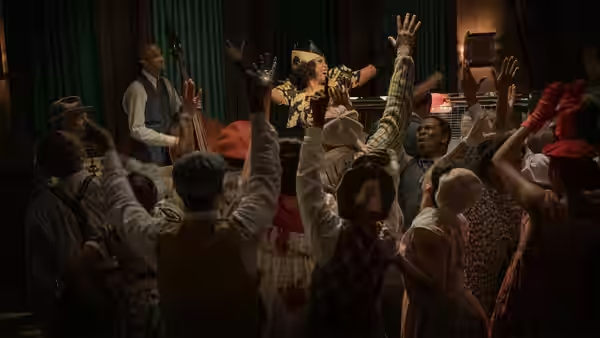
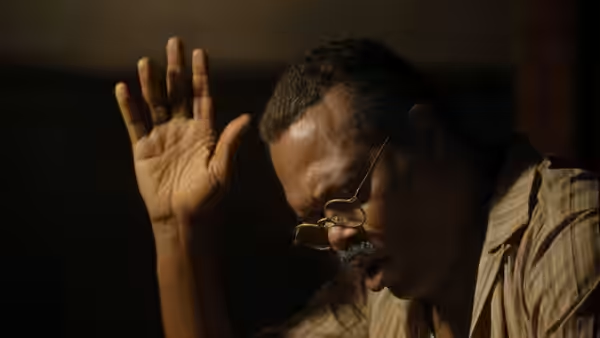
Samuel L. Jackson’s Doaker, the uncle who keeps the peace, is the calmest work Jackson has done in years. He tells the piano’s history in the kitchen as if reading a timetable, and it is the best stretch of writing in the film because nobody has added anything to it. Michael Potts’s Wining Boy arrives broke and thirsty, sits down at the keys and sings, and for three minutes the film is about a man who wasted his gift and knows it. Ray Fisher’s Lymon is slow and sweet and gets the laughs. Corey Hawkins’s Avery preaches at the furniture.
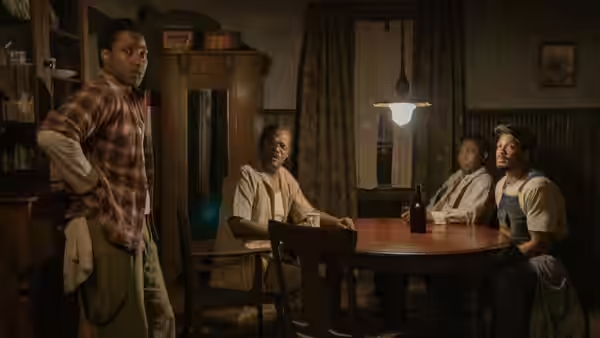
Mike Gioulakis shoots the house in browns and lamplight, and when the camera goes to the stairs the frame darkens and the ghost is a shape on the landing and a door that will not stay shut. David J. Bomba’s parlour is cramped in the right way, the piano too big for the parlour, so every argument has to be conducted around it. Francine Jamison-Tanchuck dresses Boy Willie for the city he has just arrived in and Berniece for the one she has lived in for years. Alexandre Desplat keeps the score low and mostly out of the way of the talk, which is right. Leslie Jones cuts the arguments at the speed the actors deliver them, which means long stretches where nobody moves.
Around the hour mark we felt that. Washington and his co-writer Virgil Williams have opened the play out with flashbacks, the men who stole the piano and the men who died for it, shot in silvery grey, and they are handsome and there are too many of them. Every time Doaker tells us something, the film shows it as well, and the showing is never as good as the telling. The comedy of Boy Willie and Lymon, Berniece’s grief and the horror upstairs sit side by side and the joins show. At 127 minutes, the middle walks in circles round the same argument, because the play does too, and Washington has not found a way to make going in circles feel like anything else.
Then the last half hour takes the thing on the stairs seriously, and we will not describe how. What we can say is that Washington directs it with more confidence than anything before it, and that it is the one stretch where the film stops feeling like a play. Some critics find that it lurches into a horror film it cannot pay off. We disagree. Wilson wrote a ghost; Washington believes in it, and the film is better for that.
Fences trusted the words and the two people saying them. This one has a house, a piano and a century of dead relatives, and it keeps leaving the house to show us the dead. See it for Deadwyler, for Jackson in the kitchen and for Potts at the keys. Watch it at home, where the parlour feels the size it should, and be patient through the middle. The piano earns its place. The film, mostly, does too.