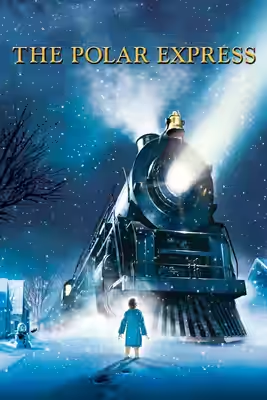
Robert Zemeckis makes the train journeys in The Polar Express thrilling, but its digital children remain awkward company. The thin story and insistent sentiment leave us with an uneven Christmas film whose scenery is its chief attraction.
Robert Zemeckis gives The Polar Express enough movement to make a train journey feel like an adventure in itself. It is an uneven Christmas film, thrilling in motion and much less engaging when it asks us to love its passengers. The performance-capture animation is central to that difficulty, since the children attract attention for reasons that have little to do with their personalities. There is pleasure here, but it arrives in stretches.
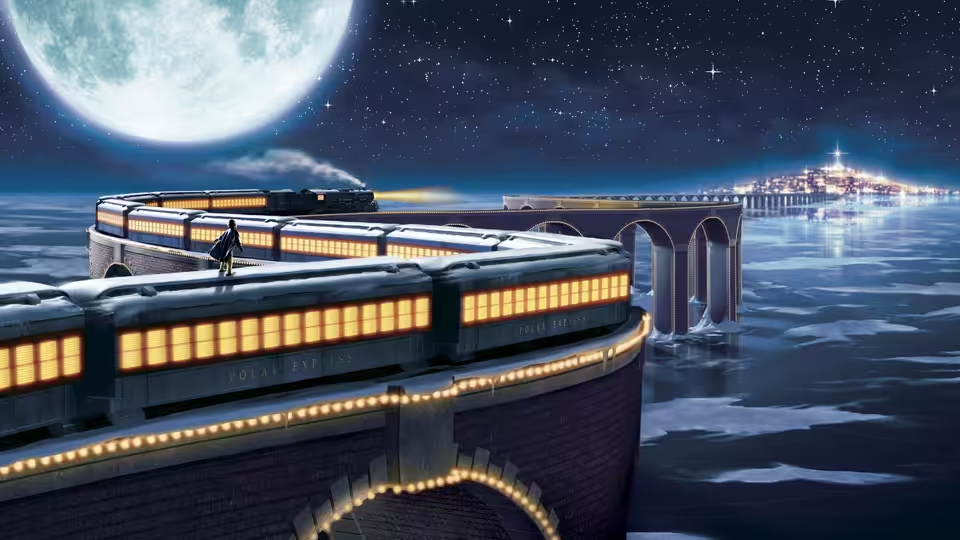
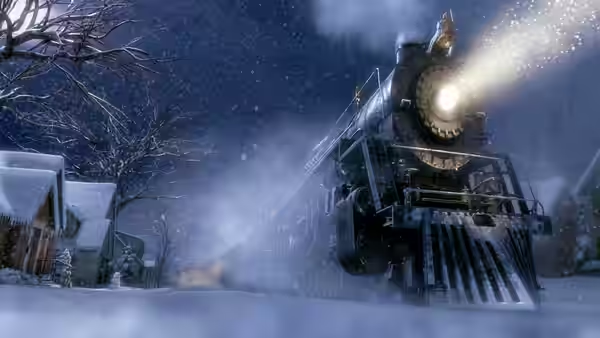
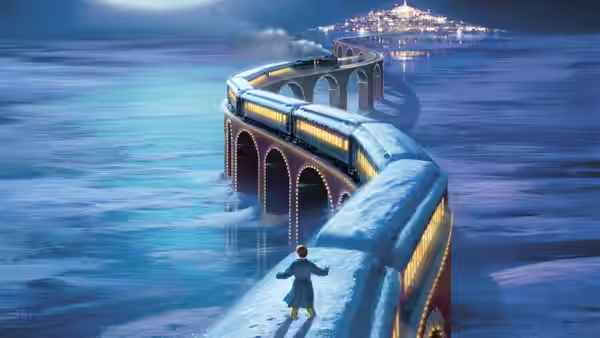
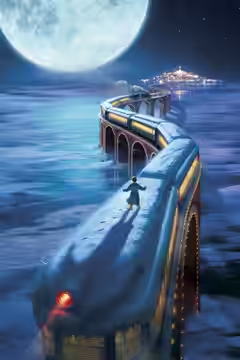
The wintry scenery is the strongest invitation. Cinematographers Robert Presley and Don Burgess give the journey a sweep that makes the railway worth following, and production designers Rick Carter and Doug Chiang provide a setting more appealing than the people travelling through it. The images can be painterly without losing the excitement of a train moving through snow. For a while, simply watching it travel is enough, and the scenery holds our attention without assistance from the dialogue.
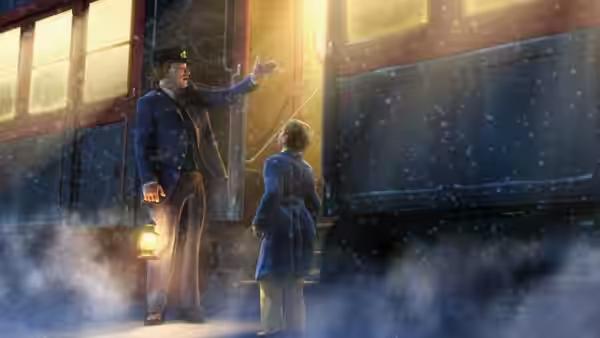
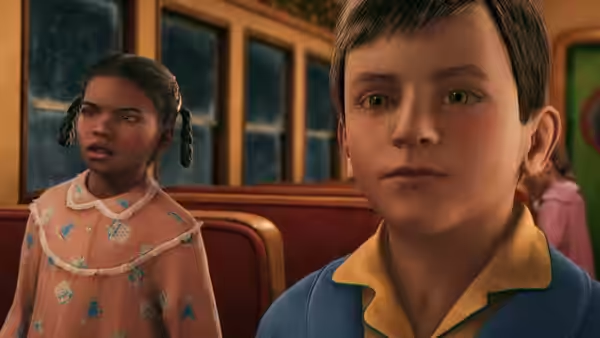
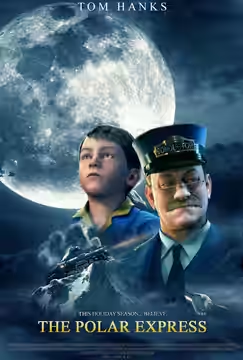
The faces are harder work. We found the children unsettling, because the animation repeatedly made us notice their artificiality when we ought to have been following their feelings. That is a serious problem for a film so dependent on tenderness, and it is not solved by the visible effort that has gone into capturing a performance. Tom Hanks brings welcome liveliness to the Conductor, though even his presence cannot make the digital passengers feel entirely comfortable to be around.
Daryl Sabara voices Hero Boy, with Josh Hutcherson supplying the motion capture, while Nona Gaye voices Hero Girl and Eddie Deezen plays Know-It-All. Those character names give some indication of how broadly the children are written. Robert Zemeckis and William Broyles Jr. leave too little room for them to become interesting company between the attractions. The actors have warmth to offer, but the screenplay keeps their personalities too simple to support a film lasting 100 minutes.
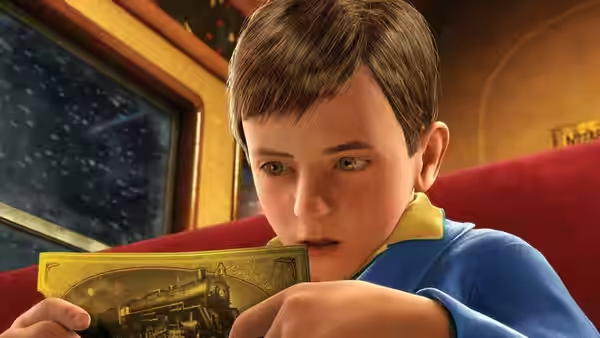
A lost ticket’s passage through the wintry landscape is a more successful use of the animation. It lets an ordinary object hold our attention through movement, without demanding that a digital face persuade us of anything. Editors Jeremiah O’Driscoll and R. Orlando Duenas help the travelling sequences move with purpose, but they cannot keep the thin story from feeling extended. The pauses between the railway thrills are where we start noticing how little there is to carry the children forward.
Alan Silvestri’s score suits the scale of the journey, although its encouragement to feel wonder becomes wearing alongside the film’s insistence on Christmas sentiment. There is already enough to enjoy in the sight of the train and its snowy surroundings. The music works better when it supports that movement than when it presses for tenderness the characters have not earned. Too often, the film seems unwilling to let a modest pleasure remain modest.
A family fantasy needs room for doubt, mischief and the occasional feeling that is not the approved one. Here, the narrow view of Christmas makes all that encouragement feel rather compulsory. Children mainly interested in a train adventure may be less troubled by this than adults expected to share the feeling. Watch it for the railway, if that is enough of a reason; do not expect the passengers to win you over.