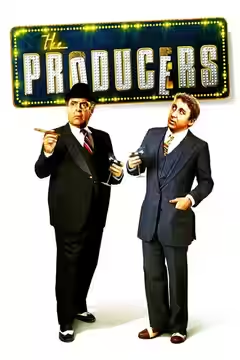
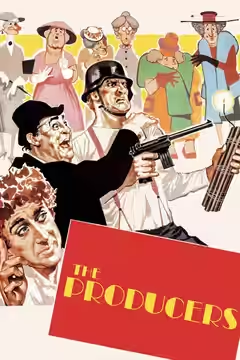
Zero Mostel and Gene Wilder make Mel Brooks’s satire worth the occasional heavy-handed stretch. The musical excess is a pleasure, but the friction between the leads earns our warm recommendation.
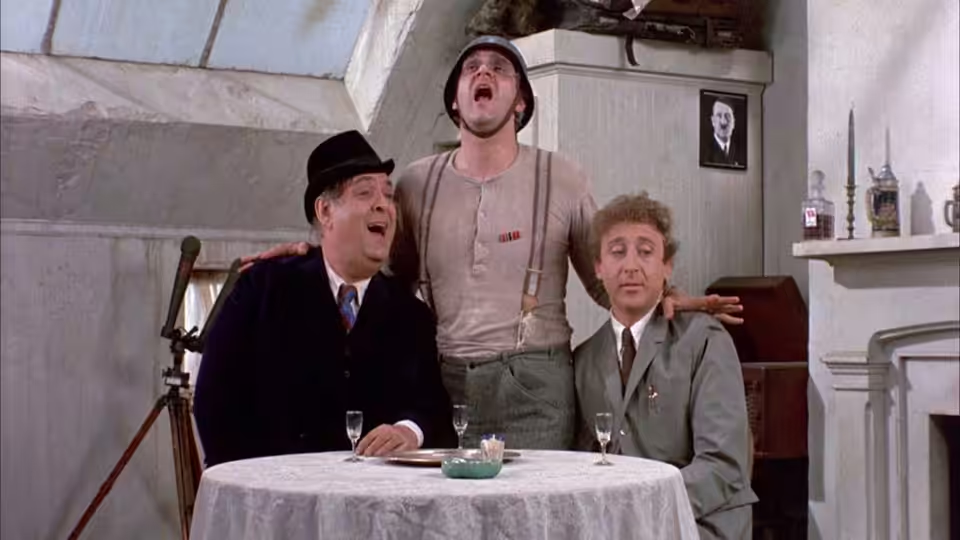
We recommend The Producers for Zero Mostel and Gene Wilder, whose pairing makes its rough edges easy to forgive. Mel Brooks’s comedy is broad, noisy and occasionally ungainly, but its satire has enough bite to keep the slapstick from feeling merely busy. The unevenness matters most whenever the film draws attention away from those two performers. At 89 minutes, it also has the good sense not to demand an entire evening in return for its laughs.
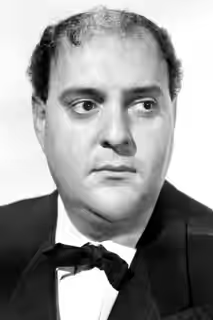
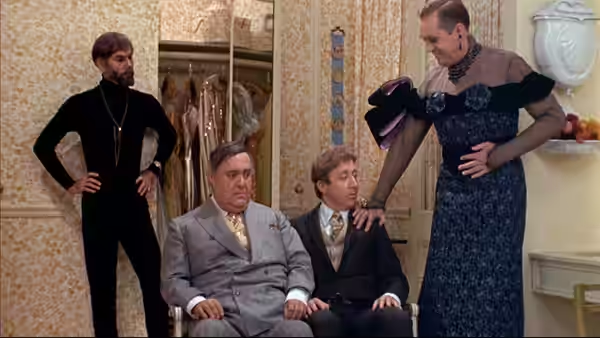
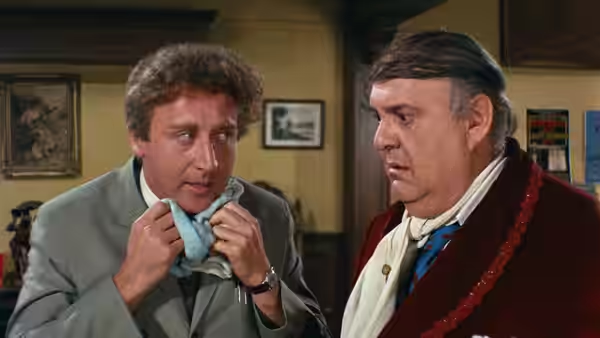
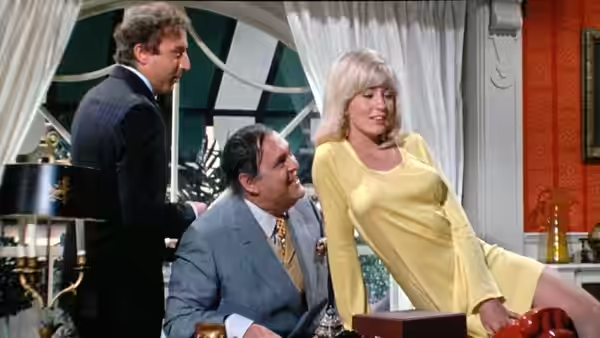
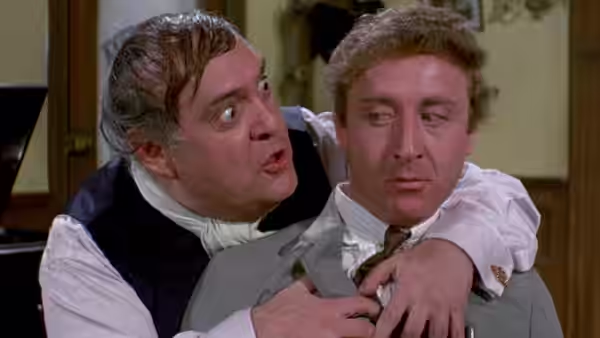
As Max Bialystock, Zero Mostel plays with an expansiveness that could be exhausting on its own; Gene Wilder gives Leo Bloom a nervous precision that makes the excess funnier. We laughed hardest at the mismatch between them, with one performance seeming to crowd the other out of the picture. Their exchanges have a welcome unpredictability even when the comedy itself is broad. Both actors understand that the other needs space to land a laugh, and neither seems anxious to appear reasonable.
Mel Brooks’s writing is funniest when it lets those performances pull a scene in different directions. The jokes need enough structure to remain intelligible, but not so much that the actors feel confined to taking turns. That balance generally holds, though a few routines continue beyond the point at which we have enjoyed them most. The extra insistence is a small price for a comedy prepared to be so unguarded about wanting a laugh, but a little less of it would have helped.
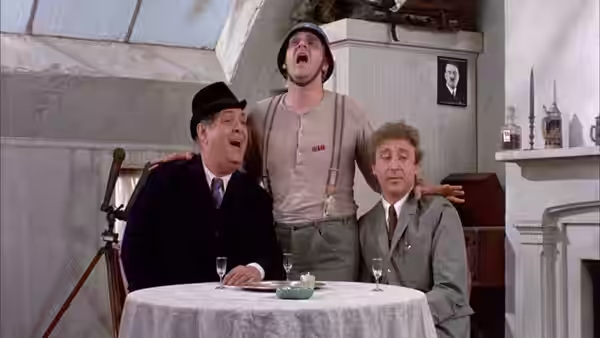
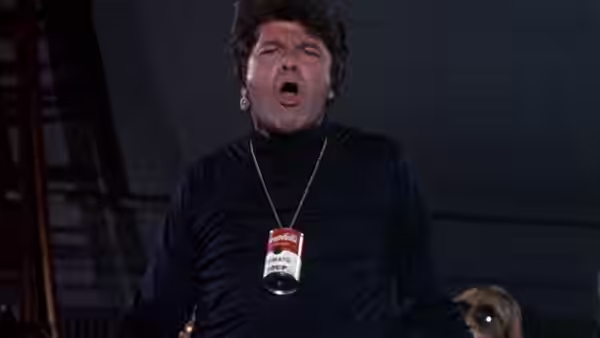
Joseph F. Coffey’s cinematography is sensible about where the interest lies: the performances remain easy to read. The images rarely demand admiration on their own, which is no great loss in a comedy so dependent on the friction between its actors. Charles Rosen’s production design provides a workable setting for that broadness, though the extravagant musical number gives the eye most to enjoy. There, the sheer scale of the silliness earns the attention that might otherwise belong to the leads.
John Morris’s music is willing to be as emphatic as the rest of the film, and that suits the musical comedy. A more discreet approach would hardly help material that takes such pleasure in being excessive. Ralph Rosenblum’s editing is most persuasive when it allows the contrast between the leads to establish the pace. Our reservation about extended jokes belongs here too, but the film would lose something important if every performance were trimmed to the quickest possible delivery.
Slapstick can become mechanical when every performer seems to be waiting for the same laugh. The pleasure here comes from watching two actors accommodate completely different ways of being ridiculous, without smoothing away their differences. The satire gives their exertions a useful sharpness, although not every prolonged gag deserves to be defended as provocation. Mel Brooks occasionally asks enthusiasm to carry a joke further than it can travel. Choose it for a shared evening, provided nobody is hoping for restraint.