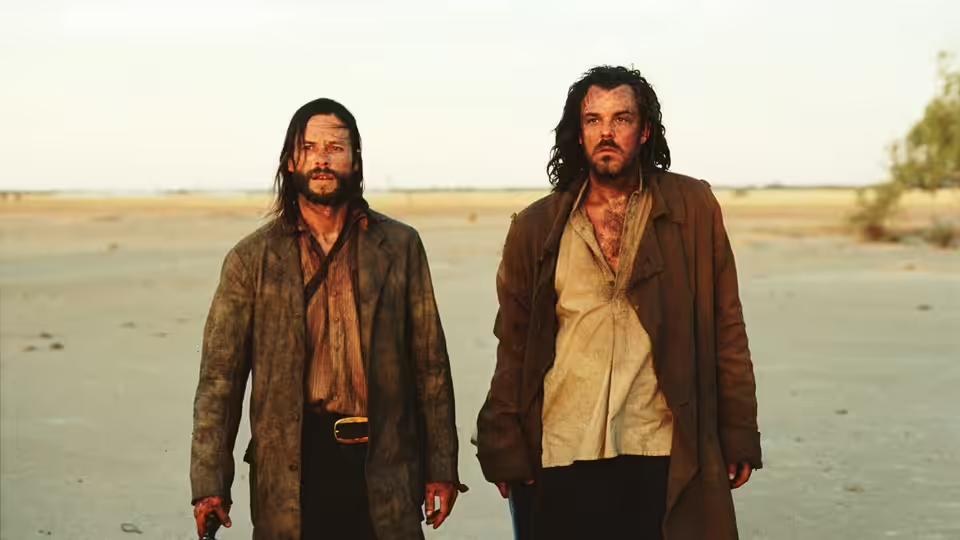
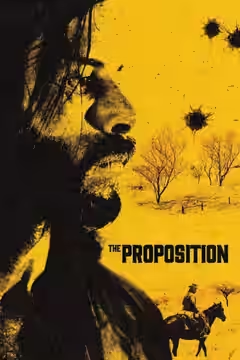
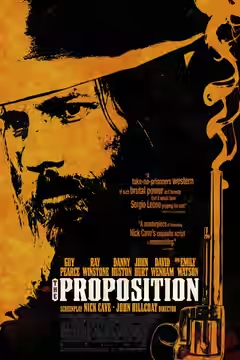
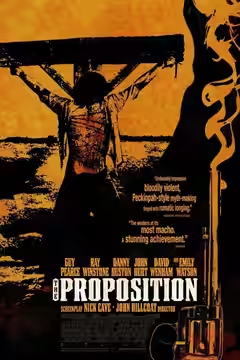
John Hillcoat’s Australian Western, written by Nick Cave, is brutal, slow and often beautiful. Guy Pearce rides into the hills to kill his brother while Ray Winstone and Emily Watson keep Christmas in the heat. It sags in the middle, and it stays with you.
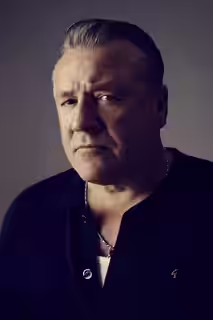
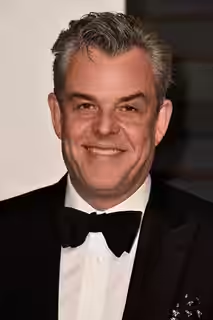
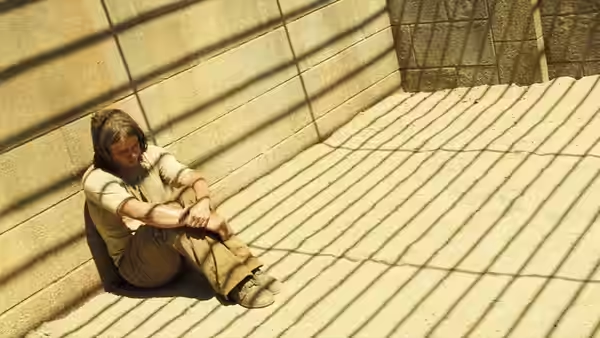
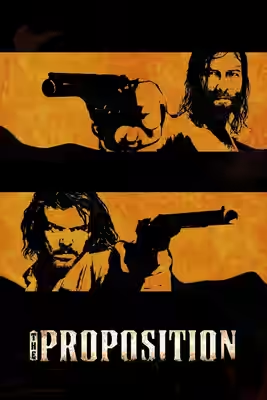
The bargain is set out in the first ten minutes. Captain Stanley (Ray Winstone) has caught two Burns brothers and wants the third, Arthur (Danny Huston), who leads the gang and did the worst of the killing. He tells Charlie (Guy Pearce) to go and shoot Arthur before Christmas or watch his younger brother Mike (Richard Wilson) hang. Then he lets Charlie go. The rest of The Proposition is Charlie riding into the hills, Stanley waiting in a town that despises him, and 104 minutes of heat. It is a good film, ugly on purpose and in no hurry, and if you can stomach it, it is worth your evening.
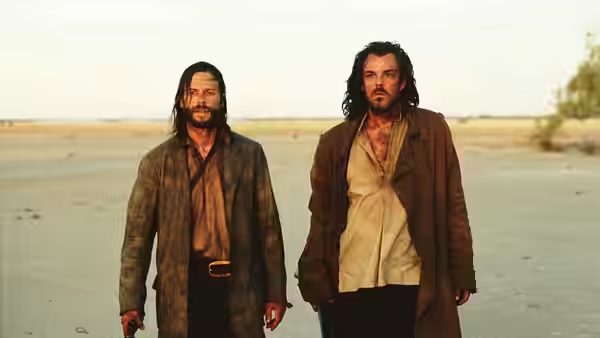
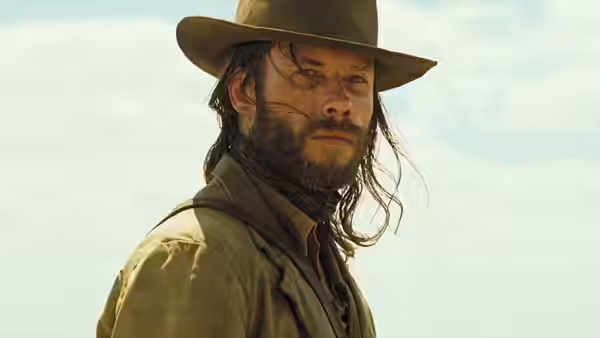
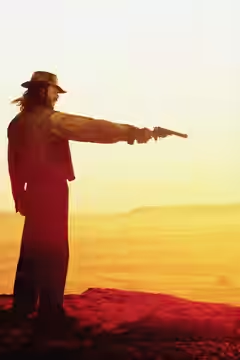
Nick Cave wrote it and, with Warren Ellis, scored it, and the two jobs have the same temperature. The script gives nearly everyone a speech about God, blood or the land; the music is a single violin sawing at one note while a voice mutters under it. John Hillcoat directs as though the sun were a character, and Benoît Delhomme shoots to match. Daylight here is white, not golden; faces are shadowed under hat brims and the horizon is a smear. At dusk the light turns orange and purple and the film stops to look at it, usually with Arthur looking too.
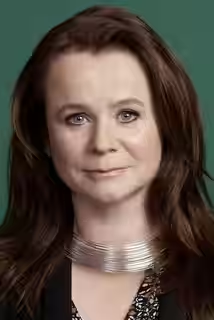
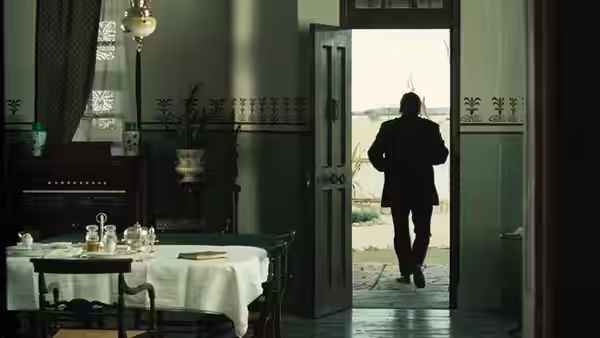
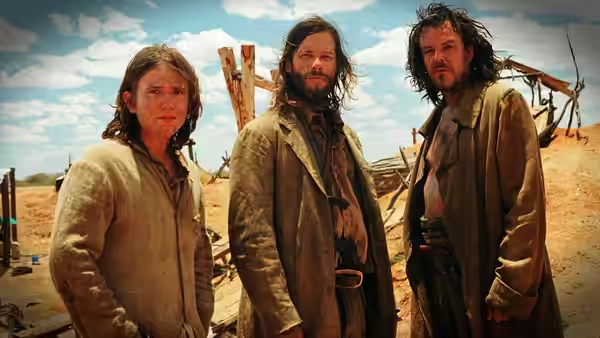
Chris Kennedy’s production design does the clearest thinking in the film. Stanley’s house has a white picket fence, roses, a tablecloth and a Christmas tree, and it sits in red dust a few hundred yards from the lock-up where men are chained. Margot Wilson dresses Martha Stanley (Emily Watson) in clean English cotton and everyone else in cloth that looks as if it has been buried. That is the argument of the film, and the design makes it without a line of dialogue. Jon Gregory cuts slowly, holding on the flies on a man’s face longer than is comfortable, and once or twice longer than is useful.
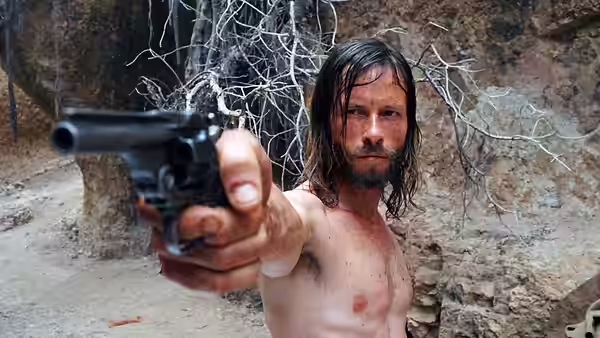
Winstone is the reason to see it. Stanley is a brute with a conscience, a man who flogs and hangs for a living and wants, more than anything, to get his wife back to England with her illusions intact. Winstone plays him tired, sweating and gentle at home, and the scenes where he lies to Martha about his day are the best-written in the picture. Watson matches him; Martha is not a fool, and her slow realisation of what the town does is the quietest thing in a loud film. Pearce says almost nothing and lets his face do it. Huston, as Arthur, talks about sunsets and recites poetry and is the more frightening for it. John Hurt turns up for two scenes as the bounty hunter Lamb and makes a meal of both.
We were horrified early, and not by the shooting. The film opens on a gunfight seen through holes in corrugated iron, and then on photographs of the murdered family laid out on a table, and it is the photographs that did it: still, formal, a child among them, with Stanley’s voice going on about civilisation over the top. Later there is a public punishment in the town we will not describe, and what disturbed us was not the blood but the townspeople who had come to watch it and then found they could not. Hillcoat holds on their faces. He is right to.
The flaws are real. The middle stretch, with Charlie in the hills, loses momentum; there is a lot of riding, a lot of looking at rocks, and a subplot with a spear that stops the film rather than turns it. Cave’s dialogue reaches for the biblical so often that when a character speaks plainly it comes as a relief. And Arthur’s gang is a gallery of grimaces rather than people; only Huston is given anything to play.
Set against the Westerns it borrows from, the ones where the land is hostile and the law is only a slightly cleaner kind of violence, it holds its own. It has none of their swagger and no interest in a hero. Watch it on a cold night with the curtains shut; the heat comes through anyway, and so does the smell.