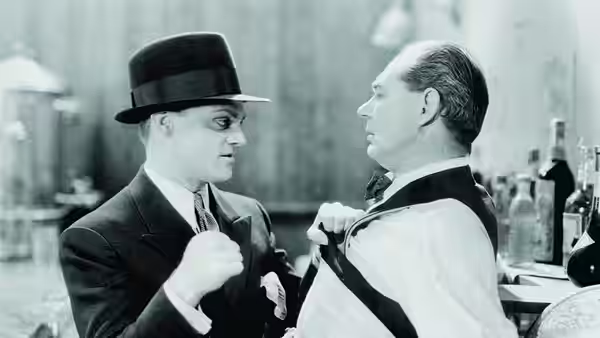
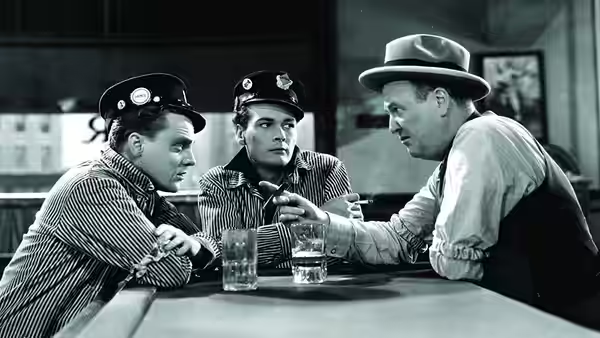
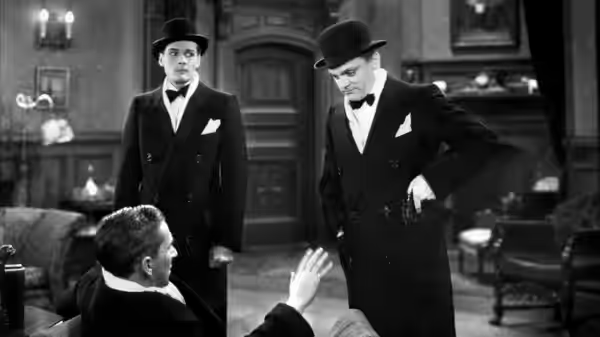
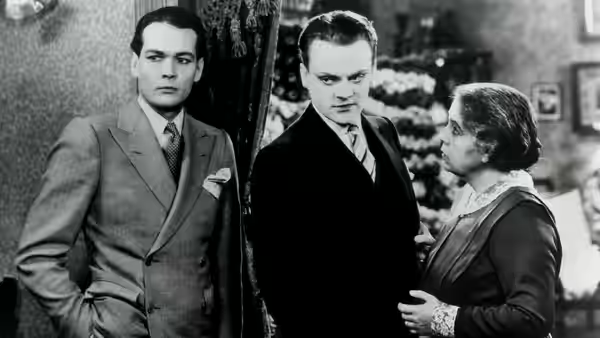
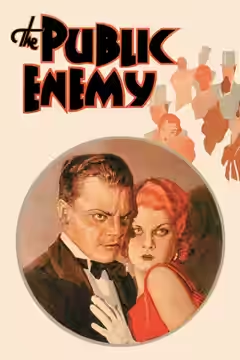
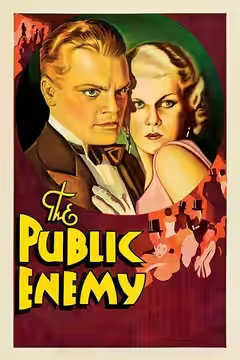
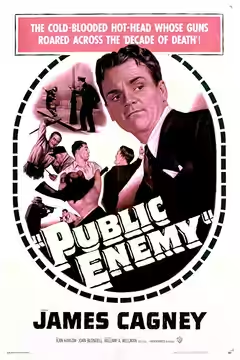
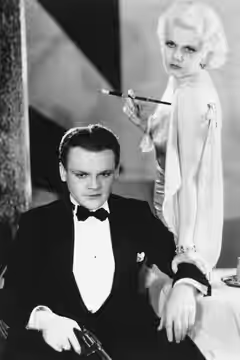
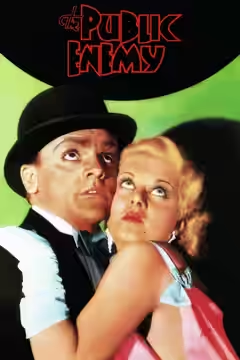
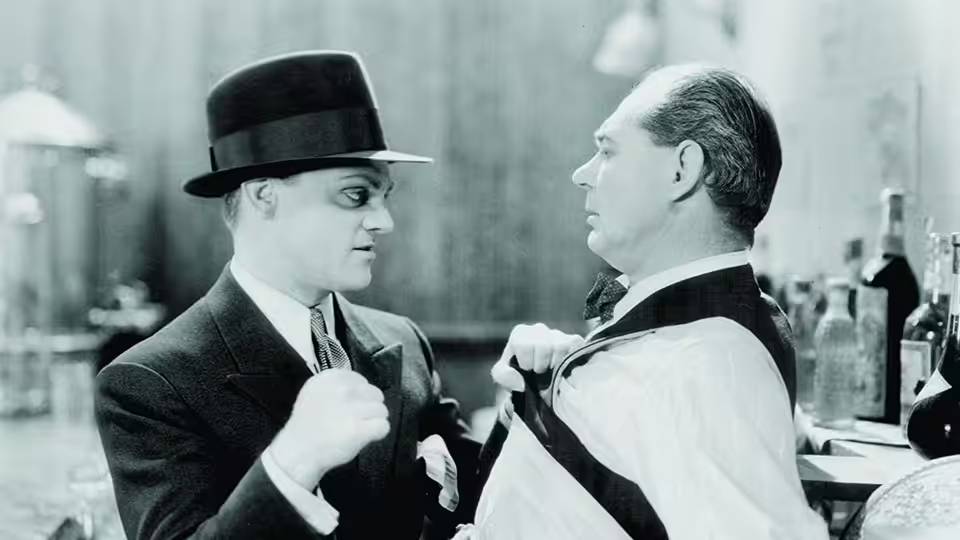
Two suited men face each other indoors, one gripping his lapel
Film review

The Public Enemy

1931 · Directed by William A. Wellman · 1h 24m

In a sentenceJames Cagney makes everyone else look as though they are waiting for permission to move

Tom Powers grows from a boy (Frank Coghlan Jr.) into a man (James Cagney) accustomed to taking what he wants. Crime gives that appetite a direction. Around him are Matt Doyle (Edward Woods), Mike Powers (Donald Cook) and Ma Powers (Beryl Mercer), while his dealings with women bring the same demands into his personal life. Kitty (Mae Clarke) is among those who have to contend with him. Tom wants his own way, and other people’s wishes have little place in his plans.

Plays from YouTube when you press play; nothing loads from them until then.

Fi1m review

James Cagney’s brash, frightening presence makes The Public Enemy worth seeing. William A. Wellman keeps it brisk, the dialogue has bite, and the simple plotting matters less than it should, though Jean Harlow is a weak spot.

The Public Enemy is a forceful gangster drama with a simple story and a leading actor who makes simplicity seem sufficient. William A. Wellman recognises what he has in James Cagney and directs with a briskness that suits him. As Tom Powers, the actor makes aggression look easy, even pleasurable, without making it respectable. We recommend it, though anyone hoping for plotting as sharp as the dialogue should adjust their expectations.

James Cagney gives Tom a brash confidence that makes even an ordinary exchange feel liable to become unpleasant. We laughed at the comic exchanges, then felt uneasy about how readily we had laughed. The delivery supplies the reason: the jokes carry the same bullying certainty as the aggression, and accepting one makes the other harder to dismiss. The performance keeps that discomfort alive without asking us to search for a nicer man underneath.

William A. Wellman is good at preserving the ugliness around that charm. The brutality feels crude and objectionable, with little invitation to congratulate ourselves for enjoying it. Devereaux Jennings’s cinematography serves the performance by making its physical force easy to read; the aggression remains plainly visible, and the images need no decorative flourish to make it register. That directness suits a film whose central attraction is also its most repellent person.

Edward M. McDermott’s editing helps keep the pace brisk without squeezing out the comic byplay. At 84 minutes, the film has room for exchanges that establish temperament as well as push the story forward. Those pauses matter because sustained belligerence would become monotonous, however forcefully acted. The humour gives the dialogue some variation and makes the next unpleasantness harder to settle into as routine entertainment.

The limitations are mostly in the story credited to writers John Bright and Kubec Glasmon. Its broad strokes can make the people around Tom seem insufficiently considered, as though his strength of personality were enough to explain every relationship. The dialogue is sharper than this suggests, but individual exchanges cannot supply all the complexity the plotting lacks. We can accept a blunt gangster story; here, there are stretches when a little more complication would have given the supporting performances something firmer to work with.

Jean Harlow, playing Gwen Allen, is the clearest weakness in the cast. Her vocal delivery sounds less assured beside Mae Clarke as Kitty and Joan Blondell as Mamie, and it can make dialogue feel laboured in a film otherwise carried by verbal attack. The contrast is especially noticeable because so much depends on the actors making short exchanges count. James Cagney dominates, but the supporting cast still needs to suggest people with reasons to remain in his company.

As a gangster film, this understands the attraction of a man who behaves as though consequences are somebody else’s concern. It also understands how quickly that confidence can become exhausting for everyone around him. The storytelling is too basic to sustain every implication, but the performance gives us plenty to watch and some reason to distrust our enjoyment. See it for James Cagney, with fair warning that the rest of the film cannot always keep up.

Critical consensus AI synthesised

78
Positive
4
Mixed
2
Negative
0

Most critics respond positively to The Public Enemy, with praise clustering around James Cagney’s raw, brash screen presence. His performance is the clearest point of agreement: the reviews credit it with giving the gangster story its force, while Radio Times also praises Wellman’s brisk direction. The film’s uncompromising treatment of crime draws approval, and Variety finds sharp dialogue and comic byplay alongside the brutality.

Reservations concern the simplicity of the plotting and individual performances rather than a broad rejection of the film. Slant Magazine finds the plot occasionally simplistic but considers Cagney compelling enough to make those objections recede; Variety is less persuaded by Jean Harlow’s voice beside Mae Clarke and Joan Blondell. The recorded scores range from qualified approval to considerable enthusiasm, with no negative entries. Two reviews have only partial accessible material, however, so their specific reservations cannot be established.

Radio Times
★★★★★ · David Parkinson
100

Parkinson praises the film as the performance that transformed James Cagney into a defining gangster star. He singles out Cagney’s raw power and Wellman’s briskly paced direction.

Read the full review →
Slant Magazine
11 February 2005 · ★★★½/4 · Chris Barsanti
88

Barsanti finds the film’s plot occasionally simplistic, but says Cagney’s performance ultimately makes other quibbles recede. He singles out Cagney’s intense, brash screen presence as the film’s defining strength.

Read the full review →
Empire
1 January 2000 · Jake Hamilton
80*

The review says the film remains a classic of the gangster genre. It praises its uncompromising portrayal of crime and singles out the grapefruit scene as an iconic image.

Read the full review →
Variety
1 January 1931 · Variety Staff
70*

The review regards the film as raw and brutal, elevated by its craftsmanship. It singles out the sharp dialogue and comic byplay, while criticizing Jean Harlow’s voice beside Mae Clarke and Joan Blondell.

Read the full review →
The New York Times
1 April 1973
67*

The headline suggests the article regards the film as still compelling, but the review text is unavailable. No specific praise or criticism can be verified from the accessible page.

Read the full review →
Time Out
· GA
65*

The available page metadata identifies this as a review, but does not reveal its verdict. It singles out the surprising original casting plan for Tom Powers, with Woods slated instead of Cagney.

Read the full review →

Straight answers AI written, from our review

Is The Public Enemy worth watching?
The Public Enemy is worth watching for James Cagney’s brash, frightening performance and brisk gangster storytelling; we score it 83 out of 100. We recommend it to anyone who values sharp dialogue and forceful acting over intricate plotting, with reservations about the thin supporting characters and Jean Harlow’s less assured delivery.
How long is The Public Enemy, and what is it rated?
The Public Enemy runs 1h 24m. It is a crime and drama film.
Where can I watch The Public Enemy in Thailand?
The Public Enemy is not on any streaming or rental service in Thailand at the moment. Availability is checked daily.
How violent or frightening is The Public Enemy, and is it suitable for children?
The Public Enemy contains crude, objectionable brutality and bullying aggression; with no UK certificate supplied and a US NR designation, we would not treat it as children’s viewing. We find Cagney’s threatening presence unsettling even in ordinary exchanges, so viewers sensitive to intimidation should take care; those labels provide no specific age guidance.
How does The Public Enemy compare to The Long Good Friday?
The Public Enemy is the better fit for brisk, straightforward gangster drama, while The Long Good Friday offers more to consider about ambition and money, though its plot takes more effort to follow. We recommend both for their domineering criminal leads: Cagney supplies brash aggression, while Hoskins makes his London crime thriller funny and frightening, with strong support from Helen Mirren.
What should I watch after The Public Enemy?
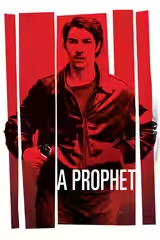
After The Public Enemy, try The Long Good Friday (1980, Fi1m 88): A domineering criminal discovers that confidence is no substitute for understanding events. Then A Prophet (2009, Fi1m 86): A criminal education with the patient detail this film tends to hurry past.

Cast

If you liked this, try…

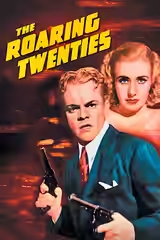
  1. The Roaring Twenties (1939) · not on Fi1m yetAnother James Cagney gangster, with more regret beneath the appetite for success.

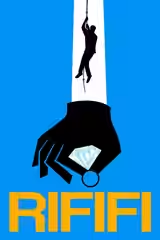
  2. Rififi (1955) · not on Fi1m yetPatient criminal craftsmanship gives way to trouble that competence cannot prevent.

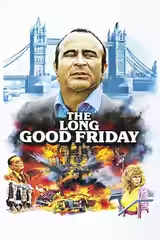
  3. The Long Good Friday (1980, Fi1m 88)A domineering criminal discovers that confidence is no substitute for understanding events.

  4. Pale Flower (1964) · not on Fi1m yetJapanese gambling rooms offer a colder, quieter encounter with criminal attraction.

  5. A Prophet (2009, Fi1m 86)A criminal education with the patient detail this film tends to hurry past.