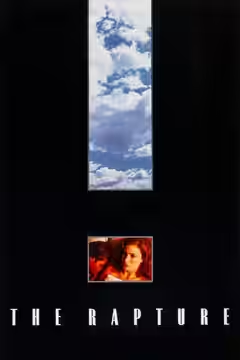
Michael Tolkin’s film takes the end of the world literally and asks what a woman owes a God who keeps his word. Mimi Rogers is remarkable, the middle sags, and the last half hour will either shake you or lose you. It shook us.
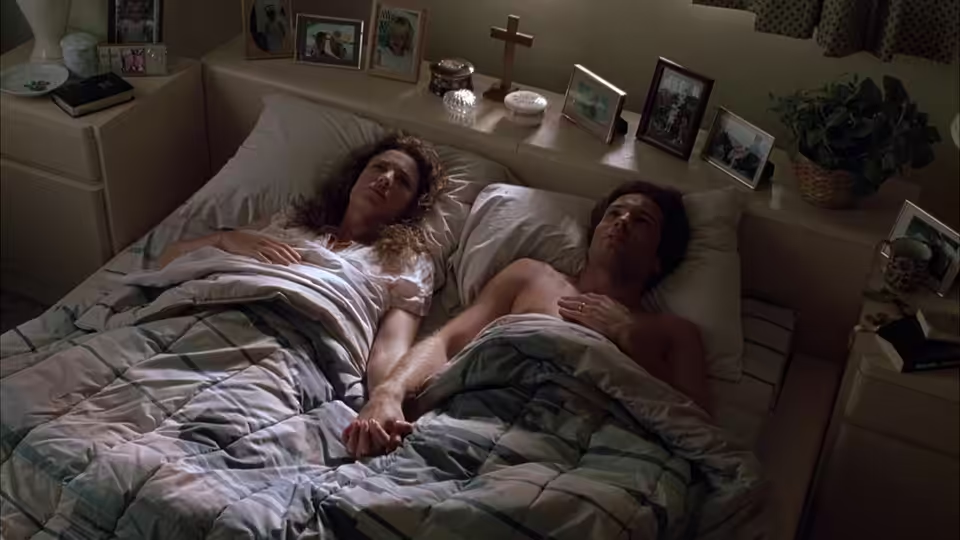
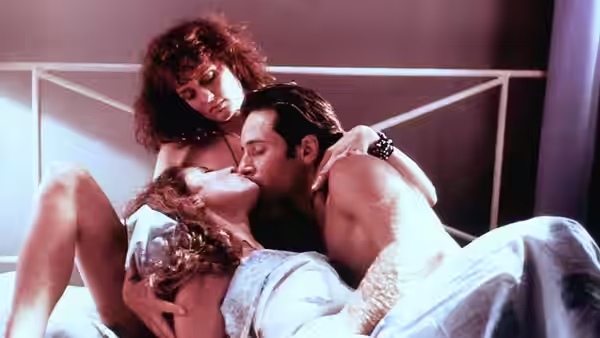
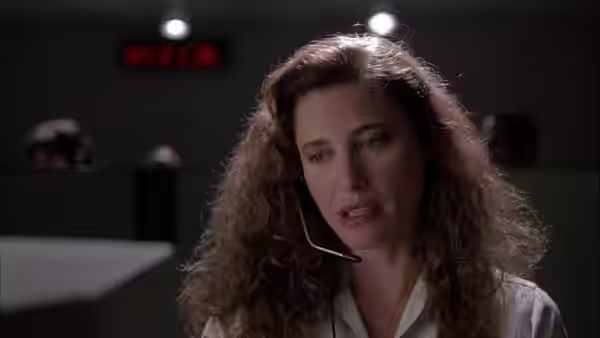
Michael Tolkin, writing and directing, begins in a Los Angeles directory-enquiries office where Sharon (Mimi Rogers) sits in a grey partition giving out numbers to strangers all day. At night she and Vic (Patrick Bauchau) go to bars and take couples back to motel rooms. Then her colleagues start whispering about a pearl and a dream, two evangelists knock at her door, and Sharon, who has tried everything else, tries God. What follows takes the fundamentalist account of the end of days at its word, without a wink, and asks what a person owes a God who does exactly what he said he would. It is a good film with a slack middle and a last half hour that is either the bravest thing in it or the silliest. We came down on the side of brave.
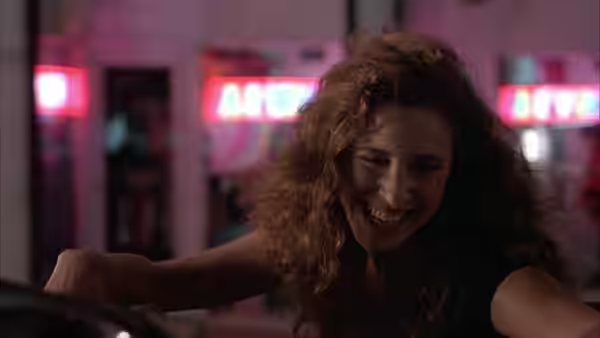
Rogers carries it. She plays the bar years with a flat, tired stare, a woman going through the motions of pleasure the way she goes through the motions of a shift, and she plays the conversion without a trace of glow. Sharon does not become nicer when she is saved. She becomes certain, which is a different and more frightening thing, and Rogers lets us see the old boredom sitting underneath the new belief, waiting. In the final stretch she has to hold the whole argument of the film in her face, with almost nothing to say, and she does it.
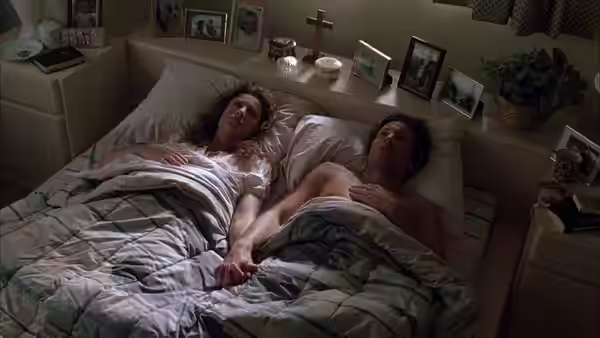
Bojan Bazelli shoots the office as a box of identical grey cubicles under fluorescent tubes, and the motel rooms in a warm orange that is meant to look like pleasure and looks like a lamp. When the film moves outdoors later, he goes the other way, bleaching the light until the sky is white and people are dark shapes in it. Robin Standefer gives Sharon’s married home bare walls and a single framed picture of Christ, so the house looks as if it belongs to the faith rather than to anyone who lives in it. Giovanna Ottobre-Melton dresses her in black lace for the bars and buttoned florals afterwards, and the florals are the more disturbing.
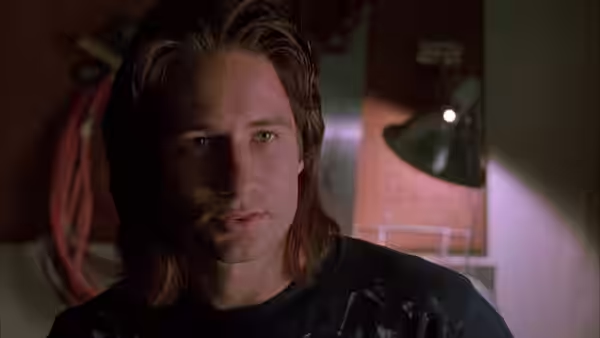
The middle is where it drifts. David Duchovny plays Randy as pleasant and not much else, and when the script asks him to speak about salvation he sounds like a man reading it off a card, which may be the point and does not help. The born-again scenes are stiff in a way the bar scenes are not, and the time jump that follows lands us among characters we have not met, talking about a faith we watched Sharon acquire but never saw her live in. Suzanne Fenn cuts everything at the same even pace, with no build, so that a prayer meeting and an orgy carry the same weight. For an hour that evenness is the idea. Around the hour mark it starts to feel like a shrug.
Then the film goes somewhere we will not describe, and we sat very still. The last twenty minutes did something to us that no film about faith has done before or since: it made us take the believers’ God seriously and then asked whether we would want anything to do with him. We argued about it on the way home, which is what we want from a film with an 18 certificate and a hundred minutes to fill, and which almost none of them manage. One of the reviews we read found the ending ridiculous, and we understand why; the effects are cheap and the staging is plain. It did not matter to us at all.
Thomas Newman keeps the score to a low drone and a few chimes and never swells to tell us what a scene means, which in a film about revelation is a discipline worth noting. Will Patton turns up late as Deputy Foster, a sceptic who is not allowed to stay one, and gives the film its only warmth. Kimberly Cullum, as Mary, asks the questions a child would ask about heaven and is answered honestly, and those answers are the most alarming lines in the picture.
Tolkin also wrote The Player (1992), a film about people who believe in nothing, and this is its mirror. See it with someone who will argue with you afterwards, and do not read anything about it first. The film’s whole effect depends on not being sure, until the last minute, whether it means it.