Blake Lively’s awkward, vulnerable assassin gives The Rhythm Section something worth watching. Reed Morano makes the violence hurt, but muddled plotting and thin characters leave too much of this revenge thriller running on effort.
The Rhythm Section has a useful idea for a revenge thriller: its would-be assassin is conspicuously bad at the job. Reed Morano gives Stephanie Patrick’s inexperience enough weight to make the violence uncomfortable, and Blake Lively supplies the physical commitment to sustain it. The film is too muddled to recommend without substantial reservations. Its action has moments of force, but Mark Burnell’s screenplay struggles to make the people or the pursuit worth following.
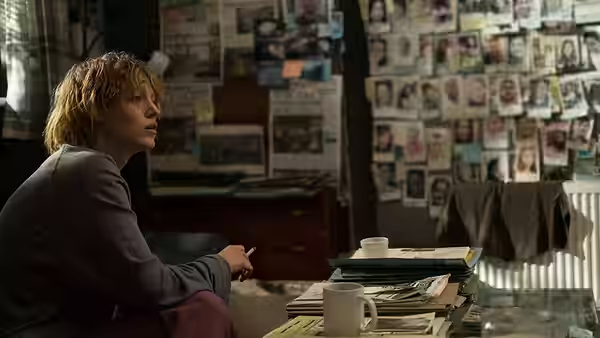
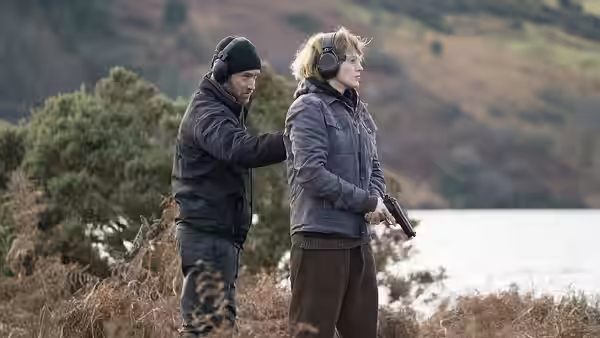
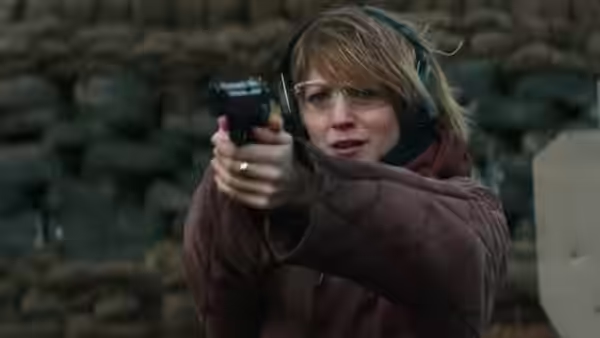
Stephanie’s clumsiness is the most convincing thing about her. The performance lets effort show, so a fight never looks like something she has rehearsed to perfection, and her vulnerability gives the familiar revenge story some urgency. We were tense during the claustrophobic fights because she seems so poorly equipped to survive them. That uncertainty does more to hold our attention than the complications of the plot.
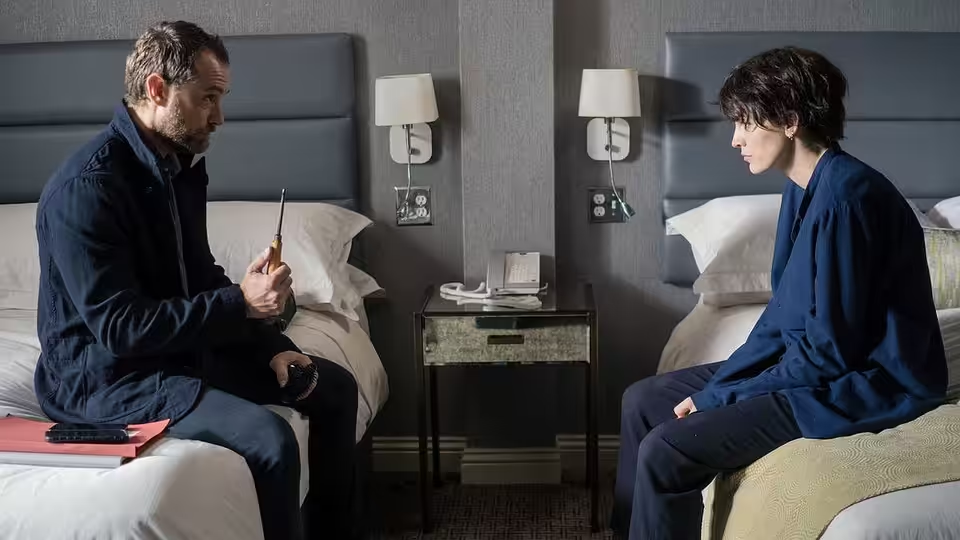
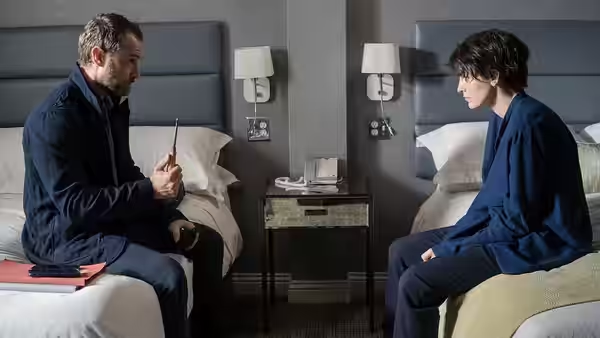
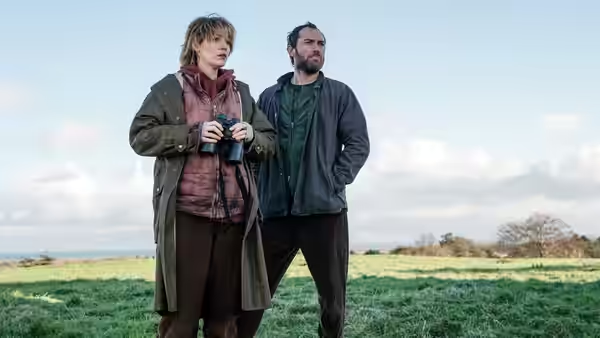
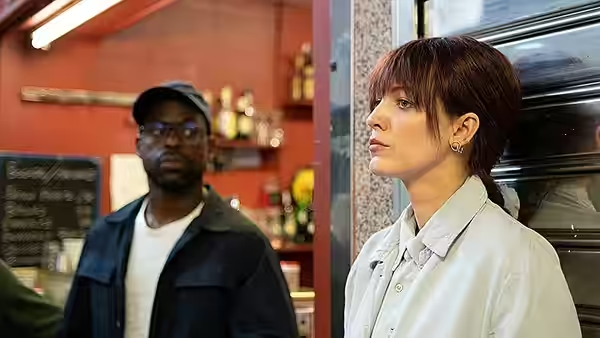
Jude Law provides some welcome relief from the prevailing solemnity, and his rapport with the lead makes their scenes easier to enjoy. Mark Burnell, adapting his own novel, has more trouble supplying Stephanie with a personality beyond her pain. Her inexperience is a convincing trait, but it cannot carry every conversation as well as every fight. The relationships need more development if we are to accept the demands the plot makes of them.
Sean Bobbitt’s cinematography is most effective during the car chase, presented as a single take from a constricted, near-first-person viewpoint. Keeping us so close makes Stephanie’s lack of control difficult to escape, and gives the sequence a reason for its conspicuous technique. For this stretch, the camera’s restricted view makes the danger more immediate without losing the point of the scene. Elsewhere, the showier camera choices can make the action harder to follow, and the physical struggle becomes less involving when its presentation needs deciphering.
Joan Sobel’s editing keeps events moving without making their connections convincing. The screenplay supplies complication where it needs to supply a reason to care, and briskness only gets us to the next uncertainty sooner. Tom Conroy’s production design gives the settings a care that the thinly written people seldom receive, though it cannot do much to distinguish their stories. Steve Mazzaro’s score applies more pressure than these scenes need; the music becomes tiring when the drama is already so determined to be serious.
The approach to the action-thriller is worth respecting. Stephanie is allowed to be vulnerable and inept, and the fights resist the easy satisfaction of watching somebody do everything correctly. Yet withholding that satisfaction makes it especially important to give us a person worth staying with between the violent scenes. The director and writer do not manage that consistently enough, and at 109 minutes the thin characterisation becomes wearing.
The case for watching rests largely on an appetite for a thriller hero who gets things wrong. That is a reasonable attraction, and the leading performance takes it seriously enough to justify some patience with the surrounding confusion. Go in for the fallible assassin, if that is enough; do not expect the spy story to reward close attention.