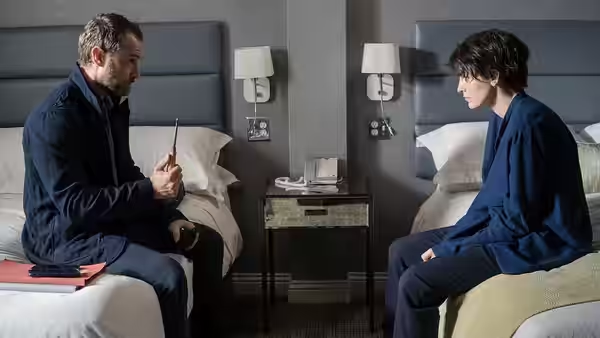
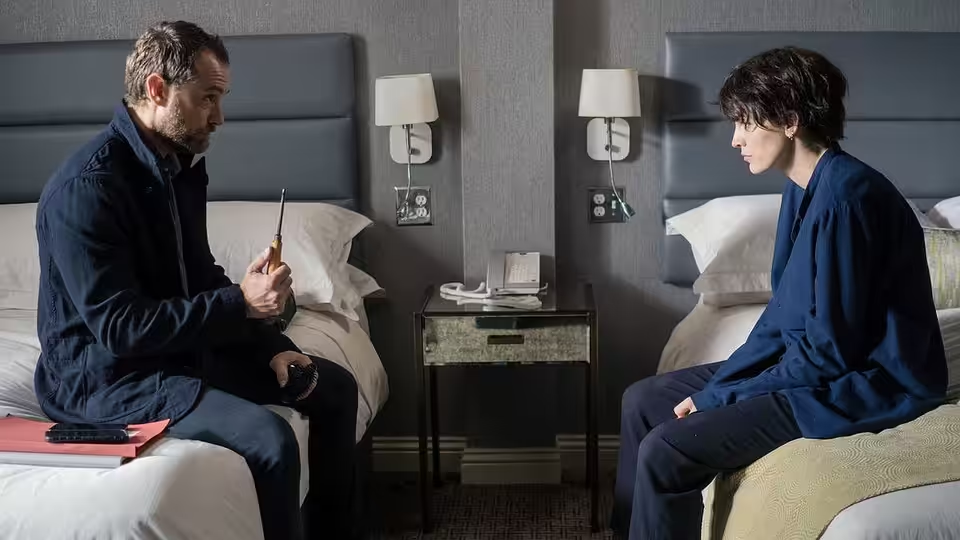
Iain Boyd (Jude Law) sits opposite Stephanie Patrick (Blake Lively) on separate beds
Film review

The Rhythm Section

2020 · Directed by Reed Morano · 1h 49m

In a sentenceBlake Lively makes a persuasive case for assassins having probation periods

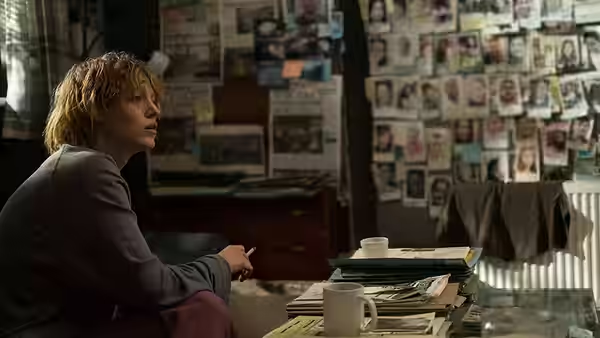
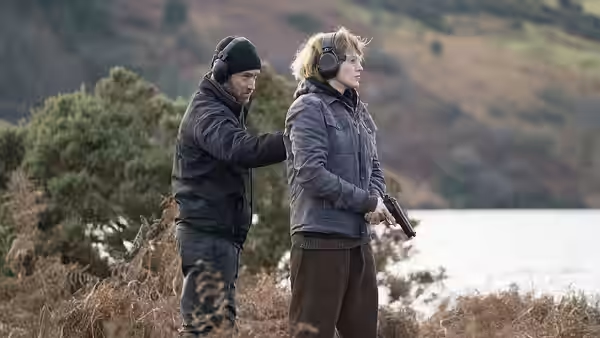
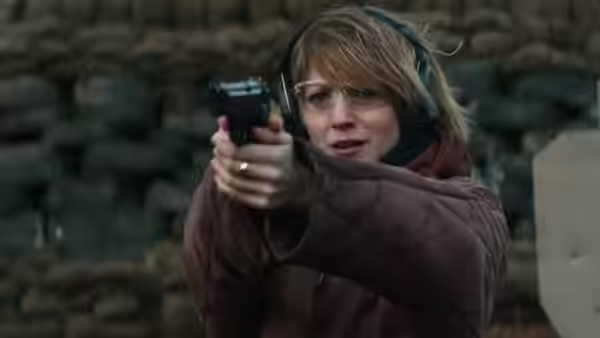
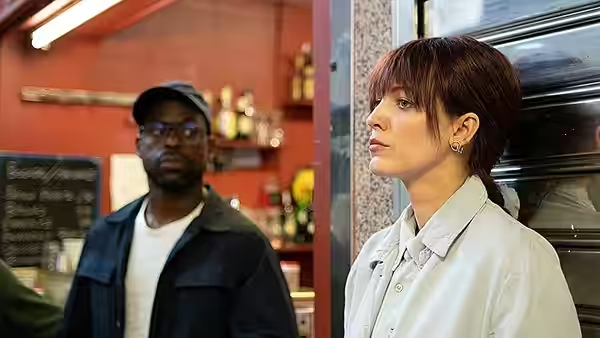
Stephanie Patrick (Blake Lively) is driven by grief towards revenge and the work of an assassin. She has little experience of the violence she is taking on, and her inexperience makes the practical demands of the job an obstacle in their own right. The people around her include Iain Boyd “B” (Jude Law) and Serra (Sterling K. Brown). Stephanie wants to act on her anger, but has to contend with her own vulnerability as she attempts to become someone capable of carrying out a killing.

Plays from YouTube when you press play; nothing loads from them until then.

Fi1m review

Blake Lively’s awkward, vulnerable assassin gives The Rhythm Section something worth watching. Reed Morano makes the violence hurt, but muddled plotting and thin characters leave too much of this revenge thriller running on effort.

The Rhythm Section has a useful idea for a revenge thriller: its would-be assassin is conspicuously bad at the job. Reed Morano gives Stephanie Patrick’s inexperience enough weight to make the violence uncomfortable, and Blake Lively supplies the physical commitment to sustain it. The film is too muddled to recommend without substantial reservations. Its action has moments of force, but Mark Burnell’s screenplay struggles to make the people or the pursuit worth following.

Stephanie’s clumsiness is the most convincing thing about her. The performance lets effort show, so a fight never looks like something she has rehearsed to perfection, and her vulnerability gives the familiar revenge story some urgency. We were tense during the claustrophobic fights because she seems so poorly equipped to survive them. That uncertainty does more to hold our attention than the complications of the plot.

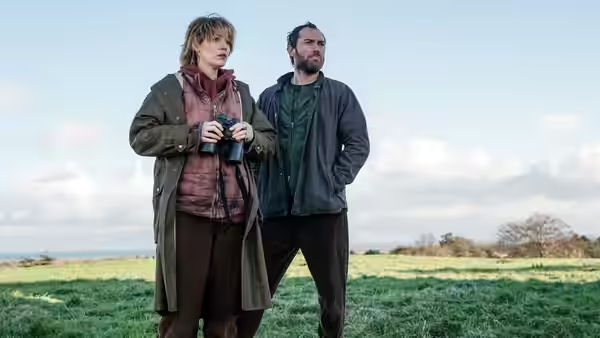
Jude Law provides some welcome relief from the prevailing solemnity, and his rapport with the lead makes their scenes easier to enjoy. Mark Burnell, adapting his own novel, has more trouble supplying Stephanie with a personality beyond her pain. Her inexperience is a convincing trait, but it cannot carry every conversation as well as every fight. The relationships need more development if we are to accept the demands the plot makes of them.

Sean Bobbitt’s cinematography is most effective during the car chase, presented as a single take from a constricted, near-first-person viewpoint. Keeping us so close makes Stephanie’s lack of control difficult to escape, and gives the sequence a reason for its conspicuous technique. For this stretch, the camera’s restricted view makes the danger more immediate without losing the point of the scene. Elsewhere, the showier camera choices can make the action harder to follow, and the physical struggle becomes less involving when its presentation needs deciphering.

Joan Sobel’s editing keeps events moving without making their connections convincing. The screenplay supplies complication where it needs to supply a reason to care, and briskness only gets us to the next uncertainty sooner. Tom Conroy’s production design gives the settings a care that the thinly written people seldom receive, though it cannot do much to distinguish their stories. Steve Mazzaro’s score applies more pressure than these scenes need; the music becomes tiring when the drama is already so determined to be serious.

The approach to the action-thriller is worth respecting. Stephanie is allowed to be vulnerable and inept, and the fights resist the easy satisfaction of watching somebody do everything correctly. Yet withholding that satisfaction makes it especially important to give us a person worth staying with between the violent scenes. The director and writer do not manage that consistently enough, and at 109 minutes the thin characterisation becomes wearing.

The case for watching rests largely on an appetite for a thriller hero who gets things wrong. That is a reasonable attraction, and the leading performance takes it seriously enough to justify some patience with the surrounding confusion. Go in for the fallible assassin, if that is enough; do not expect the spy story to reward close attention.

Critical consensus AI synthesised

44
Positive
4
Mixed
5
Negative
11

Most critics find The Rhythm Section a disappointing revenge thriller, though praise repeatedly returns to Blake Lively’s committed, physically convincing performance. Several reviews welcome a would-be assassin whose clumsiness and vulnerability make her seem human rather than effortlessly capable. The bruising fights and tense car chase also draw approval, including from critics otherwise unconvinced by the film. For its supporters, that grounded approach gives a familiar story enough distinction to work.

The reservations centre on thin characterisation, muddled plotting and a solemn tone that leaves too little excitement. There is a wide spread of opinion, with even the action dividing critics: some find it immediate and unsettling, others confusing or flat. Paste praises Morano’s visually imaginative direction, while The AV Club finds the cinematography showy and the visual storytelling incoherent. The central disagreement is how much the vulnerable heroine and physical action compensate for the weaknesses in the script.

IndieWire
31 January 2020 · B · Kate Erbland
77

Erbland finds the thriller gritty and compelling, though its plot grows needlessly complicated and some relationships feel improbable. She especially praises Blake Lively’s physical, nuanced performance and the film’s bruising fight scenes.

Read the full review →
Variety
29 January 2020 · Peter Debruge
70*

Debruge finds the familiar revenge-thriller plot worthwhile because the film feels unexpectedly human. He praises Blake Lively’s committed performance and Stephanie’s believable ineptitude as an action hero.

Read the full review →
The Guardian
29 January 2020 · Peter Bradshaw
65*

Bradshaw finds the film a serviceable thriller that works well enough despite a shaky opening. He singles out the watchable rapport between Blake Lively and Jude Law, alongside the well-assembled fights, stunts and car chases.

Read the full review →
RogerEbert.com
64*

The page could not be accessed, so the critic’s verdict and any specific praise or complaint are unavailable. The visible page only displays a browser check.

Read the full review →
Time Out
30 January 2020 · ★★★ · Dan Jolin
60

The review finds the thriller’s action generic but Blake Lively’s performance refreshingly clumsy. It singles out her distinctive take on a vengeance-driven spy as the film’s bright spot.

Read the full review →
Los Angeles Times
29 January 2020 · Katie Walsh
50*

Walsh finds the film an uneven but refreshing entry in the action-spy genre. She praises its grounded portrayal of Stephanie as an inexperienced, human would-be assassin, while faulting the thin storytelling.

Read the full review →

Straight answers AI written, from our review

Is The Rhythm Section worth watching?
The Rhythm Section is difficult to recommend beyond fans of fallible action heroes; we score it 48 out of 100. Blake Lively makes its inexperienced assassin convincingly vulnerable, and the fights have force, but muddled plotting and thin relationships leave too little to hold our attention between them.
How long is The Rhythm Section, and what is it rated?
The Rhythm Section runs 1h 49m. It is an action and thriller film.
Where can I watch The Rhythm Section in Panama?
The Rhythm Section is available to buy from Apple TV from PAB 6.99. Availability is checked daily; the links above go straight to each service.
How violent or frightening is The Rhythm Section, and is it suitable for children?
The Rhythm Section has a UK 15 certificate and is unsuitable for children, with claustrophobic fights that make violence feel painful and uncomfortable. We find the tension comes from Stephanie’s vulnerability and lack of control; squeamish viewers may find that harder going than action built around a capable, confident hero.
How does The Rhythm Section compare to Nikita?
The Rhythm Section makes its assassin’s practical ineptitude compelling, but we recommend Nikita for its stronger sense of the life assassin training displaces. Both benefit from leads who convey anger or vulnerability, and neither has entirely assured plotting, but Nikita gives its dangerous violence more human weight.
Is The Rhythm Section based on a true story or a book?
The Rhythm Section is adapted from a novel by Mark Burnell, who also writes the screenplay, rather than presented as a true story. No familiarity with the book is needed, though we find the film’s plotting muddled on its own terms; we make no judgement about how closely it follows the novel.
What should I watch after The Rhythm Section?
After The Rhythm Section, try La Femme Nikita (1990, Fi1m 76): Assassin training with a stronger sense of the life it displaces. Then Haywire (2011, Fi1m 74): Clear, forceful action gives every blow the weight this genre often avoids; and Blue Ruin (2013, Fi1m 84): An unprepared avenger discovers that anger supplies none of the necessary skills.

Cast

If you liked this, try…

  1. La Femme Nikita (1990, Fi1m 76)Assassin training with a stronger sense of the life it displaces.

  2. The Long Kiss Goodnight (1996) · not on Fi1m yetFor a female assassin thriller that remembers the pleasure of absurdity.

  3. Haywire (2011, Fi1m 74)Clear, forceful action gives every blow the weight this genre often avoids.

  4. Blue Ruin (2013, Fi1m 84)An unprepared avenger discovers that anger supplies none of the necessary skills.

  5. Lady Vengeance (2005) · not on Fi1m yetRevenge becomes morally awkward, with a central character worth the close attention.
The Rhythm Section (2020) review: A strong lead, a muddled plot (Panama) | Fi1m