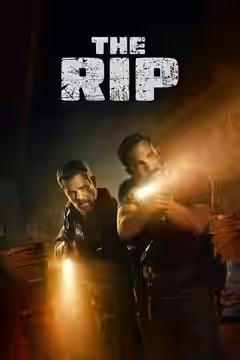
Joe Carnahan puts Matt Damon, Ben Affleck and a room full of cash in a Miami house for one long night, and for an hour it grips. Then the door keeps opening, the script keeps explaining, and the tension leaks out with each new arrival.
Joe Carnahan made Narc in 2002, a cop film that got most of its heat from two men in a car who did not trust each other, and The Rip is his attempt to do that again with a bigger cast and a great deal more money on the floor. A Miami narcotics unit finds a fortune in cash in a stash house and has to sit on it until morning. That is the whole engine: a room, a pile of cash, and people who all insist they are not thinking about it. It is a good idea, and for its first hour Carnahan knows what to do with it. Then the door starts opening, and the film gets weaker with each person who walks through it.
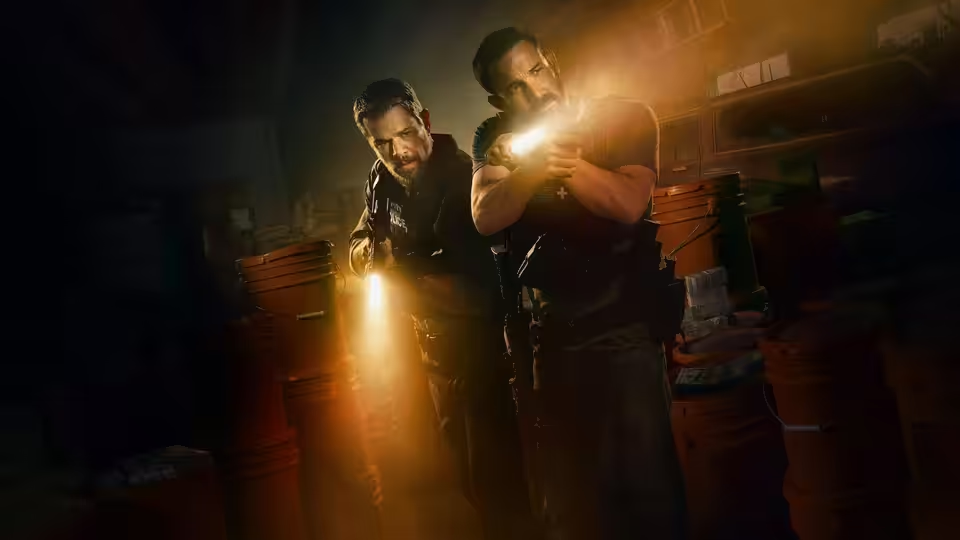
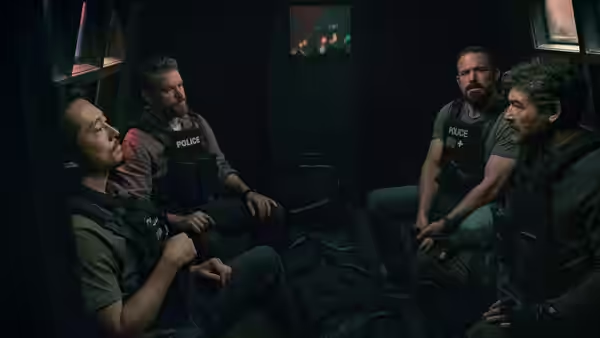
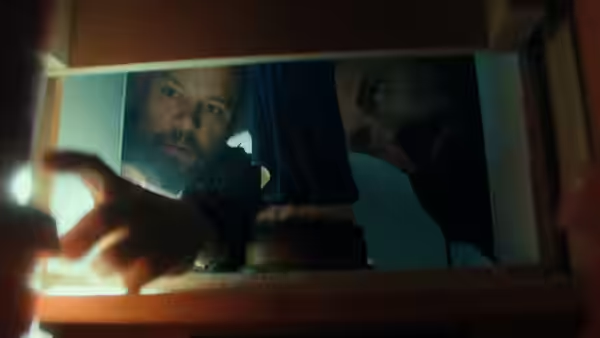
The house is the best thing in the film. Judy Becker gives it bare walls, cheap furniture and money stacked in bricks where a family would keep its shoes, and Juan Miguel Azpiroz lights it from inside, so that faces sit half in shadow and the cash is the brightest thing in the frame. Kevin Hale lets the early scenes breathe: the counting, the recounting, the glances exchanged when a total is read out. Nobody says anything about taking it, and we watched hands. We were tense, properly tense, for the better part of an hour, and nothing had happened yet but arithmetic.
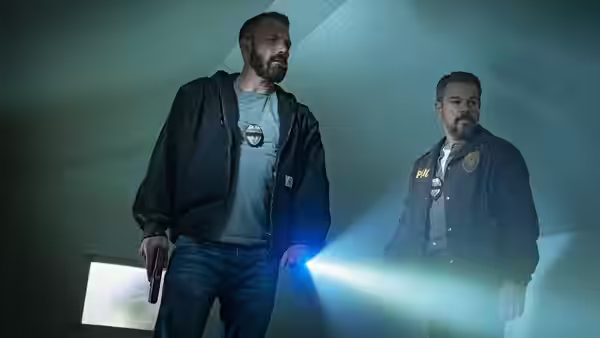
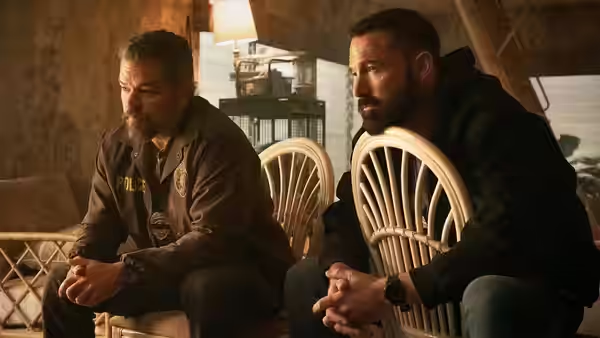
Damon plays Dumars as a tired, decent man who counts the money anyway, and he is good at the small business of a lieutenant, moving people around a room without seeming to. Affleck’s Byrne is heavier and looser, the one who says the thing out loud, and he gets most of the laughs. The two have known each other on screen and off since Good Will Hunting (1997), and neither finishes a sentence the other has started; the film is at its most relaxed when it simply lets them talk. Steven Yeun is the pick of the unit, jittery and reasonable at once. Teyana Taylor gives Baptistie a stillness that makes her hard to read, which the plot needs. Catalina Sandino Moreno’s Salazar has less to do than her billing suggests.
The trouble starts when the federal agents arrive. Kyle Chandler’s Nix is a DEA man who talks as if he is selling something, and Chandler is enjoyable, but he brings with him the film’s bad habit: every new arrival gets a scene in which someone explains who they are and what they want, and Carnahan’s script does this by having them say it. Scott Adkins and Daisuke Tsuji, as the FBI men, are dealt with the same way. Up to then the house had made us nervous. Now the people in it were telling us to be nervous instead, and we felt the difference at once.
The second half takes the film out of the house. There are car chases and there is gunfire, and both are staged cleanly; Carnahan has never had trouble making a shootout legible. But what was particular about The Rip was the house, and Miami at night looks like any thriller’s city at night. Clinton Shorter’s score, all low brass and pulse, gets louder in the second half, insisting on stakes we had stopped feeling. The last stretch runs long, and there is a coda that explains what we had already understood. We were checking the time by then, and a little annoyed with ourselves for it, because the first hour had earned better.
Against Carnahan’s own record this is a step back to solid ground rather than a return to form. Narc had two characters and dug into both; The Rip has a dozen and gets under the skin of perhaps two. It runs 113 minutes and carries a 15, and it is a film made for the sofa, which suits it. Nothing here needs a cinema screen, and the murk of Azpiroz’s interiors survives a smaller one. Watch it with the lights down and someone to argue with about who is lying. When the last gun goes quiet, you have our permission to stop.