Bruce Robinson’s adaptation of Hunter S. Thompson’s early novel is sunny, well cast and pleasant company for an hour, then wanders off the way its hero does. Michael Rispoli and Giovanni Ribisi carry it; Johnny Depp, oddly, does not.
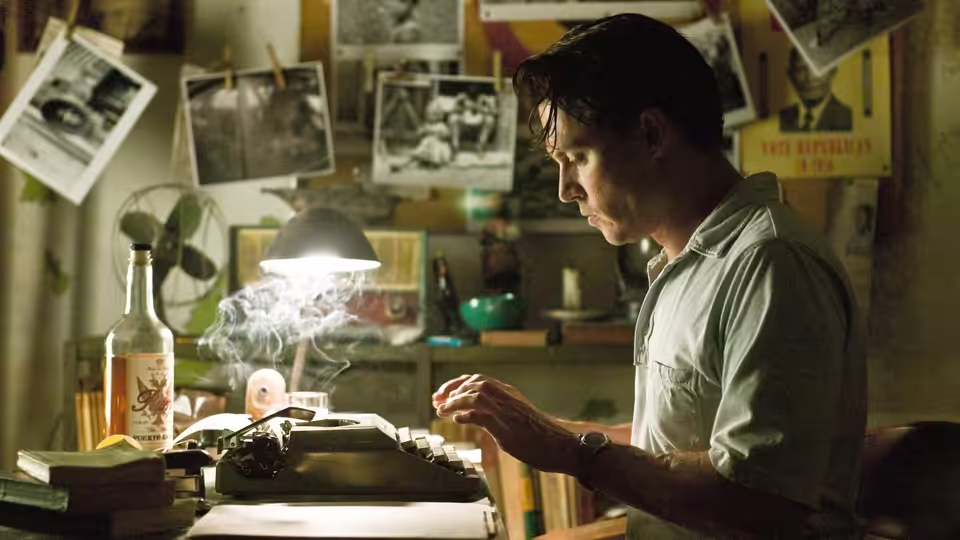
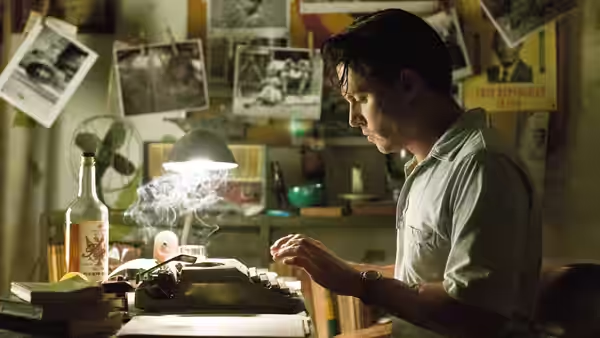
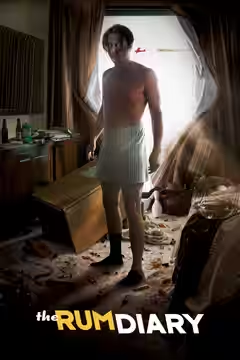
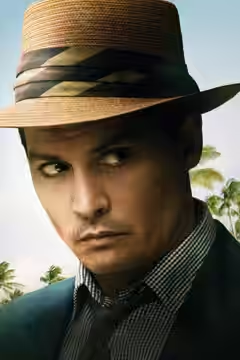
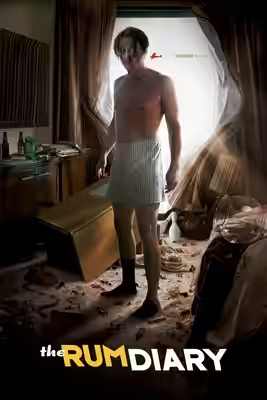
Bruce Robinson, who wrote and directed Withnail and I (1987), has adapted the novel Hunter S. Thompson wrote as a young man. Johnny Depp, who played Thompson in Fear and Loathing in Las Vegas (1998) and produces here, plays Paul Kemp, the writer before he found his voice: a journalist who arrives in San Juan in 1960 with a hangover and a drinking habit he calls the upper end of social. The Rum Diary is sunny, well cast around the edges and good company for about an hour. Then it goes for a wander and does not come back, and two hours is too long to wait for it.
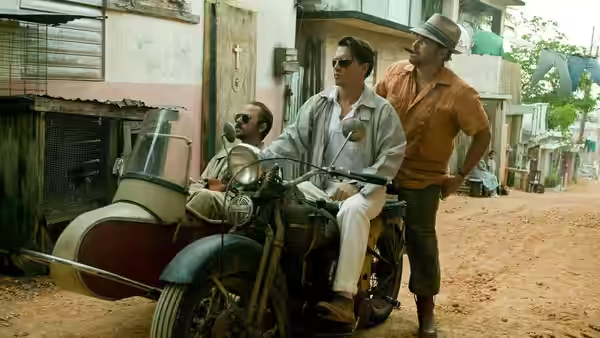
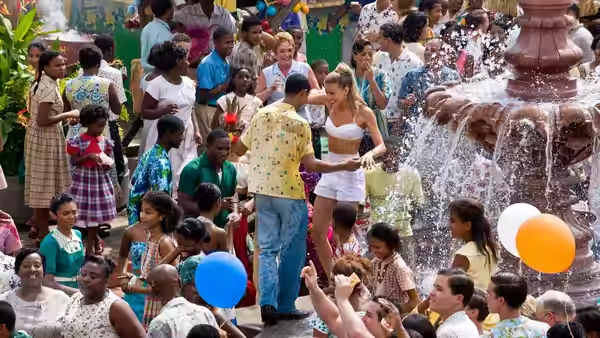
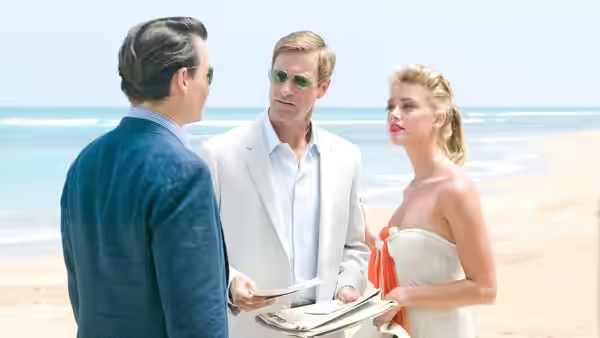
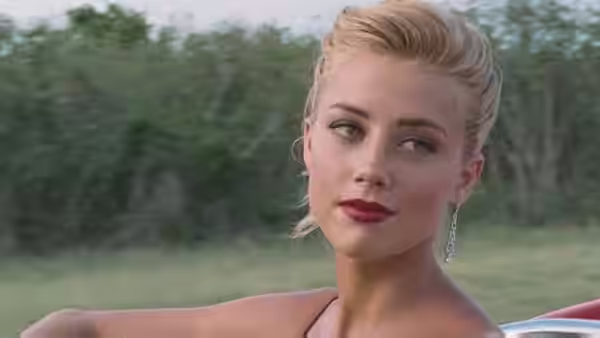
The island is the film’s best asset and Dariusz Wolski treats it with care. He shot on 16mm, so the daylight has a soft grain and the whites burn out, and Old San Juan looks like a postcard left on a dashboard. Chris Seagers gives the newspaper a newsroom of dead typewriters and a press that has to be kicked, and Sanderson’s house is its opposite, a glass box on the water. Colleen Atwood and Diana Noris put Kemp in rumpled linen and dark glasses and Chenault in white, which is how Kemp sees her.
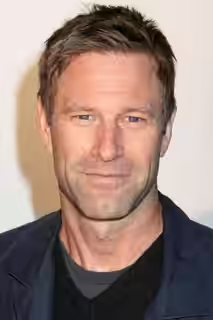
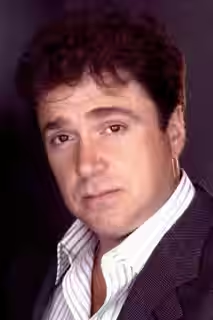
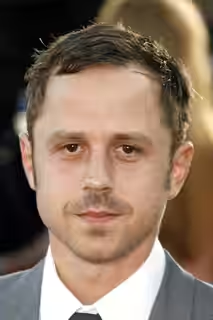
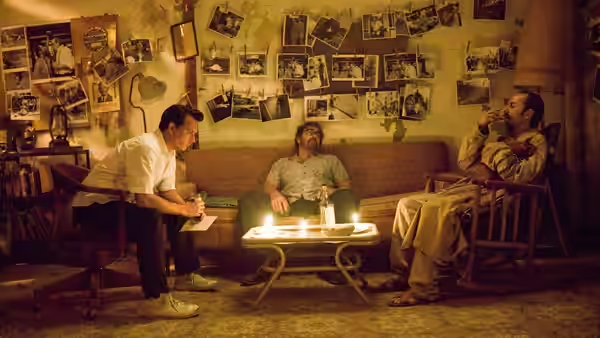
The supporting cast earn their keep. Michael Rispoli’s Sala is a slumped, patient man who has given up on everything except the next drink, and he is the film’s steadiest presence; every scene with him knows what it is about. Giovanni Ribisi plays Moberg as a wreck in filthy clothes who plays Hitler speeches on a gramophone, and he is funny in a way that stops the film whenever he arrives. Richard Jenkins, under a bad toupee, gives the editor Lotterman the despair of a man who knows his paper is finished. Aaron Eckhart’s Sanderson is tanned, smooth and friendly in the manner of a man who has already decided what you are for.
We laughed properly once, and it was worth the ticket. Moberg has been hoarding a liquid he says is too strong to be legal, Kemp and Sala take a drop each in the eye, and Kemp turns to find Sala’s tongue has unrolled across the floor towards him. Robinson plays it straight, holds the shot and lets Depp’s face do the work. It is the one scene where the film’s drinking and its humour are in the same place, and the one that looks like the Thompson film it was meant to be.
The trouble is the man in the middle. Depp plays Kemp as watchful, courteous and half asleep, a visitor who writes down what he sees and waits to be told what it means. Kemp ought to be frightened and angry; this one is mostly tired. We kept waiting for him to lose his temper, at Sanderson, at Lotterman, at the island, and the few times he does, Robinson cuts away before the anger has anywhere to go. Amber Heard is given one job, to be looked at, and does it well; her dance in a bar is the film’s single jolt of danger, and the romance around it is a series of long looks that lead nowhere.
Robinson writes a good line, but he has not written a second half. Scenes end rather than finish, and Carol Littleton can cut them into an order but not into a shape. Christopher Young’s score stays out of the way, which is polite of it and about all we remember. By the ninety-minute mark we were watching the sea and waiting, and the film seemed to be doing the same.
Withnail and I had two men, one flat and a bottle, and it knew that the drinking was the structure as well as the subject. The Rum Diary has the same parts and keeps misplacing them.
See it on a warm evening with something in a glass and it will match your mood for about an hour. Thompson’s readers will enjoy spotting where the man they know is about to begin. Everyone else gets Rispoli, Ribisi and a tongue, which is not nothing. It runs 120 minutes and carries a 15 certificate.