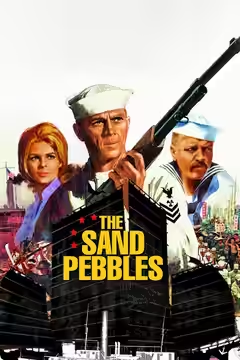
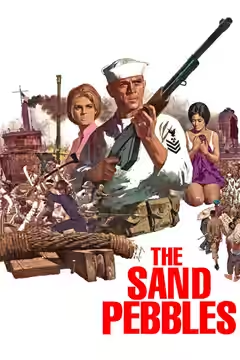
Robert Wise’s 196-minute gunboat picture is slow, solemn and about half an hour too long, and Steve McQueen is quietly the best thing in it. Worth an evening if you can give it a long one; the engine room is where it lives.
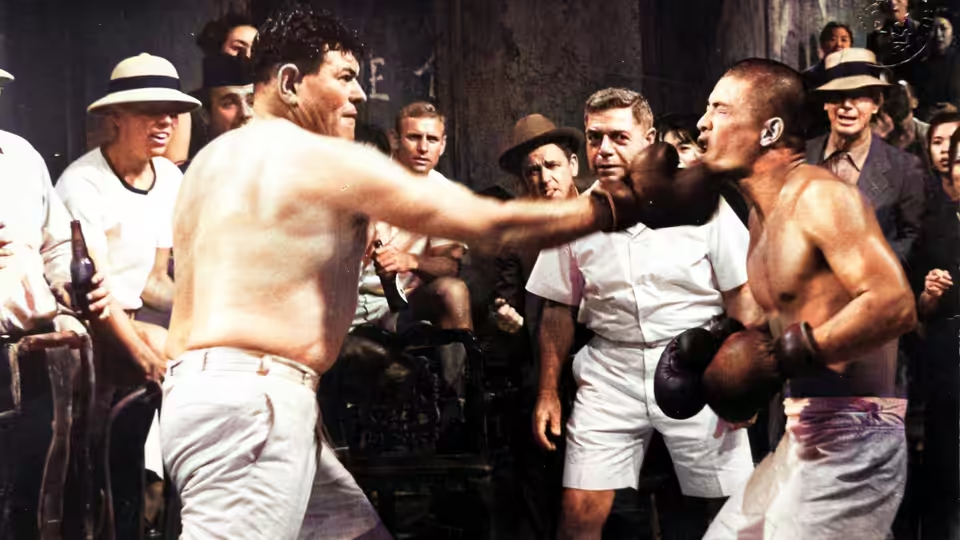
Robert Wise directs and produces a 196-minute film from Richard McKenna’s novel, with a screenplay by Robert Anderson, about an American gunboat on the Yangtze in 1926 and the machinist’s mate who would rather be left alone with its engine. It is long, it knows it is long, and it moves at the speed of the river. We think it is better than that length, but we would not argue with anyone who checks the runtime and puts the kettle on first.
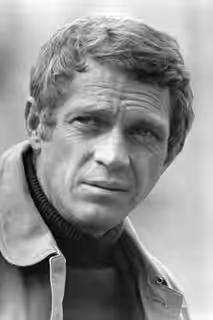
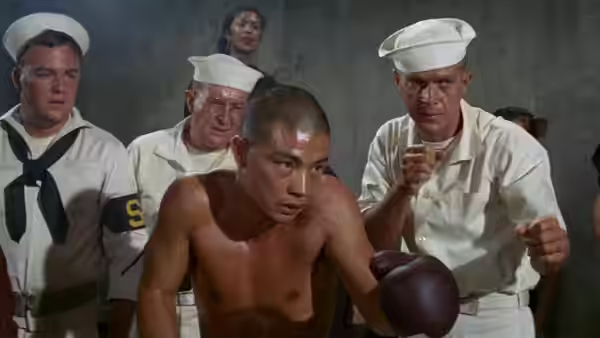
Steve McQueen plays Jake Holman with his hands. He wipes down a piston, feels a bearing for heat, puts his ear to a cylinder and listens as if the thing were breathing. He barely raises his voice in three hours, and the film is at its best when it trusts that. When Holman takes Po-han (Mako) down into the engine room and teaches him, part by part, what each valve does, we were moved more than we had expected, and the reason is plain: it is the only stretch of the film in which anybody on that boat treats a Chinese man as a person, and both actors know it. Mako plays Po-han with pride and appetite and none of the grinning servility the period usually asked for.
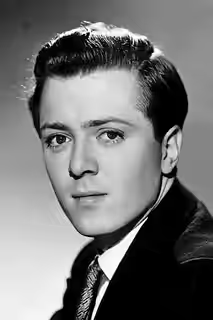
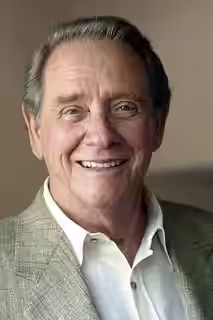
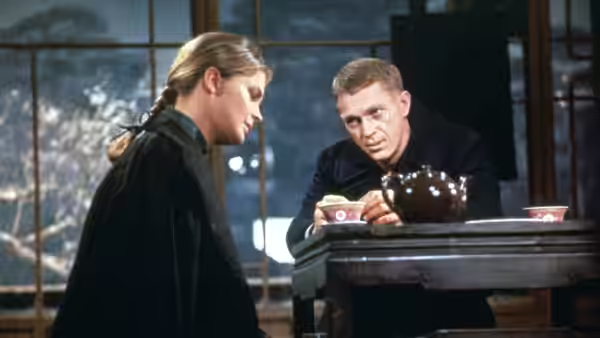
Richard Attenborough’s Frenchy is gentle and soft-hearted, a sailor who spends his pay on kindness, and Attenborough never plays him as a fool. Richard Crenna has the harder part and the better writing: Captain Collins believes the flag is a religion and preaches it to a crew who would rather have their beer. Candice Bergen is given less than she deserves; Anderson writes Shirley Eckert as a conscience, and a conscience is thin company for three hours. Larry Gates’s Jameson, the missionary who wants the navy gone, gets the film’s best argument and about three scenes to make it in.
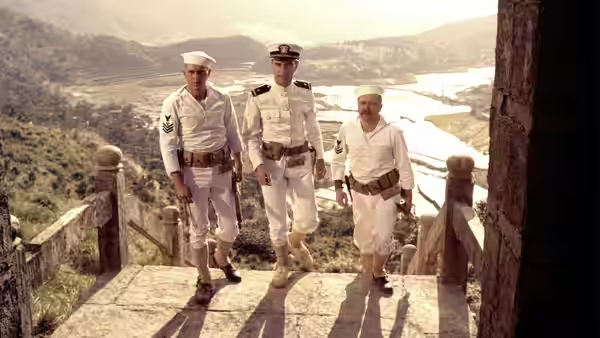
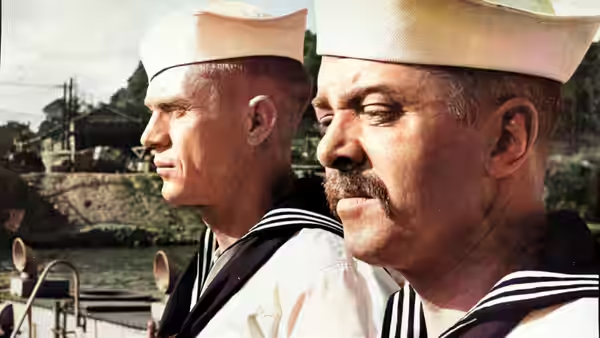
Joseph MacDonald shoots the river wide and grey-green, all mist and junks, and the town at night by lantern so the crowds seem to come out of the dark. Boris Leven’s San Pablo is a cramped, rusting, believable ship, and its engine room, a cave of brass and steam pipes, is where the film lives. Renié’s whites are sweat-stained by the second reel and stay that way. Jerry Goldsmith’s score is the other great performance here: a main theme in a minor key that never once tells us to feel brave, and a slow, sad march that follows the boat downriver. We would put it among the best things he wrote.
What is wrong is pace and nerve. William H. Reynolds cuts patiently, and the patience becomes a fault; scenes end a beat after they should, and the second hour, most of it ashore, is where we began to fidget and then to resent the fidgeting. The politics are the larger trouble. Anderson’s script wants to say the Americans have no business on that river, and says it, through Jameson, more than once; then it cuts back to Collins on deck, lit like a saint, and lets his speeches stand. The film has doubts about the gunboat and still photographs the gunboat as a hero. The battle late on is cleanly staged, and we will describe none of it.
Wise made The Sound of Music the year before, and this is the film that credit bought him: a big studio picture with something on its mind. The reviews so far lean against it, two of the four we have read finding it long, slow and solemn, and they are right about the length and the solemnity and wrong about what those add up to. A slow film in which McQueen, Mako and Goldsmith are working at this level is a slow film worth sitting through.
See it at home, in one sitting, on the longest evening you have. It does not split well: the first half sets things up and the second pays them off, and the slow patches are Wise’s choice, not an accident. The 12 certificate is about right. Do not start it after ten.