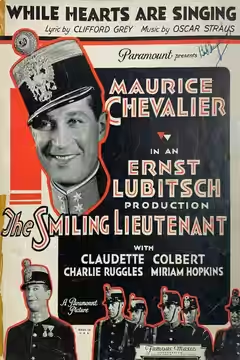
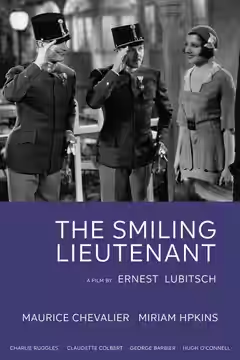
Ernst Lubitsch’s early talkie is a sly, good-natured operetta about a misdirected wink, and Miriam Hopkins steals it from under Maurice Chevalier’s grin. The songs are the weakest thing in it.
Ernst Lubitsch made The Smiling Lieutenant in 1931, when talking pictures were still young and most directors were filming actors standing very still beside a hidden microphone. He chose instead to make an operetta about a night of adultery, a state visit and a wink that lands on the wrong woman, set it in Vienna and a made-up kingdom called Flausenthurm, and trust that the audience would enjoy being winked at too. We did. This is a small, sly, kindly film, and it is worth your evening if you have any patience for early musicals. Its songs are its weakest part and its ending is its strangest, and we will come to both.
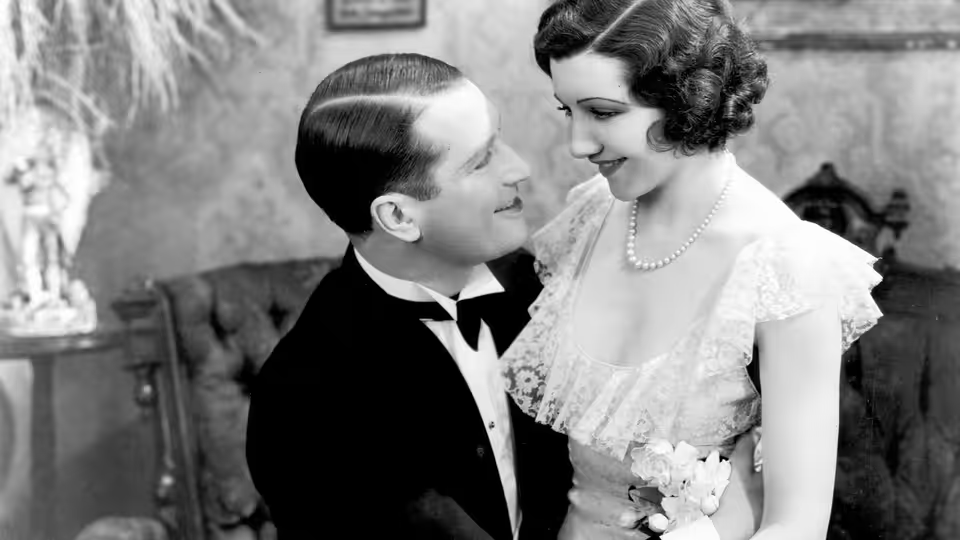
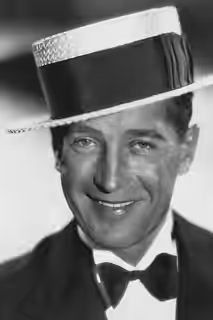
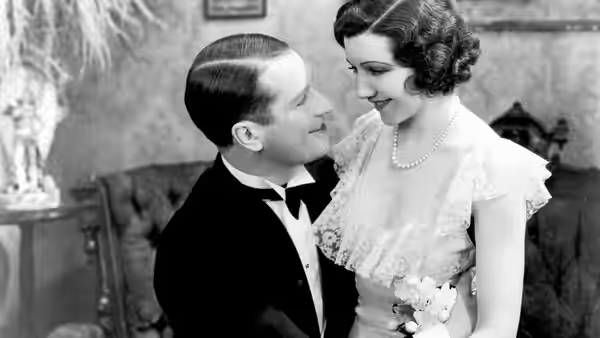
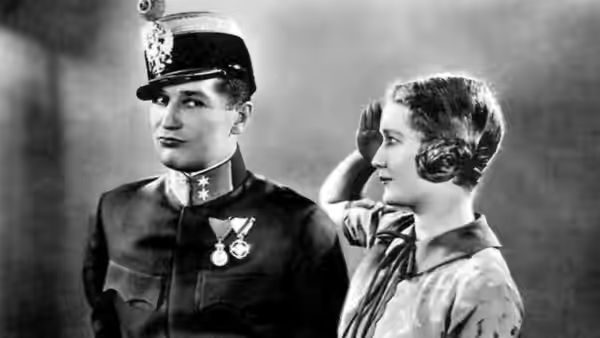
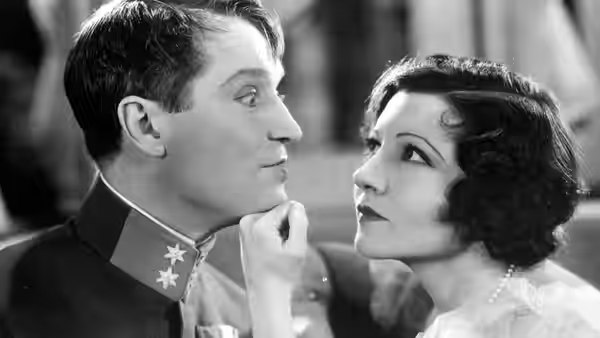
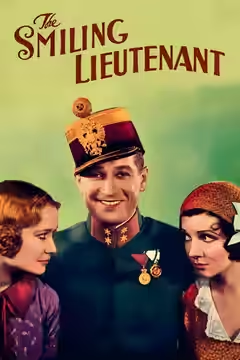
Maurice Chevalier plays Niki, a lieutenant whose main military duty appears to be women, and his method is to grin at the camera until it gives in. For about an hour it does. He has one trick, the lopsided smile and the shrug, and Lubitsch uses it the way a cook uses salt, sparingly and then all at once. By the last reel we were a little tired of him. The two women in the film are not, and that is the plot.
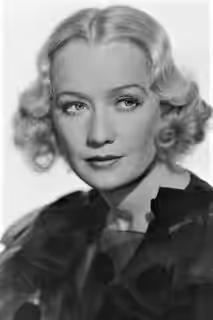
Claudette Colbert’s Franzi is the film’s warmth. She plays a working musician who knows exactly what a night with a lieutenant is worth and takes it anyway, and the breakfast she shares with Chevalier the morning after, sung over coffee and rolls, is the frankest thing in the picture about what has happened between them. Miriam Hopkins is the surprise. Her Princess Anna arrives under a hat that could shelter a family, in a dress her grandmother would have called dowdy, sulking through games of draughts with her father, and Hopkins plays her not as a joke but as a young woman who has never once been looked at. When she decides she has been, her certainty is alarming. George Barbier’s King Adolf is fat, fond and easily managed, and Charles Ruggles does the nervous friend with his usual fluster.
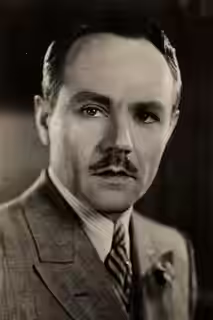
George J. Folsey shoots it with more movement than most films of the year managed. The camera runs along the guard of honour as the royal carriage passes, and Merrill G. White cuts the wink itself so that we see Niki, then Franzi, then Anna’s face, and understand the whole mistake before anyone on screen does. Lubitsch’s habit of playing a scene on a closed door or a raised eyebrow is already fully formed; a bedroom is described entirely by Niki’s orderly (Hugh O’Connell) and his expression. Oscar Straus’s music is the problem. The tunes are pleasant and gone by the time you reach the kettle, the sound recording is thin, and Chevalier’s numbers stop the film rather than carry it. Ernest Vajda and Samson Raphaelson’s script, from Hans Müller-Einigen’s novel, is so much funnier than the songs that we caught ourselves waiting for them to finish.
We laughed out loud, alone on a sofa, when the wink is explained to the King; it is a scene built on three people each misunderstanding the other two, and Lubitsch times it like a watchmaker. We were also, by the end, more uneasy than we expected to be. This is a comedy about two women and one man, and the arithmetic of that cannot come out even. We will not say how the film settles it, only that we were less comfortable with the answer than the film seemed to be, and that the discomfort is the thing that stayed with us afterwards.
Set against the rest of Lubitsch, this sits below Trouble in Paradise, which came the following year and has Raphaelson’s wit with a stronger plot, and above The Love Parade, which had the grin without women who could answer it. The three critics we have read all liked it, as we do; the New York notices of 1931 praised the music far more than we can, and we suspect the microphones of the day flattered it.
At 89 minutes it is the length of a proper dinner. Watch it with the sound turned up, because the recording is old and the best lines are thrown away.