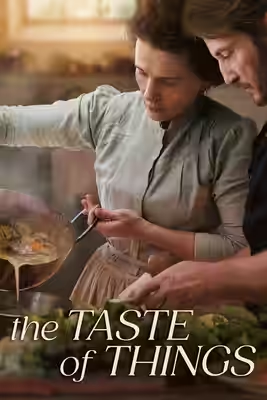
Trần Anh Hùng’s film about a gourmet and the cook he has loved for twenty years is patient, handsome and unusually grown-up about affection. It is 135 minutes with little in the way of event, and the men talk about sauces more than anyone needs.
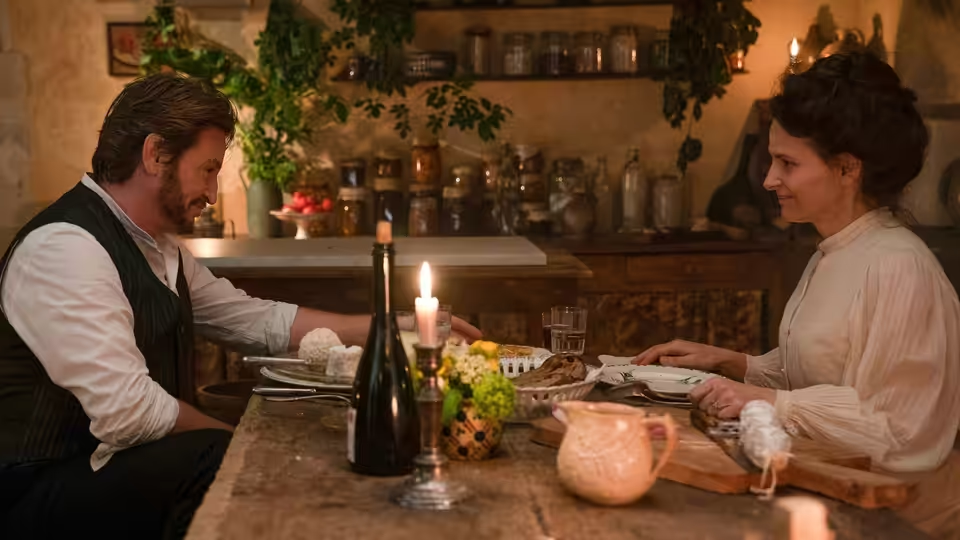
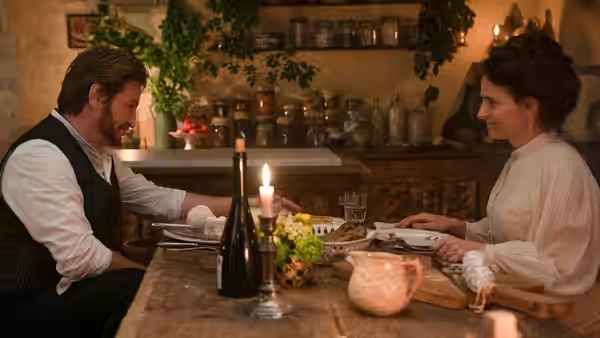
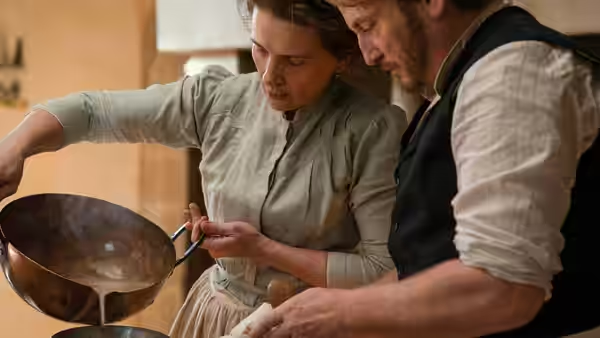
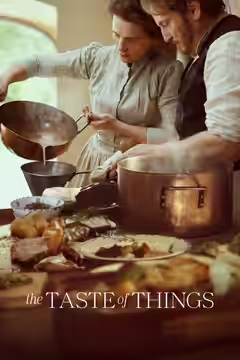
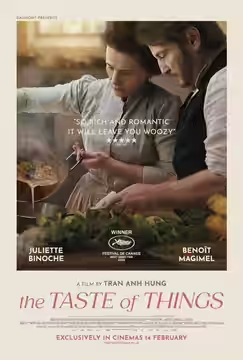
The Taste of Things opens in a kitchen and stays there for the best part of forty minutes. Vegetables come in from the garden, a fish is boned, a sauce is passed through muslin, and nobody says much. Trần Anh Hùng, adapting Marcel Rouff’s novel, is showing us how the film will go. Dodin Bouffant (Benoît Magimel) is a gourmet with a country house in late nineteenth-century France; Eugénie (Juliette Binoche) has cooked for him for twenty years. He has asked her to marry him more than once and she has said no. Her bedroom door is sometimes locked at night and sometimes not, and that, for a long while, is the plot.
It is a fine film, as interested in work as in love, and it asks more patience than it always repays.
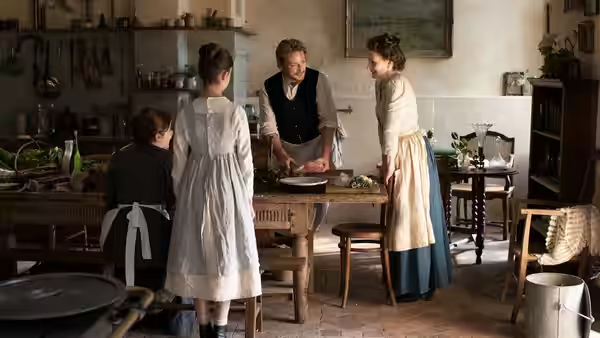
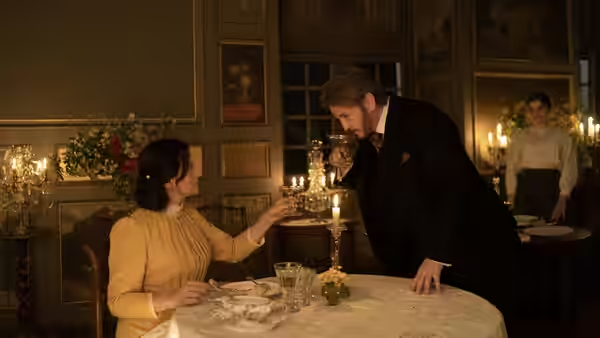
Jonathan Ricquebourg shoots the kitchen by the light through its windows, so the copper glows and the shadows are brown rather than black, and his camera moves from range to table without hurrying anyone. Mario Battistel barely cuts; a pot goes on, a pot comes off, and we have watched the whole of it. Toma Baquéni’s kitchen has a stone floor, an iron range and a wall of pans, and it looks used rather than dressed. Trần Nữ Yên Khê keeps Binoche in plain working dresses and Magimel in the waistcoats of a man who eats well. There is almost no music. We heard the fire, the knife on the board and the water coming to the boil, and after twenty minutes we noticed we had stopped waiting for something to happen.
Magimel plays Dodin as a man who has been told he is brilliant for so long that he believes it. He talks about food the way some men talk about war, and Magimel lets us enjoy it and tire of it as Eugénie does. Binoche is quieter and better. Eugénie knows what she wants from the arrangement, and when Dodin presses her in the garden she tells him, without heat, that she is happy as things are. The moment that got at us is a small one: Dodin at her door at night, trying the handle. Nothing is said and nobody is watching him. We were more moved than we expected to be by a man finding out whether a door is locked, because by then we knew what each answer would cost him.
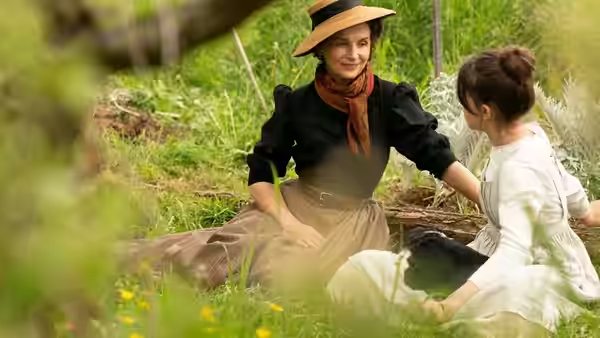
Around them Hùng arranges a small society. Dodin’s friends, Grimaud (Patrick d’Assumçao), Rabaz (Emmanuel Salinger), Magot (Jan Hammenecker) and Beaubois (Frédéric Fisbach), come to eat and to talk about eating, and they are drawn broadly, as four appetites with hats. Violette (Galatea Bellugi) brings a child to the kitchen, Pauline (Bonnie Chagneau-Ravoire), whose palate earns her a place at the stove. An invitation from a prince prompts Dodin to reply with a dinner of his own built around a pot-au-feu.
The trouble is the talking, and the length. Dodin and his friends hold forth on the history of sauces and the correct order of a menu, and these are the flattest scenes; Hùng writes them as essays. The second half takes a turn we will not describe and gets talkier as it goes. At 135 minutes it is a long sit for a film in which the biggest event of the first hour is a pudding.
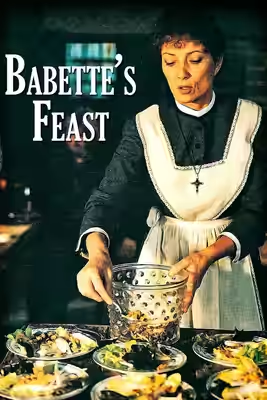
Hùng made The Scent of Green Papaya thirty years ago, another kitchen film, and this is his best work since. The obvious neighbour is Babette’s Feast, which most critics have reached for, and the comparison holds: both are about a woman whose gift is spent on people who do not fully see it. The reviews so far are close to unanimous; the one or two dissenters find it handsome and slight, and we understand the complaint without sharing it. The feeling is there, in the doors and the garden, if you wait for it.
Eat before you see it, and accept that whatever you eat afterwards will disappoint you. The 12A certificate is honest: nothing happens that could not be shown to a child, and a great deal happens that a child would find unbearably slow.