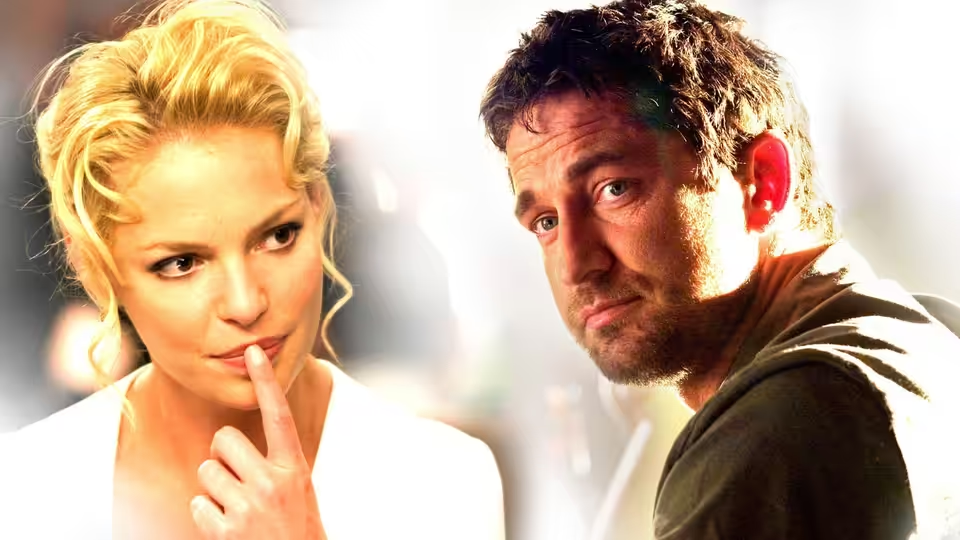
Heigl and Butler are better company than the film deserves, and John Michael Higgins and Cheryl Hines steal it from the anchor desk. But the script thinks a career woman’s problem is her career, and most of the dirty jokes land with a thud.
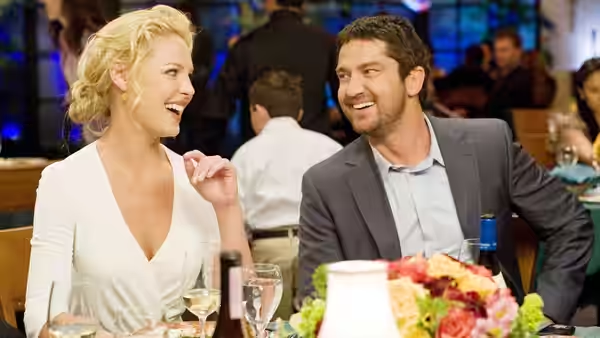
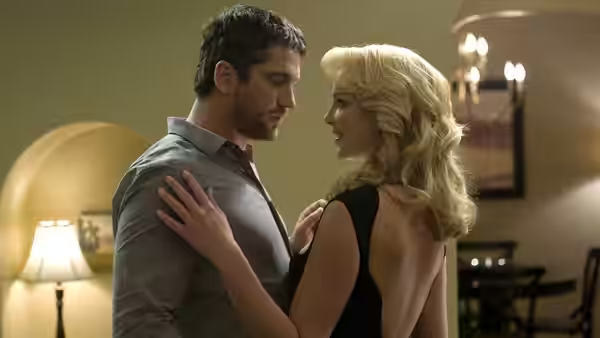
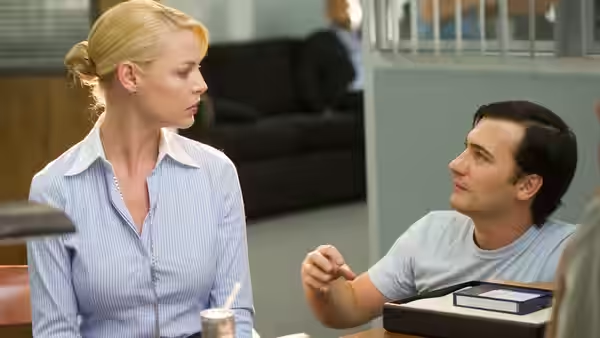
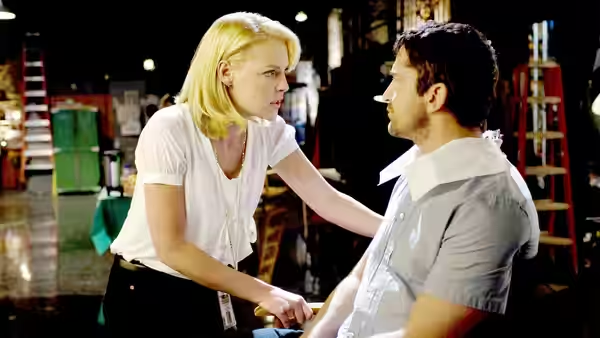
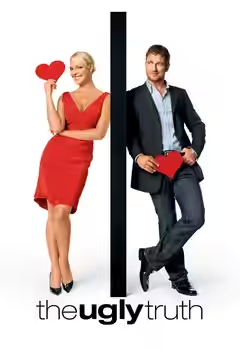
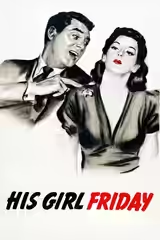
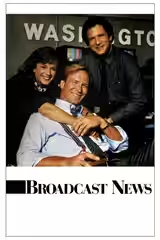
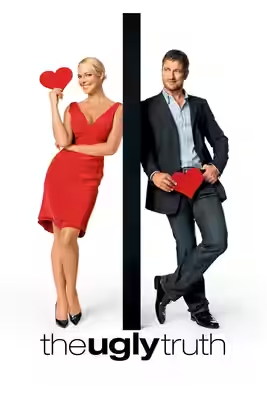
Robert Luketic’s film is a battle-of-the-sexes comedy of the kind Hollywood made in the 1940s, with the lights turned up and the talk turned filthy. Abby Richter (Katherine Heigl) produces a Sacramento breakfast programme and brings a printed list of requirements on dates. Mike Chadway (Gerard Butler) is hired by her station to say rude things about women to camera, because rude things rate. Nicole Eastman and Karen McCullah’s script puts a surgeon between them and runs the course you will have guessed inside 96 minutes. The two leads keep it watchable, and the script gives them less than they earn.
Butler is the pleasant surprise. He plays Mike as a man who has given this speech so often he is slightly bored of it, and the looseness suits him; he does not push for laughs, which in this film makes him almost restful. Heigl does the harder thing and plays an uptight woman as a competent one. She can hit a line, and when she is given a scene to run, a live broadcast going wrong, a date she is managing from notes, she runs it. Their best moments are at work, with him in her ear and her trying not to listen.
The anchors are better still. John Michael Higgins and Cheryl Hines play Larry and Georgia, a married couple who stopped speaking at home some years ago and are now invited to do it on air. Higgins does weary and Hines does bright, and between them they turn a handover to the weather into a divorce hearing. We laughed hardest at them, and then noticed that the film had no further use for them once the ratings had gone up.
The problem is the material around all this. The film’s big set piece is a dinner at which Abby wears a pair of remote-controlled underwear and a small boy finds the remote. We laughed, we admit it, and then felt slightly ashamed, and then watched the film take that laugh as permission to say what it likes for the next hour. What it likes to say is that Abby’s trouble is her standards and her job, and that a man who tells her so in the crudest available terms is doing her a kindness. A film can have a boor in it. This one gives him the microphone and the moral.
The craft is professional and does not help. Russell Carpenter lights everything bright and even, so the film looks like the breakfast show it is supposed to be laughing at. Missy Stewart’s newsroom is glass partitions and beige carpet, and nobody appears to work in it. Betsy Heimann does the clearest character work in the picture, buttoning Heigl into pencil skirts and leaving Butler in a jacket he has plainly slept in. Aaron Zigman’s score nudges you a beat before every joke. Lisa Zeno Churgin cuts it clean and quick, and the film does not outstay its 96 minutes, which we were grateful for and which is not much of a compliment.
Luketic directed Legally Blonde in 2001, which McCullah co-wrote, and that film got its laughs from a woman everybody underestimated while never once asking her to be less. This one asks her to be less in every scene, and then rewards her for it. The 1940s pictures it is imitating worked because both parties had something to learn. Here one of them learns nothing until the running time requires it.
Most critics landed about where we have, some kinder for Butler’s sake, and the few who hated it hated it for the right reasons. If you want ninety minutes with two likeable people and a couple of good laughs, this will do on a tired Friday, and the 15 certificate is for the talk rather than anything shown. Just do not expect it to be on Abby’s side, because it is not, and it does not seem to have noticed.