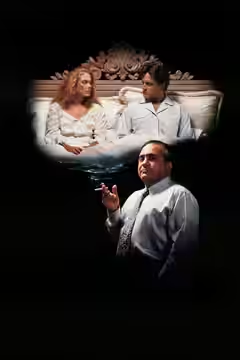
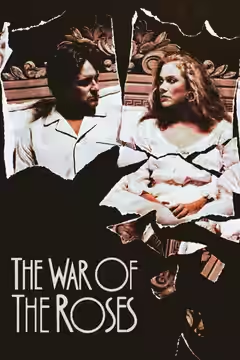
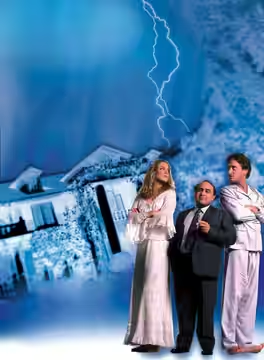
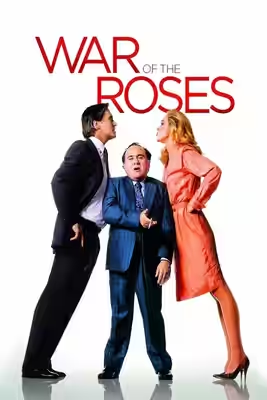
Danny DeVito’s vicious marital comedy is worth the discomfort, chiefly for Michael Douglas and Kathleen Turner. Their performances keep the hostility funny, though the relentless nastiness can leave the jokes feeling like hard work.
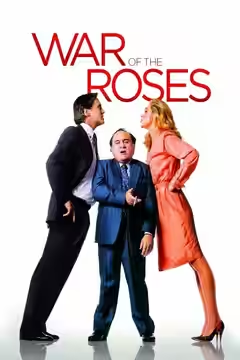
The War of the Roses is a good black comedy for anyone prepared to spend an evening with a couple behaving appallingly. Danny DeVito directs the marital conflict with a relish that can be funny and, after a while, tiring. The film is interested in the satisfaction of refusing to give way, even when giving way would make life less wretched. It is especially sharp about the importance the couple attach to their possessions.
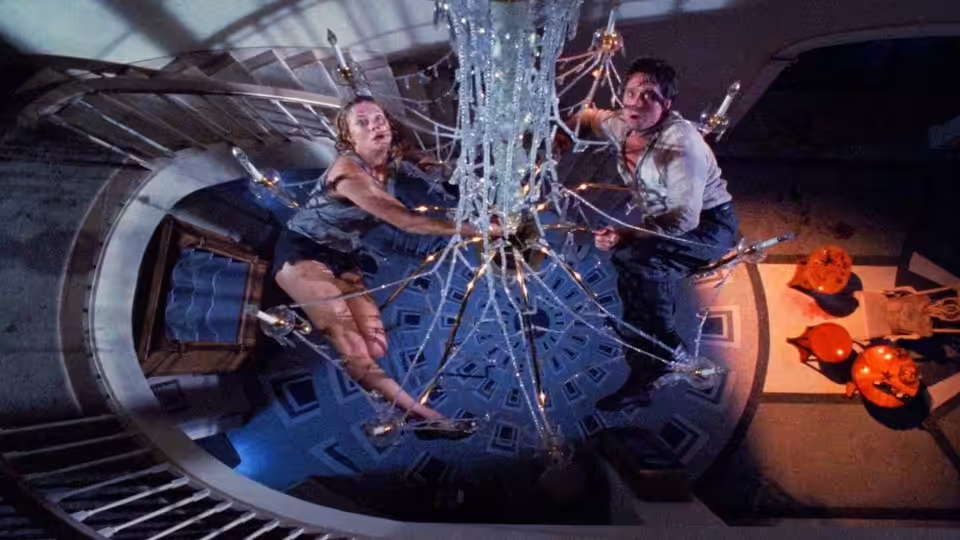
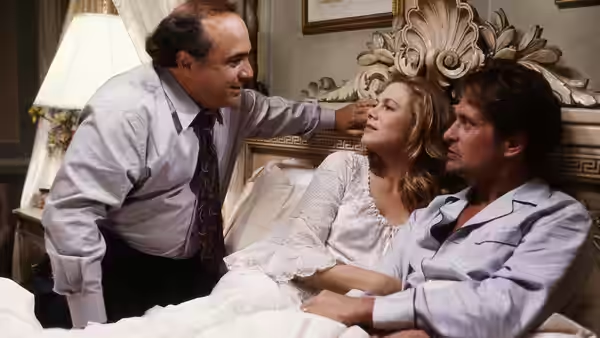
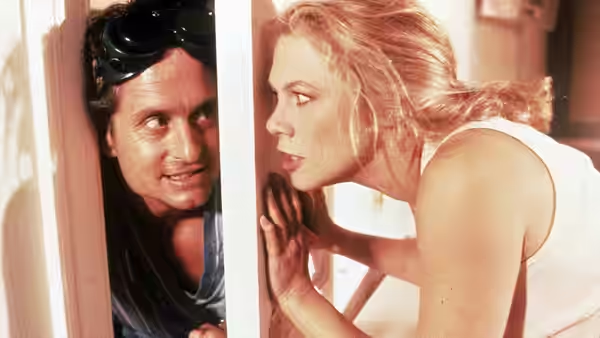
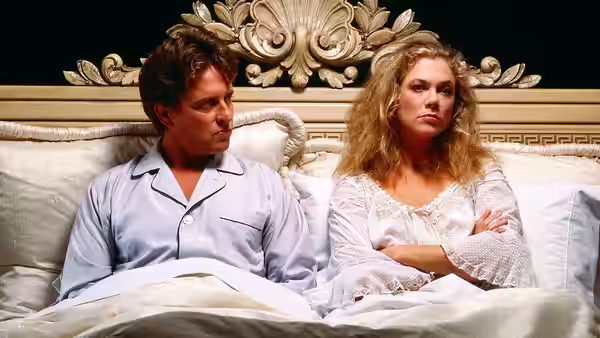
Michael Douglas gives Oliver Rose the kind of certainty that makes a disagreement feel like an insult to his standing. Kathleen Turner makes Barbara Rose a convincing opponent, with anger that has its own momentum rather than merely answering his. The pleasure is in watching two forceful performers refuse to let a quarrel become dull, even when the characters are being petty. We laughed at the spite in their exchanges, then winced at the evident pleasure each takes in causing hurt.
The screenplay by Michael J. Leeson, from the novel by Warren Adler, gives that hostility time to develop. It understands how a couple can start treating every disagreement as proof of a larger grievance, until even a small concession feels intolerable. That gradual accumulation makes the nastiness comprehensible, without requiring us to find either spouse pleasant. Once we understand the pattern, though, the continued hostility starts to feel repetitive, and we begin waiting for a change in the rhythm of the quarrels.
Ida Random’s production design gives the acquisitiveness weight: the surroundings look worth fighting over, which makes the possessiveness easier to believe. Stephen H. Burum’s cinematography treats the domestic conflict with enough visual force to stop it feeling like an argument merely recorded for the screen. We understand the attraction of what the Roses have accumulated, as well as the absurdity of placing such importance on it. The setting helps explain the behaviour.
Lynzee Klingman’s editing serves the actors well, keeping their antagonism brisk even when the writing becomes insistent. David Newman’s music is comfortable with the film’s exaggeration and helps sustain its appetite for misbehaviour. The score suits the willingness to make spite entertaining, without asking us to mistake these people for harmless eccentrics. The comic handling remains assured even when the amount of unpleasantness becomes wearing.
The greater reservation is how readily the film sometimes accepts its characters’ pleasure in cruelty. These are spouses trying to punish one another, and a black comedy about marriage needs to notice when the punishment has stopped being funny. Danny DeVito sometimes seems too pleased with how far he can push our tolerance. The performances preserve enough recognisable hurt to complicate the laughter, although the film does not always appear equally interested in that hurt.
Even with that reservation, we would recommend it to anyone who likes a comedy capable of making the laughter catch. Michael Douglas and Kathleen Turner keep the conflict watchable when the repeated unpleasantness might otherwise exhaust our interest, and the attention to possessions gives the film a useful target beyond marriage itself. Perhaps save it for an evening when the division of household responsibilities is not already under discussion.