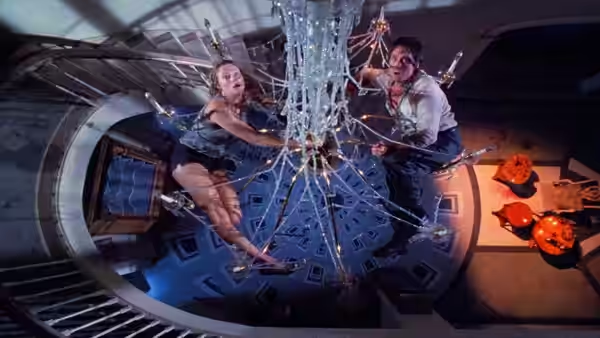
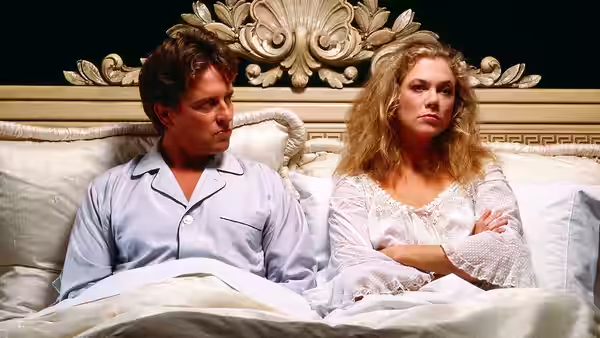
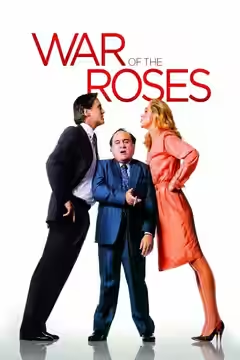
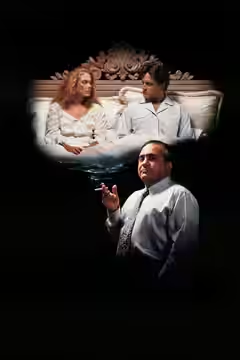
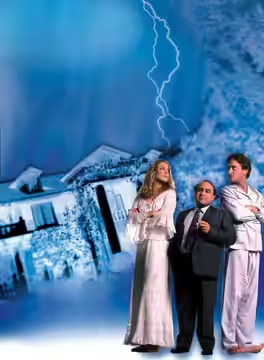
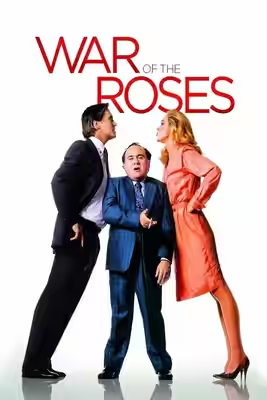
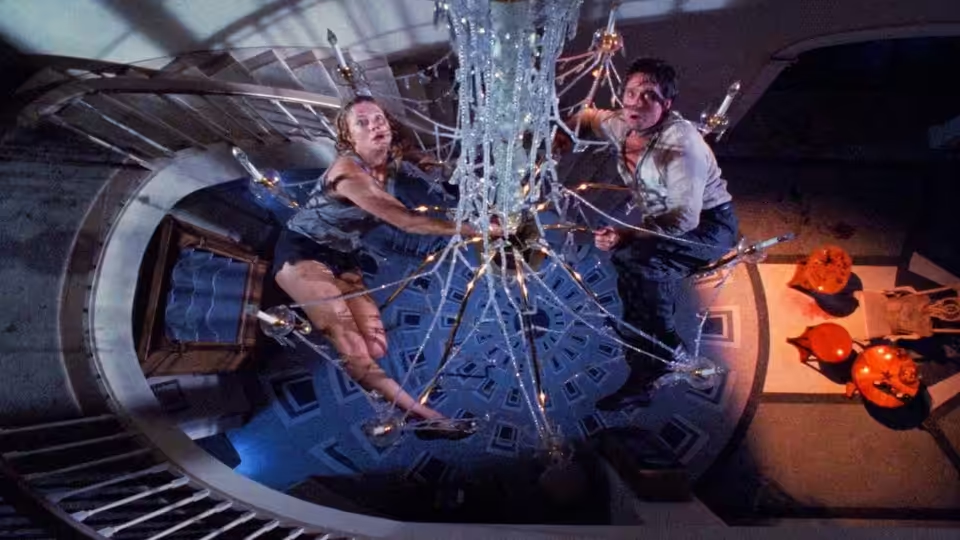
Oliver Rose (Michael Douglas) and Barbara Rose (Kathleen Turner) cling to a chandelier above the foyer
Film review

The War of the Roses

1989 · Directed by Danny DeVito · 1h 56m

In a sentenceMichael Douglas and Kathleen Turner make staying married look like a threat

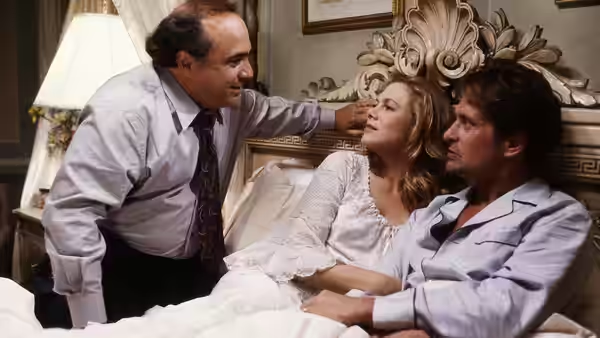
Oliver Rose (Michael Douglas) and Barbara Rose (Kathleen Turner) are a married couple whose shared life is coming apart. Their possessions become entangled with their grievances, and each wants the upper hand in deciding what happens next. Giving ground means letting the other win, something neither is willing to do. Their story also involves Gavin D’Amato (Danny DeVito). What they have acquired together gives them more to quarrel over, while resentment on both sides makes the prospect of a compromise increasingly remote.

Fi1m review

Danny DeVito’s vicious marital comedy is worth the discomfort, chiefly for Michael Douglas and Kathleen Turner. Their performances keep the hostility funny, though the relentless nastiness can leave the jokes feeling like hard work.

The War of the Roses is a good black comedy for anyone prepared to spend an evening with a couple behaving appallingly. Danny DeVito directs the marital conflict with a relish that can be funny and, after a while, tiring. The film is interested in the satisfaction of refusing to give way, even when giving way would make life less wretched. It is especially sharp about the importance the couple attach to their possessions.

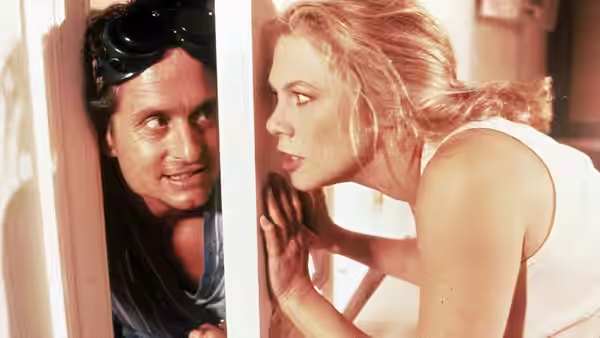
Michael Douglas gives Oliver Rose the kind of certainty that makes a disagreement feel like an insult to his standing. Kathleen Turner makes Barbara Rose a convincing opponent, with anger that has its own momentum rather than merely answering his. The pleasure is in watching two forceful performers refuse to let a quarrel become dull, even when the characters are being petty. We laughed at the spite in their exchanges, then winced at the evident pleasure each takes in causing hurt.

The screenplay by Michael J. Leeson, from the novel by Warren Adler, gives that hostility time to develop. It understands how a couple can start treating every disagreement as proof of a larger grievance, until even a small concession feels intolerable. That gradual accumulation makes the nastiness comprehensible, without requiring us to find either spouse pleasant. Once we understand the pattern, though, the continued hostility starts to feel repetitive, and we begin waiting for a change in the rhythm of the quarrels.

Ida Random’s production design gives the acquisitiveness weight: the surroundings look worth fighting over, which makes the possessiveness easier to believe. Stephen H. Burum’s cinematography treats the domestic conflict with enough visual force to stop it feeling like an argument merely recorded for the screen. We understand the attraction of what the Roses have accumulated, as well as the absurdity of placing such importance on it. The setting helps explain the behaviour.

Lynzee Klingman’s editing serves the actors well, keeping their antagonism brisk even when the writing becomes insistent. David Newman’s music is comfortable with the film’s exaggeration and helps sustain its appetite for misbehaviour. The score suits the willingness to make spite entertaining, without asking us to mistake these people for harmless eccentrics. The comic handling remains assured even when the amount of unpleasantness becomes wearing.

The greater reservation is how readily the film sometimes accepts its characters’ pleasure in cruelty. These are spouses trying to punish one another, and a black comedy about marriage needs to notice when the punishment has stopped being funny. Danny DeVito sometimes seems too pleased with how far he can push our tolerance. The performances preserve enough recognisable hurt to complicate the laughter, although the film does not always appear equally interested in that hurt.

Even with that reservation, we would recommend it to anyone who likes a comedy capable of making the laughter catch. Michael Douglas and Kathleen Turner keep the conflict watchable when the repeated unpleasantness might otherwise exhaust our interest, and the attention to possessions gives the film a useful target beyond marriage itself. Perhaps save it for an evening when the division of household responsibilities is not already under discussion.

Critical consensus AI synthesised

65
Positive
4
Mixed
4
Negative
1

The reviews lean towards qualified approval of The War of the Roses, with praise concentrated on its dark humour, controlled staging and performances. Admirers find the marital conflict wickedly funny, crediting the screenplay’s gradual escalation and Danny DeVito’s willingness to let the comedy turn vicious. Production design and cinematography also draw praise, while Douglas and Turner’s charged performances earn appreciation even from critics who dislike the film.

The spread is wide, and the chief disagreement is over whether the cruelty remains funny. Sight and Sound admires DeVito’s visual staging but finds few laughs and little reason to like the characters. Variety offers the strongest dissent, finding the misanthropy alienating despite the leads’ chemistry. Den of Geek recognises the wit and acting but raises concerns about the treatment of domestic violence and gender. The divide rests less on the film’s technical skill than on what its hostility achieves.

Los Angeles Times
8 December 1989 · Sheila Benson
90*

Benson finds the film a thoughtful, laceratingly funny black comedy that stays true to its vision. She especially praises the script’s gradual buildup and DeVito’s unflinching direction.

Read the full review →
Empire
1 January 2000 · Adam Smith
85*

The critic praises the film as a gleefully dark comedy that turns marital conflict into a merciless farce. They single out its sharply structured screenplay and striking technical craft, including the production design and cinematography.

Read the full review →
Radio Times
★★★★ · David Parkinson
80

Parkinson sees the film as a blistering, vicious comedy about acquisitiveness rather than marriage itself. He praises Douglas and Turner’s bile-filled performances and singles out the fish-stew scene as a standout.

Read the full review →
Time Out
· NF
70*

The review presents the film as an entertaining portrait of a marriage falling apart. It singles out its wicked, wince-inducing humor as a source of comic appeal.

Read the full review →
RogerEbert.com
64*

The page could not be accessed, so the critic’s verdict is unavailable. No specific praise or complaint can be verified from the supplied text.

Read the full review →
The New York Times
8 December 1989
64*

The page content is inaccessible, so the critic’s verdict cannot be established. No praise or complaint can be reliably identified from the available text.

Read the full review →

Straight answers AI written, from our review

Is The War of the Roses worth watching?
The War of the Roses is worth watching for Michael Douglas and Kathleen Turner’s combative performances, especially if we like our comedy cruel; we score it 75 out of 100. Their recognisable anger and hurt keep the marital warfare funny, though the repeated nastiness becomes tiring before the film is done.
How long is The War of the Roses, and what is it rated?
The War of the Roses runs 1h 56m. It is a comedy and drama film.
Where can I watch The War of the Roses in Saudi Arabia?
The War of the Roses is not on any streaming or rental service in Saudi Arabia at the moment. It is available in 40 other countries; change your country at the top of the page to see where. Availability is checked daily.
How violent or frightening is The War of the Roses, and is it suitable for children?
The War of the Roses carries a UK 15 certificate and is not suitable for children, with its appeal resting on adult marital hostility and spiteful comedy. We find the spouses’ pleasure in hurting one another uncomfortable as well as funny, so it is a poor choice for anyone seeking gentle humour or reassuring relationships.
How does The War of the Roses compare to Kind Hearts and Coronets?
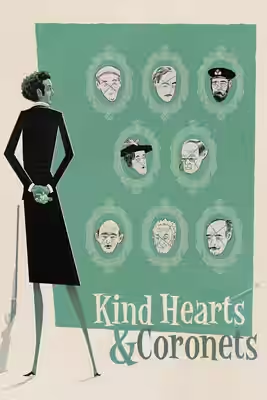
The War of the Roses is hotter-tempered and more wearing than Kind Hearts and Coronets, which we recommend as the more precise and consistently funny black comedy. Both find humour in property and appalling behaviour, but Douglas and Turner make the marital quarrels more emotionally raw than the cooler scheming over a dukedom.
Is The War of the Roses based on a true story or a book?
The War of the Roses is adapted from Warren Adler’s novel, with a screenplay by Michael J. Leeson, rather than presented as a true story. We find the couple’s accumulating grievances and attachment to possessions clear enough on screen that no familiarity with the book is needed.
What should I watch after The War of the Roses?
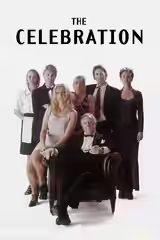
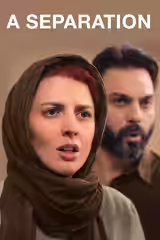
After The War of the Roses, try Kind Hearts and Coronets (1949, Fi1m 91): Property, good manners and appalling behaviour, with a cooler comic temperature. Then The Celebration (1998, Fi1m 85): Family civility collapses under sustained pressure; considerably less comfortable dinner viewing; and A Separation (2011, Fi1m 93): For marital conflict handled with greater sympathy and no easy allocation of blame.

Cast

If you liked this, try…

  1. Kind Hearts and Coronets (1949, Fi1m 91)Property, good manners and appalling behaviour, with a cooler comic temperature.

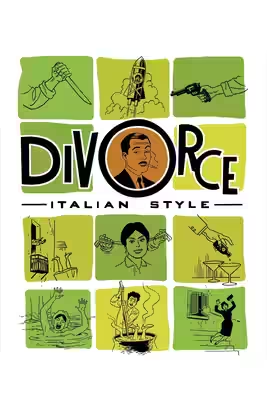
  2. Divorce Italian Style (1961) · not reviewed yetAnother marriage becomes intolerable, with social respectability making the cruelty worse.

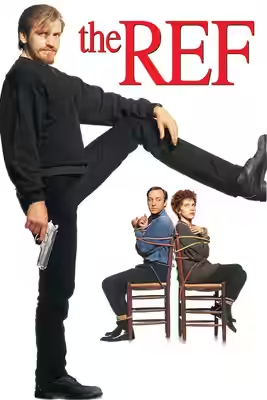
  3. The Ref (1994) · not reviewed yetA bickering couple make an armed intruder seem almost reasonable.

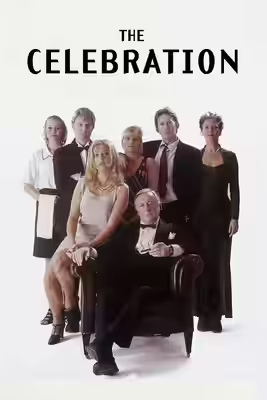
  4. The Celebration (1998, Fi1m 85)Family civility collapses under sustained pressure; considerably less comfortable dinner viewing.

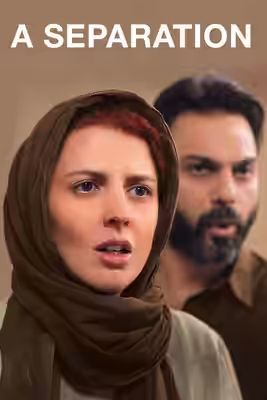
  5. A Separation (2011, Fi1m 93)For marital conflict handled with greater sympathy and no easy allocation of blame.

Free account

Know what to watch tonight

Two lists that know where things are streaming, collections you can share, your own score beside ours, and Discover that remembers what you have seen.

  • Want to see, sorted by what is streaming now
  • Seen, with your score out of ten
  • No adverts, ever