William Cameron Menzies’s science-fiction drama is worth seeing for its design, though H. G. Wells’s long explanations make it heavy going. Those interested in imagined futures will have the most patience for it.
William Cameron Menzies makes an imagined future feel substantial in Things to Come. H. G. Wells’s screenplay then spends too long explaining it. This is an imaginative, awkward science-fiction film, worth the evening for those interested in how the future has been pictured. Its ambitions deserve respect, but they do not excuse dialogue that repeatedly slows our progress through a world we would rather be allowed to examine.
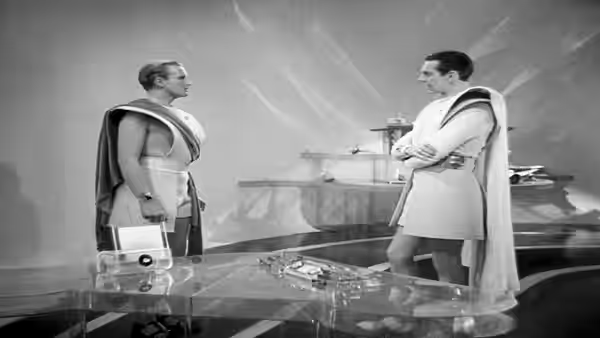
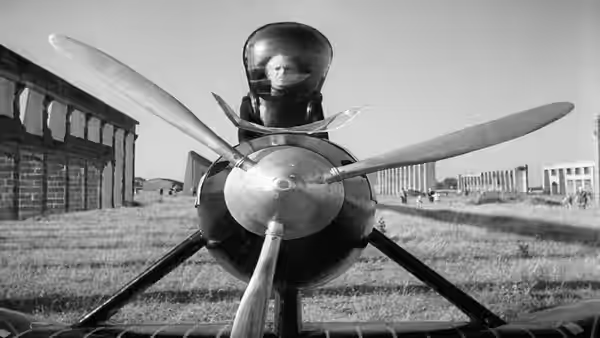
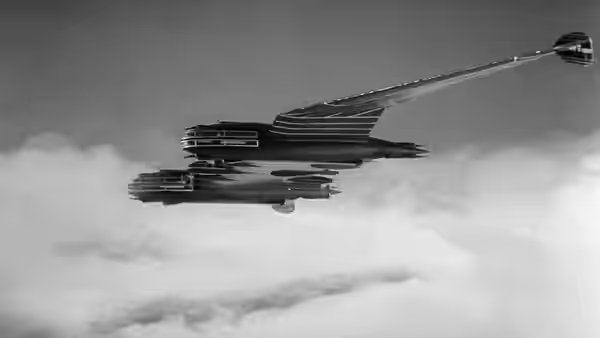
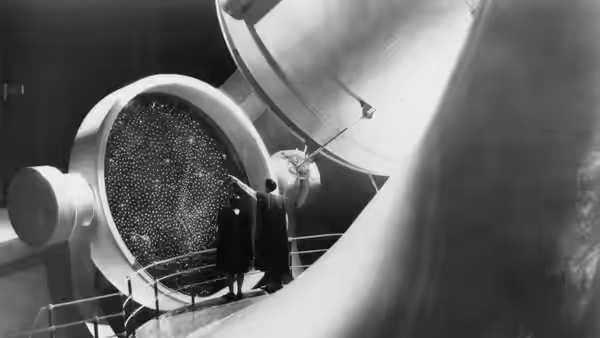
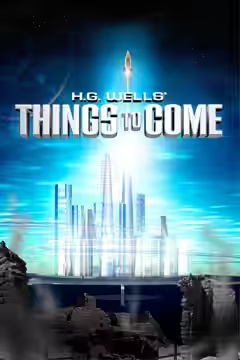
The art deco and modernist design gives the film much of its conviction. These are spaces conceived with a seriousness that makes their appearance interesting beyond the usual pleasure of unfamiliar surroundings. We were stirred by their imposing scale. William Cameron Menzies understands how architecture can hold our attention, and the film remains worth looking at even when the conversations have begun to exhaust their welcome.
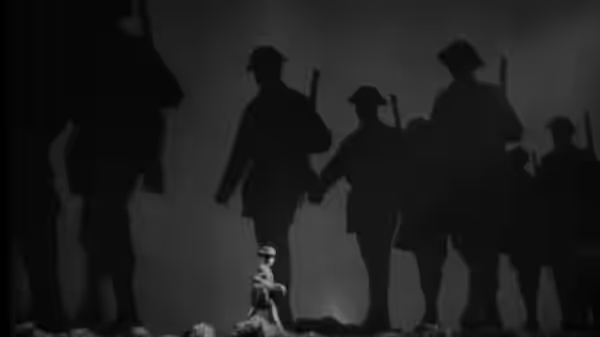
Georges Périnal’s cinematography gives that design weight and clarity, without making its grandeur feel entirely comfortable. The severity of the images suits a film so determined to be taken seriously. There is a drawback: such imposing surroundings can make the people seem secondary before the screenplay has given them much chance to establish themselves. Still, the photography sustains curiosity through passages where the dialogue does little to help.
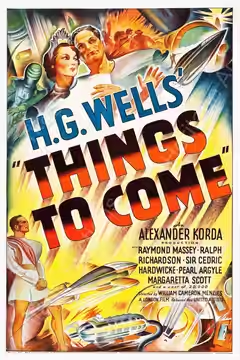
Raymond Massey, playing John Cabal and Oswald Cabal, brings the seriousness this material demands. His gravity also exposes its difficulty: solemn delivery becomes tiring when the words already sound prepared for a public address. Ralph Richardson’s The Boss offers welcome roughness, giving the film some of the human untidiness it needs. The performances are most engaging when a personality comes through strongly enough to distract us from the business of explaining an idea.
H. G. Wells has plenty of ideas, and their number is part of the attraction. The trouble is that hearing them stated does not always help us understand how they fit together. The screenplay can be intellectually muddled while sounding firmly convinced, which makes its longer explanations particularly wearing. We became impatient with those stretches because the images had already prompted questions that another speech did little to settle.
Editors Francis D. Lyon and Charles Crichton cannot entirely overcome that dependence on exposition. The film feels heavy whenever a conversation has to carry too much information, and a quicker cut would hardly solve the underlying problem. Arthur Bliss’s music supplies a welcome force, helping the scale of the images register without requiring another explanation. Its contribution matters to the pleasure of watching, especially when the dialogue has made the film feel more dutiful than curious.
Against the familiar demands of science fiction, Things to Come succeeds at making an imagined world worth contemplating and struggles to make its people equally absorbing. It takes the possibilities of the genre seriously enough to risk being ponderous, and sometimes becomes precisely that. We would not recommend it simply as an evening’s easy entertainment. Choose it when the prospect of examining a future city sounds more appealing than keeping brisk company.