François Girard’s fragmented portrait of Glenn Gould is absorbing, playful and unusually attentive to music. Colm Feore holds it together, though the reverence sometimes keeps the man at a polite distance.
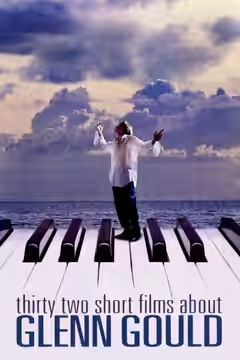
Thirty Two Short Films About Glenn Gould is an absorbing musical biography with a modest but persistent drawback: we sometimes feel that its subject is being protected from us. François Girard builds his portrait from dramatised episodes, archive material and interviews, allowing each part to offer a different impression. The music receives sustained attention of its own. We recommend it for that attention, and for the wit of a film willing to change its approach before we have settled into it.
The screenplay, by François Girard and Don McKellar, avoids turning every detail of Gould’s life into a clue. There are thirty-two pieces, so a fragment can suggest something without having to prove it or prepare the next dramatic crisis. That freedom suits a subject whose relationship with music cannot be tidied into a speech. It also gives the film a playful curiosity that is welcome in a genre prone to treating achievement as a medical condition.
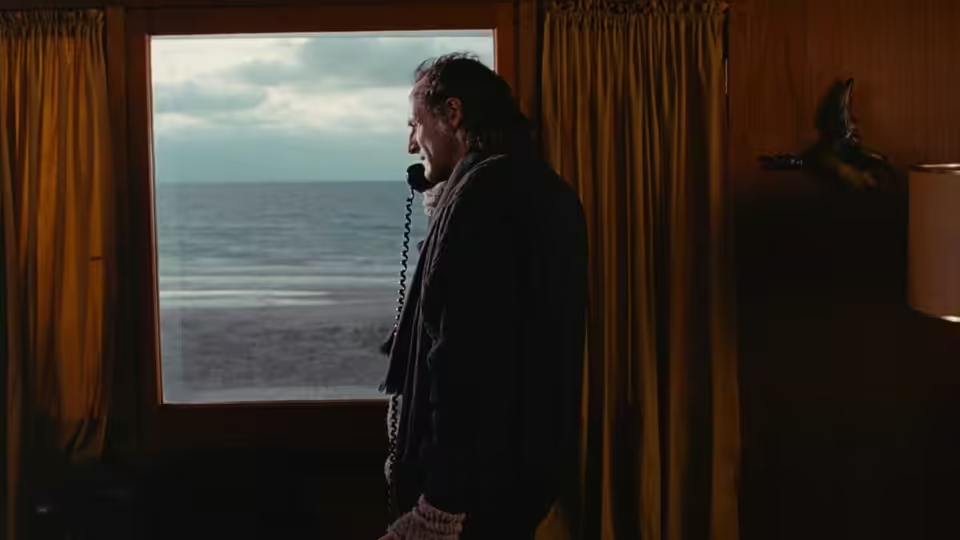
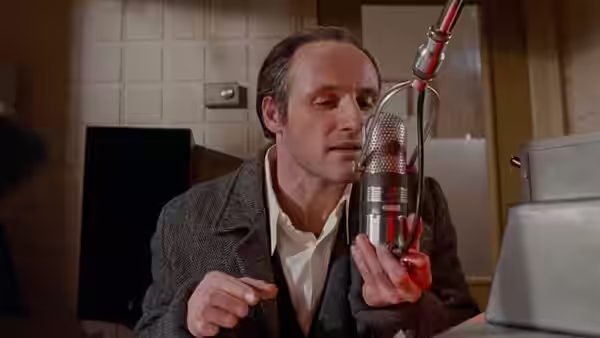
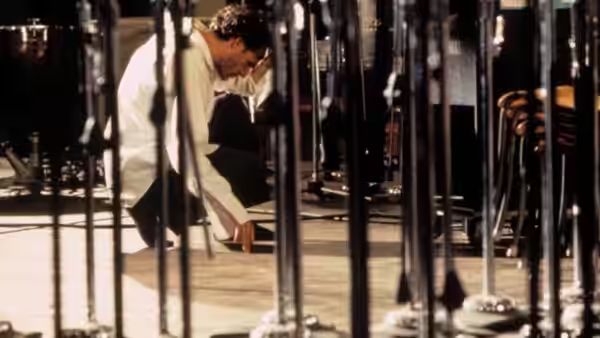
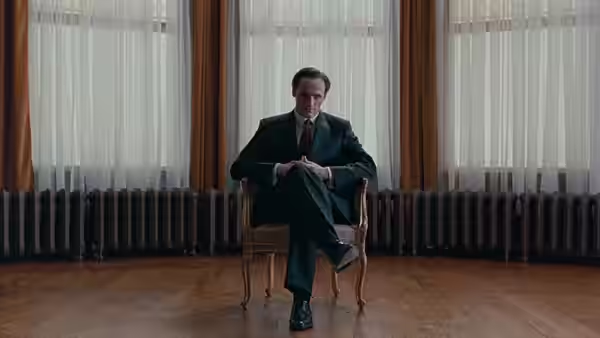
Colm Feore gives the dramatised passages the consistency this arrangement needs. He has to remain credible beside documentary material, and we accept him readily when the film returns to drama. His Gould holds our attention without demanding that every appearance add another piece of biographical information. Having an actor at the centre also matters: after a change of form, there is someone to return to, rather than another explanation of what made Gould unusual.
Alain Dostie’s cinematography gives the musical passages visual interest without making us wish the music would stop so that the story could get going again. Gaëtan Huot’s editing keeps the changes between dramatic reconstruction and documentary material from becoming a series of awkward restarts. We remain aware of the separate pieces, and that seems right for a portrait which is asking us to reconsider its subject repeatedly.
We were moved by the musical performances. The director lets us listen long enough to become interested in what is being played, without hurrying us towards another incident in Gould’s life. The layered sound also rewards attention; it gives our ears work to do while the film keeps changing its methods. There is pleasure in following the music even when the film has no new biographical information to give us.
The reservation is the film’s respectfulness. The writers are so reluctant to explain Gould that some fragments leave us looking at an admired figure when we would like a little more contact with a person. Colm Feore cannot entirely overcome that distance, however persuasive he is from moment to moment. We occasionally want a scene to continue beyond the particular quality it has introduced, giving us time to question our first impression of him.
At 93 minutes, it asks for considerably less time than its title seems to promise. There is no need to treat the separate pieces as a test, or to insist that each delivers an equally large revelation. Anyone wanting a continuous account of Gould’s life may find the arrangement fussy. Give it an evening when listening feels like something worth doing for its own sake.