Danny DeVito’s crime comedy has enough spite and good acting to survive its untidy plotting. Anne Ramsey’s domineering mother gets the laughs that the noisier action keeps chasing.
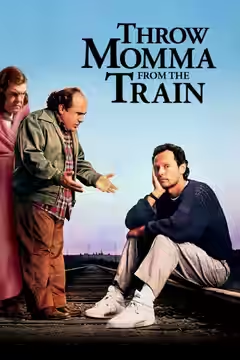
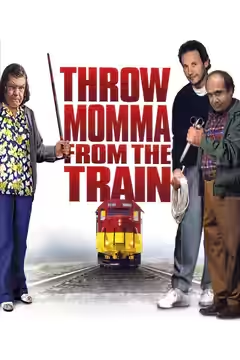
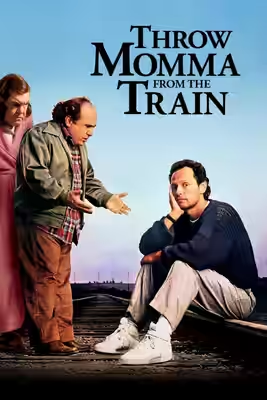
Danny DeVito’s Throw Momma from the Train is a decent, erratic black comedy that gets more out of its actors than its criminal premise. It wants the nastiness to be funny, and often manages it, though the action has a habit of becoming a scramble. The small favour Owen Lift asks of Larry Donner gives the film a promisingly awkward starting point. The difficulty is sustaining that discomfort once everyone gets busy with the complications.
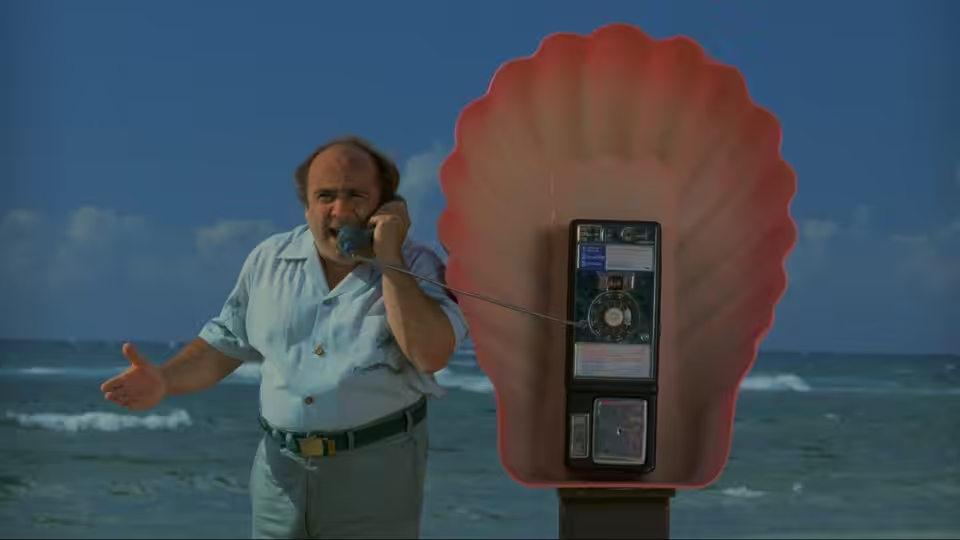
Danny DeVito plays Owen Lift with an eagerness that can make a request seem more exhausting than a demand. Billy Crystal, as Larry Donner, supplies a useful resistance, and their exchanges give the film some steadiness. Stu Silver’s dialogue is most enjoyable when it allows the actors time to irritate each other without hurrying towards another development. The writer’s block material helps: the mundane difficulty of getting words onto a page is a useful frustration for a comedy to understand.
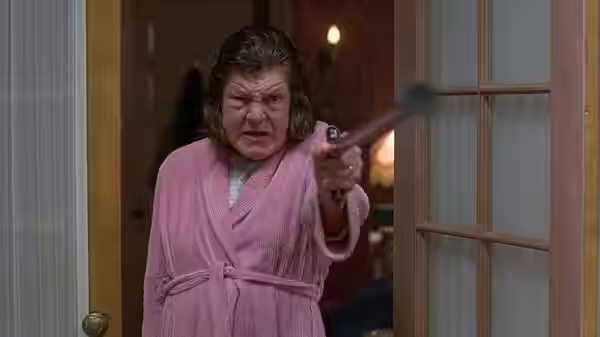
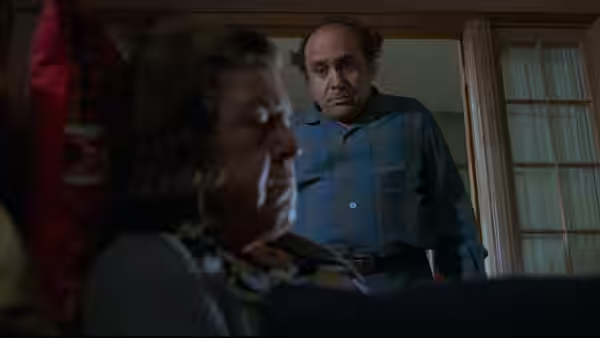
Anne Ramsey is the strongest reason to stay with it. Her Mrs. Lift is a domineering mother played with such relish that the bullying becomes absurd without losing all its unpleasantness. We laughed at the relish Anne Ramsey brings to Mrs. Lift’s bullying, then felt slightly mean for enjoying the hostility. That is a useful response for a black comedy to provoke, and the performance gets there without asking us to find the character secretly agreeable.
Barry Sonnenfeld’s cinematography suits Danny DeVito’s restless approach to visual comedy. The images feel as agitated as the people, which is effective until another piece of visual business starts competing with an actor we would rather watch. Ida Random’s production design is less insistent, giving the performances surroundings that do not demand equal attention. That restraint helps. The direction is funniest when it lets a difficult personality dominate the picture without trying to make everything around them funny too.
Michael Jablow’s editing has a harder job with the action, where briskness sometimes becomes confusion. We can feel the effort to keep everything moving, but speed does not always help us follow the joke. David Newman’s score contributes to that forward push without being the part of the comedy that stays in the memory. These passages are less amusing than the dialogue around them, although they rarely last long enough to derail the film. At 88 minutes, the unevenness never becomes a test of endurance.
The larger weakness is in Stu Silver’s handling of the dark premise. A crime comedy needs its characters’ foolishness to make the next complication seem possible, however unlikely it would be outside the film. Here, another difficulty sometimes seems to arrive simply because the story needs one. The performers remain enjoyable, but the writing does not always make their behaviour convincing, and the frantic direction makes that problem harder to overlook.
There is enough comic spite here to make the film worthwhile for those who like their farce ill-tempered. Anne Ramsey makes the weaker stretches easier to forgive, though anyone looking for a tightly worked crime plot will have more to object to. The central performances deserve the attention that the action occasionally distracts from them. Try it for the actors, with some tolerance for the commotion.