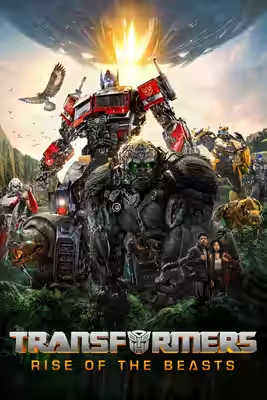
Steven Caple Jr. gives the machines a Brooklyn, a year and two humans worth watching, and for an hour this is the most likeable thing the series has done. Then the plot, the sky and the shouting arrive.
Steven Caple Jr. has been given two jobs: make a Transformers film that people who are tired of Transformers films might sit through, and start another series inside it. He manages the first for about an hour. So, since you are deciding tonight: this is the most likeable the main series has been since it began, it has two human beings in it worth watching, and it still runs out of ideas at the halfway mark and replaces them with a hole in the sky. It lasts 127 minutes and the certificate is 12A.
The first hour earns its goodwill. Sean Haworth’s Brooklyn of 1994 is stoops, a hospital corridor and a chop shop, and Ciara Whaley dresses it in the baggy denim of the year without turning anyone into a costume party. Ramos plays Noah Diaz as a man who is good at things nobody will pay him for, and he keeps his voice down, which in this series counts as a novelty. Fishback gives Elena Wallace a researcher’s impatience with people who will not read the label. They are not given much to do together, and what they are given they do well.
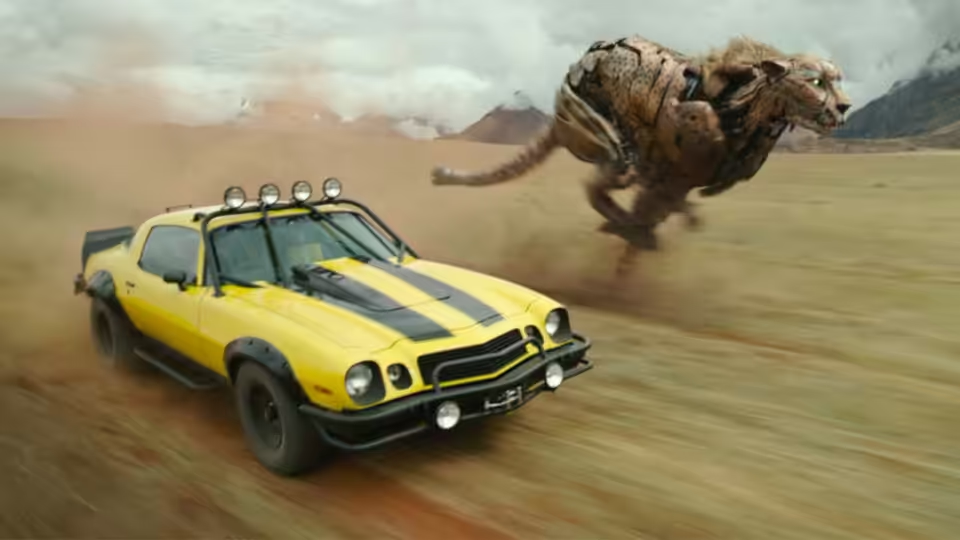
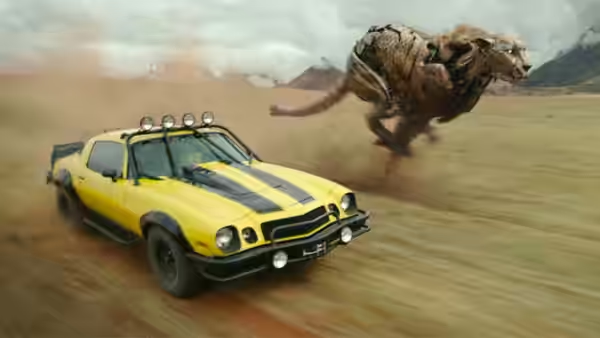
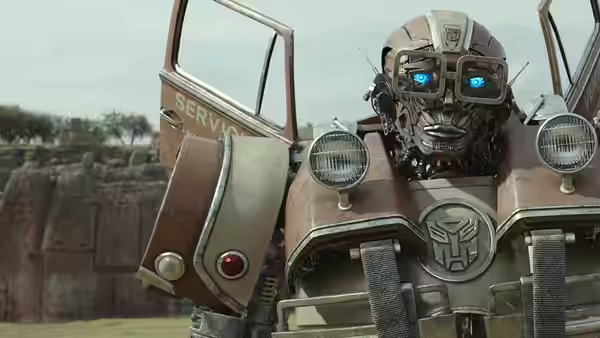
Pete Davidson’s Mirage is the best thing in it. He is a silver Porsche who talks like someone who has spent years alone with a car radio, and the script, credited to five writers, is at its loosest and best whenever it lets him and Noah argue inside a moving vehicle. We laughed, properly, at the first chase through Brooklyn, Noah in the passenger seat of a car that will not stop talking and will not let him steer, because the joke was about who was in charge rather than about metal hitting metal. William Goldenberg and Joel Negron cut these scenes on Ramos’s face rather than on the car, and for a while the film has the rhythm of a buddy comedy that happens to weigh several tonnes.
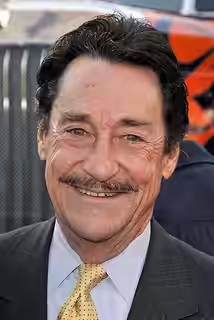
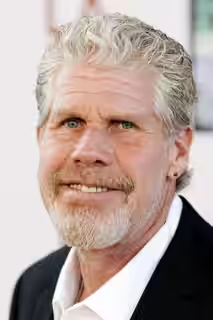
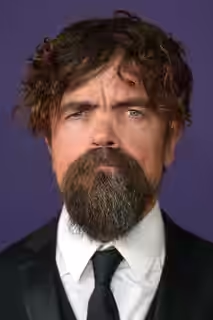
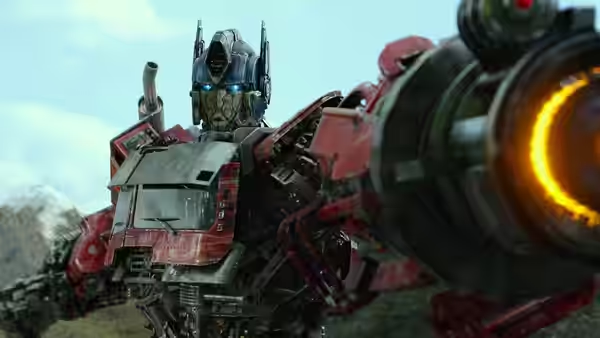
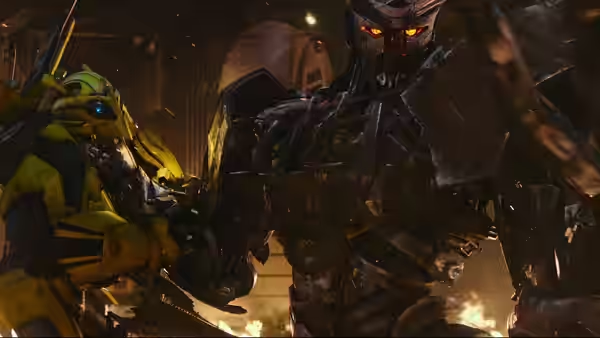
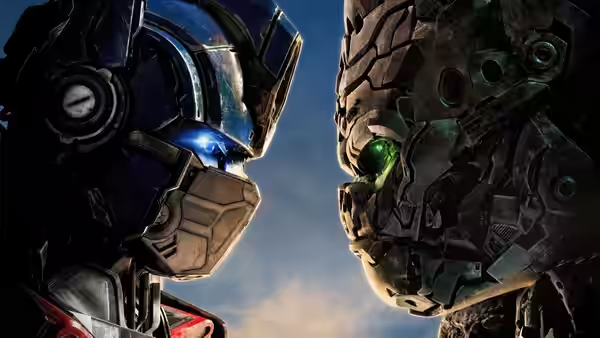
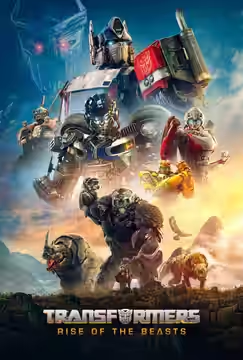
Peter Cullen’s Optimus Prime is written, for once, with a fault: he wants to get his people home and does not much care what that costs the locals, and Cullen finds a tiredness in the voice that the earlier films never asked of him. Ron Perlman gives Optimus Primal a low, patient growl, and Michelle Yeoh’s Airazor is the one machine allowed a quiet scene. Peter Dinklage’s Scourge collects the badges of the machines he has killed and likes to say so. He is the right villain for a 12A: nasty in outline, never nasty in detail.
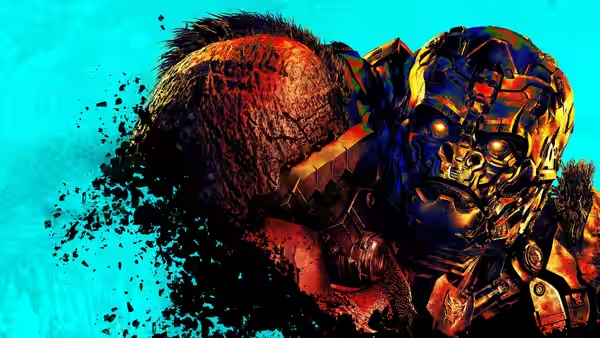
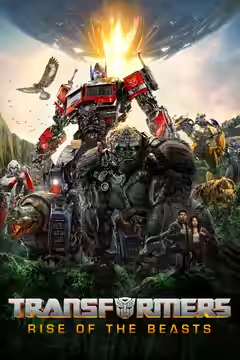
Then the plot takes over. Once everyone has been told what the artefact is for, the film stops being about anyone in particular and turns into a chase for it. Enrique Chediak shoots the Peruvian jungle in a bright, even green that never sits comfortably with the grey metal dropped into it. Jongnic Bontemps’s score brings in the choir on cue. Somewhere in the last forty minutes we realised we had stopped tracking which robot was which and, worse, had stopped minding. That is the feeling this series has spent sixteen years failing to cure, and a robot gorilla does not cure it either.
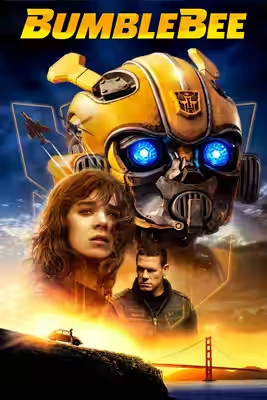
Against the series’ own standards this is a step up from the Michael Bay films, and Bay, still credited as a producer, will have to live with that. Against Bumblebee from 2018, which found a girl and a car and stayed with them, it is a retreat: that film trusted one relationship, this one juggles a dozen and drops most of them. Caple Jr. made Creed II, and the same instinct is here, to keep the camera on a man who needs a job. The trouble is that this is also a toy catalogue, and every page has to be turned.
The reviews split three ways, and we can see all three films from where we sat. Worth an evening if a talking Porsche and 1994 Brooklyn are your idea of one. At home you can stop at the hour and keep the goodwill; the second half will still be there if you want it.