Trent Reznor and Atticus Ross have written the best thing in Joachim Rønning’s third Tron film by some distance. Under it sits one good chase, a great deal of talk about what machines want, and Jared Leto not answering.
Ares (Jared Leto) is a program, made to order and sent out of the machine into the world by Julian Dillinger (Evan Peters), who owns the machine. That is the film’s one new idea, and it is a decent one: for two previous films the series asked what a person would do inside a computer, and this one asks what a computer would do out here. Joachim Rønning has hired good people to answer the question. The music is excellent, the photography is handsome, one chase is worth the ticket, and the script underneath all of it has almost nothing to say and says it several times.
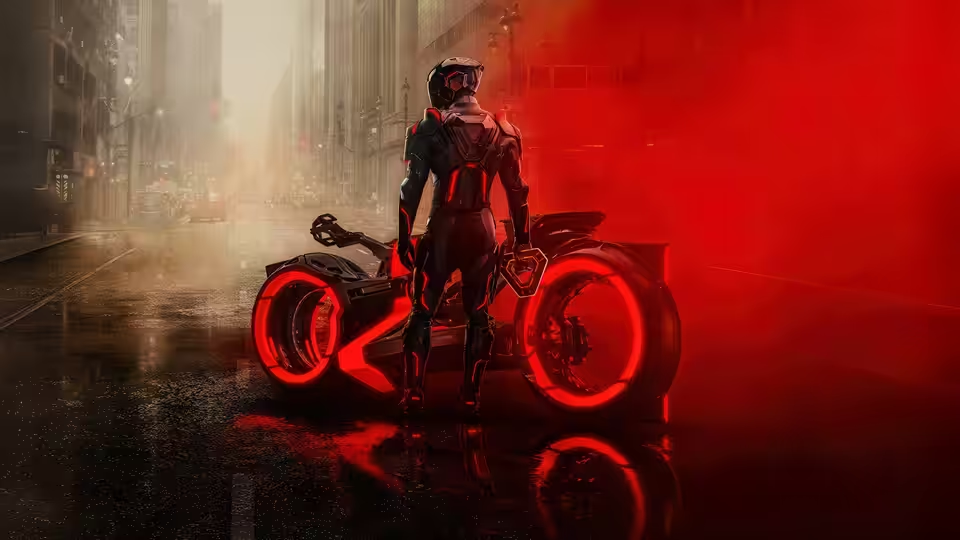
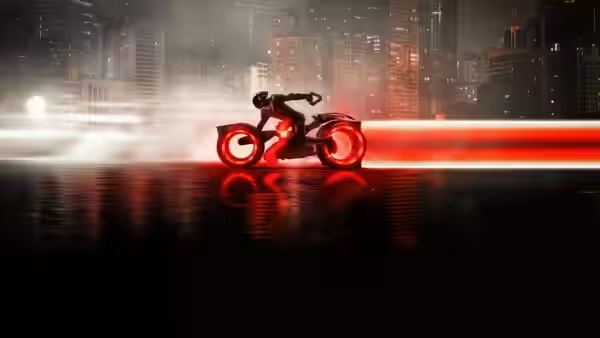
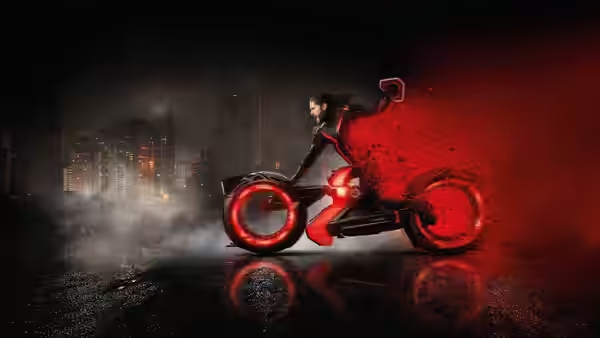
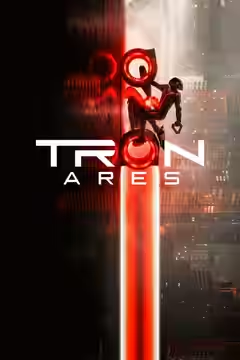
Start with the music, because everyone will. Trent Reznor and Atticus Ross, with Boys Noize, have written a score of low grinding synths and drums that sound like sheet metal being beaten flat, and it does the work of about forty pages of screenplay. When a scene has no tension the bass supplies some. Jeff Cronenweth shoots the city at night in black, wet grey and red, and Darren Gilford’s design puts the series’ light trails over ordinary tarmac, so a wall of red light stands in the road where a lorry has just been.
We sat up for that first chase. A light cycle laying a solid line across a real street, with real traffic having to make sense of it, is the kind of image this series was built for and has not managed in years, and Tyler Nelson cuts it clean enough that we always knew where the bike was. Then it ends, and the film goes indoors, and we waited the better part of an hour for it to happen again. By the time it did we were bored, and then faintly cross about being bored, because every time the drums came back in we could hear what the film had been meant to be.
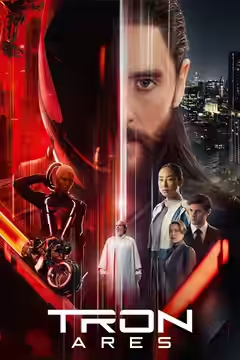
Leto is the other problem. Ares is supposed to be a soldier discovering that he has feelings, and Leto plays him as a man who has been told to look serene and is doing his best. He murmurs. He gazes at things. Some critics found this restful; we found nothing behind it, and a film about a machine learning to want needs an actor who can show wanting. Greta Lee, as Eve Kim, does the work of reacting, explaining and running, and she is the only person on screen who seems to be in a hurry. Peters plays Dillinger as a rich boy who has never been told no. Gillian Anderson gets two scenes of cold disappointment as Elisabeth Dillinger and plays them well. Jodie Turner-Smith’s Athena is given a weapon and a stare.
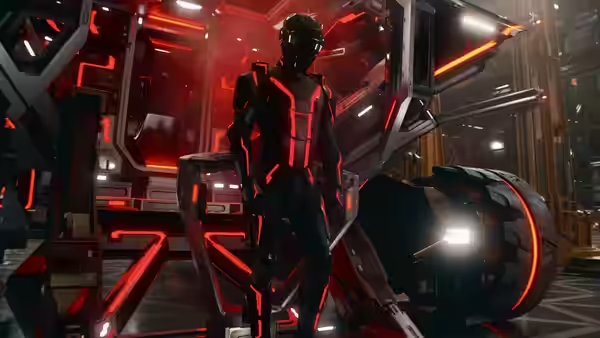
Jesse Wigutow’s screenplay, from a story by Wigutow and David DiGilio, has the idea and then explains it. Characters say what the film is about, and the ideas are the ones every film about artificial minds has had for a decade: can a made thing choose, does it deserve to. Frankenstein is invoked, more than once. There are no jokes to speak of, which in a film about a glowing man on a motorbike is a strange choice. Christine Bieselin Clark and Alix Friedberg’s suits are sleek and armoured and look as if they weigh something, which helps.
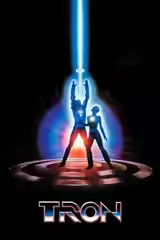
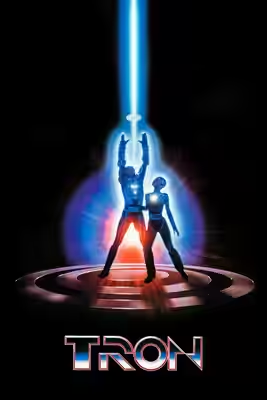
Against the series’ own standards it sits about where you would guess. Steven Lisberger, who directed Tron in 1982 and produces here, made a film that was thrilled by a toy nobody had seen before. Tron: Legacy in 2010 had Daft Punk and not much else. This one has the better score of the two and the same shortage of people. Jeff Bridges returns as Kevin Flynn, and we will not say how or for how long; the film is pleased to see him and, for a few minutes, so were we.
Most critics have landed near us, and the reviews split wide on either side, which is what happens when a film’s best and worst departments are this far apart. If you go, go to a cinema with speakers that can take it. At home the chase shrinks and the talking grows, and you will find yourself watching a fine album with a film attached. It runs 119 minutes and is a 12A, which is about right; nothing in it would frighten anyone, including its villain.