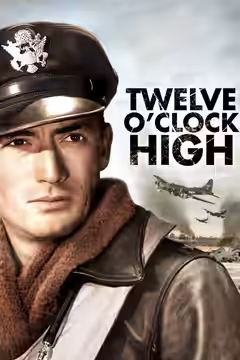
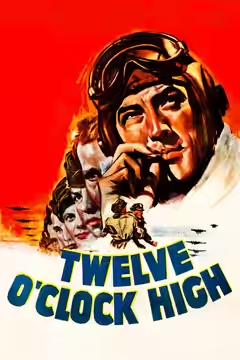
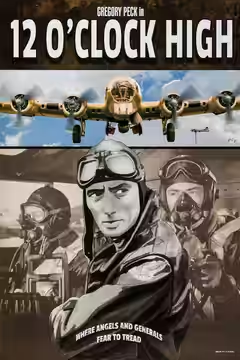
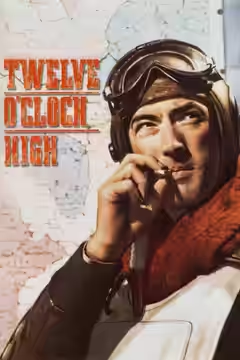
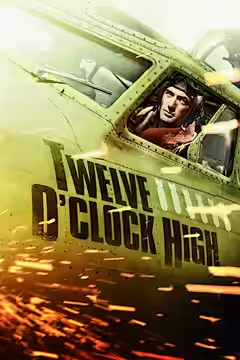
Henry King’s account of a bomber group and the man sent to break and remake it is hard, talkative and mostly right. Gregory Peck plays command as a job that eats the person doing it; the combat footage is real, grainy and often does not match.
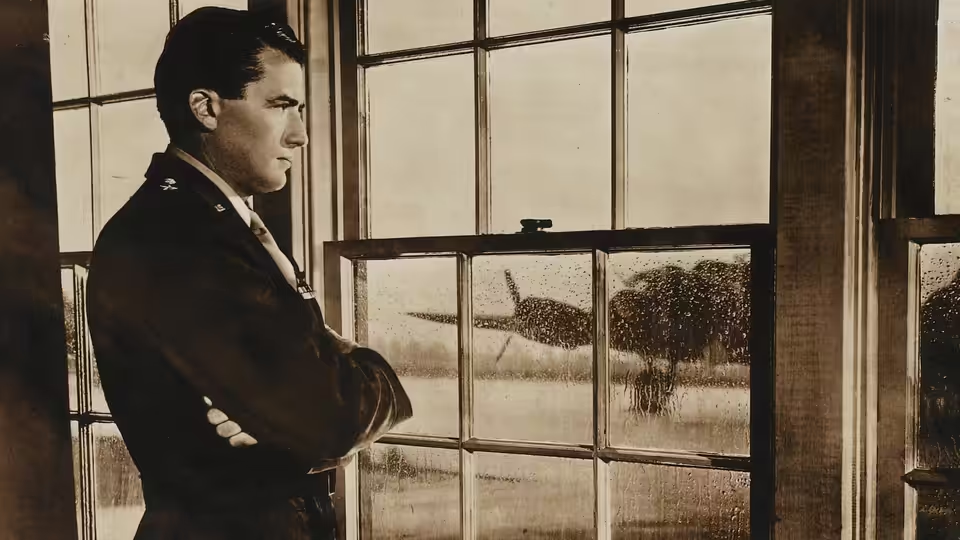
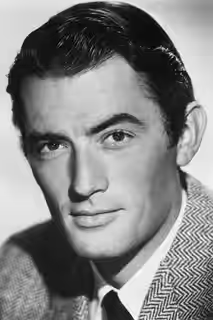
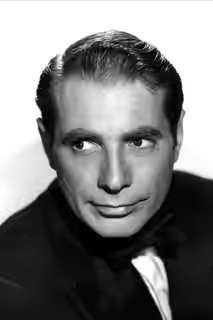
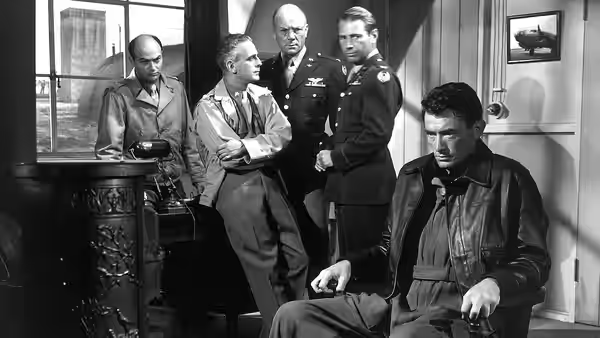
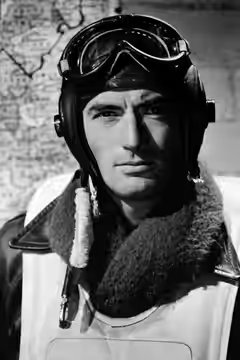
Henry King made Twelve O’Clock High in 1949, four years after the war it describes, from a novel by Beirne Lay Jr. and Sy Bartlett, who also wrote the screenplay. It is a war film in which nobody fires a shot for most of the first hour. The 918th Bomb Group, flying B-17s out of an English field called Archbury in 1942, has become what headquarters calls a hard-luck outfit. Its colonel, Keith Davenport (Gary Merrill), loves his men and is losing them anyway. Brigadier General Frank Savage (Gregory Peck) is sent to take his place, and the film is about what that costs everyone, Savage most of all.
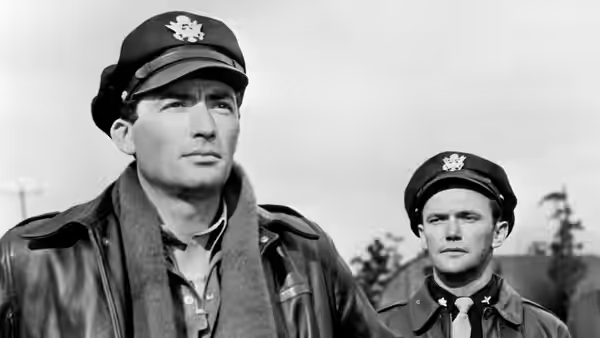
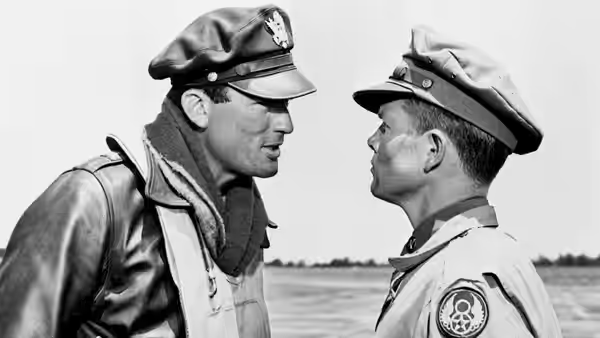
We recommend it, with one caveat we will come to. Peck plays Savage as a man who has decided to be hated and has to keep on deciding it. He does not shout much. He stands still, hands behind his back, and says the cruel thing in the voice he would use to order lunch. Early on, Savage has his driver stop the car short of the gate, gets out, smokes a cigarette and looks at the field for a long time. Then he gets back in and drives through as somebody else. It is the whole performance in one shot.
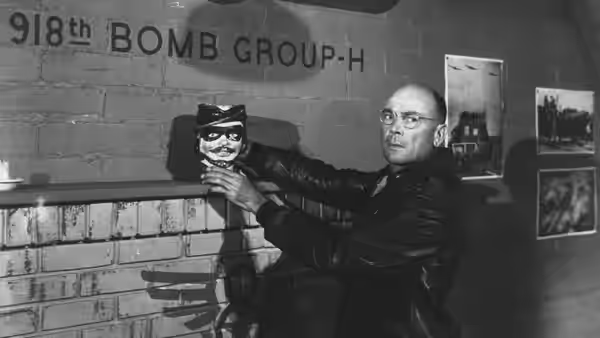
What moved us more than we expected was the frame around all this. Harvey Stovall (Dean Jagger), the group’s adjutant, older than everyone and a lawyer in peacetime, walks the empty airfield in 1949 with a Toby jug under his arm, and Leon Shamroy holds on the grass and the cracked concrete while the soundtrack brings up engines that are not there. We were got at by an empty field, because nothing in the shot asks for it. Jagger is the film’s conscience, the man who slows the paperwork when every pilot on the base asks for a transfer, and he plays it with a lawyer’s patience.
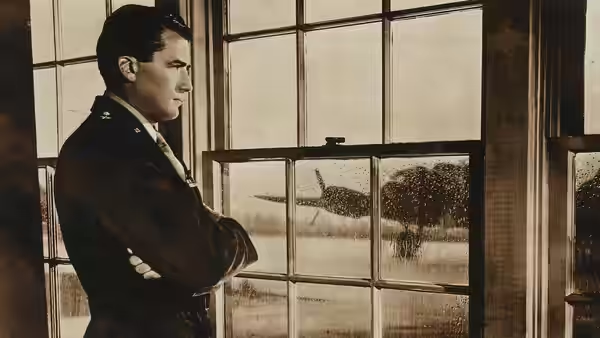
Alfred Newman writes a march for the titles and then, more or less, stops. For most of two hours the film sounds like doors, engines and men talking too quietly to be heard across a hut, and it is better for it; when the bombers are counted back in over the field, there is no music to tell us how to feel about the number. Shamroy shoots the base in flat daylight, wide and low, with the aircraft parked on the horizon like furniture.
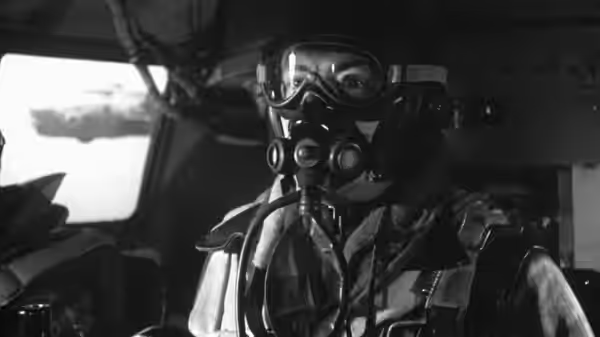
The caveat is the fighting. The raids, when they come, are cut by Barbara McLean from real combat footage, and the join shows every time. The grain changes, the light changes, and a Fortress coming apart in the sky is plainly not in the same film as the studio cockpit it is cut against. We minded less than we expected, because what is real is real, and the belly landing that opens the 1942 section is worth a hundred models.
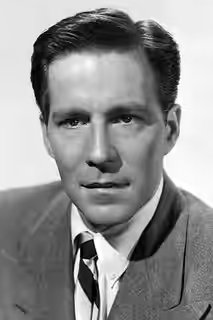
The men around Peck are drawn quickly and played well. Merrill’s Davenport is relieved of his command in a scene we found hard to watch, because Merrill plays a decent man being told his decency is the problem, and he does not raise his voice either. Hugh Marlowe’s Gately, the lieutenant colonel Savage singles out and puts in charge of the Leper Colony, has the hardest part and gets the least help from the script. Robert Arthur’s Sergeant McIllhenny, the driver who keeps losing and regaining his stripes, is the only joke the film allows itself, and it is a good one.
The second half is looser than the first. Briefing, take-off, count the planes, briefing again; the shape repeats, and the men stay the types they were introduced as. There is barely a woman in it, and nobody seems to notice. None of this stopped us. It is a film about a hard man that is honest about what the hardness does to him.
It carries a U certificate, which tells you something about 1949. Nobody bleeds on screen. Everybody is being worn away. Watch it in the afternoon with the sound up; the quiet rooms are where it works.