Masters of the Air makes aerial combat frighteningly immediate, but struggles to make its crowded cast equally distinct. The repetitive storytelling and reverent tone make this a qualified recommendation for those particularly drawn to war drama.
Masters of the Air is worth considering for its frightening aerial combat, though the drama between missions is much less dependable. Across nine episodes, creator John Orloff asks us to live with airmen whose work repeatedly puts them in mortal danger. The attacks make that danger painfully clear, but the series struggles to give everyone caught in them a distinct personality. We would recommend it chiefly to those already interested in war drama, with patience for an ensemble that takes too long to settle.
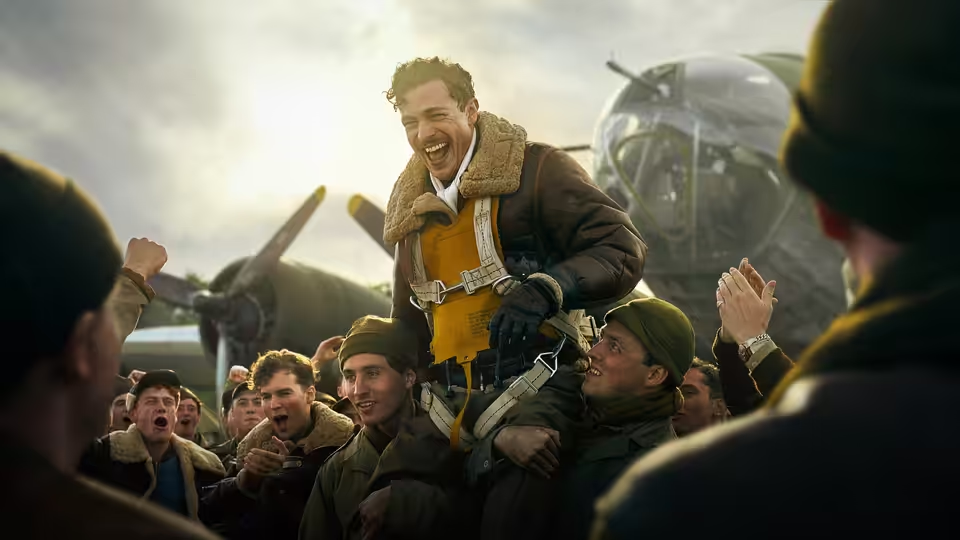
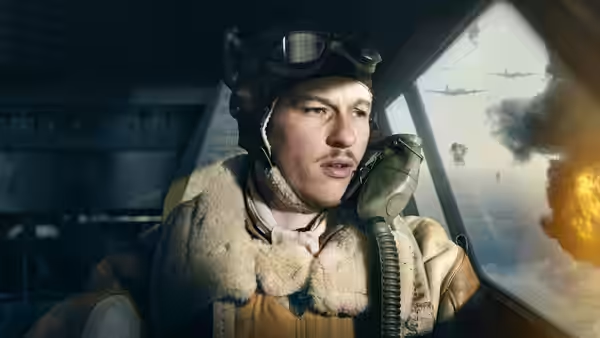
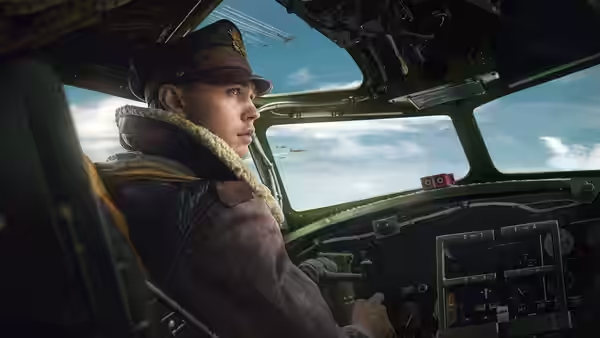
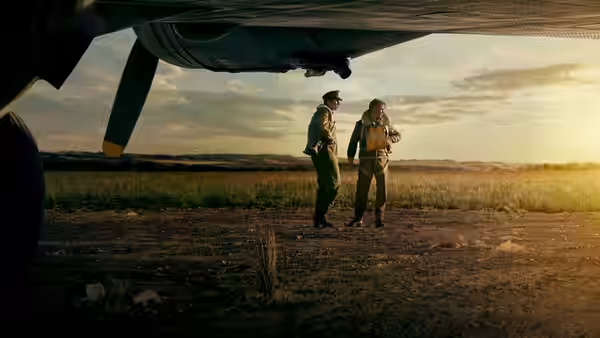
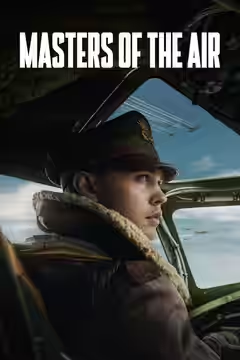
The cockpit sequences are the reason to stay. Cinematographers Adam Arkapaw, David Franco, Richard Rutkowski and Jac Fitzgerald convey confinement even during action taking place in open sky. We were frightened by the fighting inside those cramped, bloodied compartments, where the men have so little space in which to react. The close quarters and forceful sound give the combat an immediate physical threat that survives the occasional distracting gloss of the images.
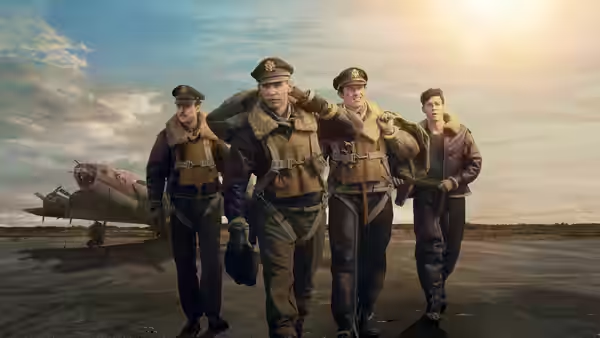
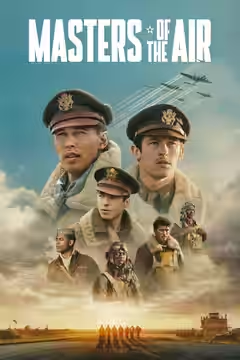
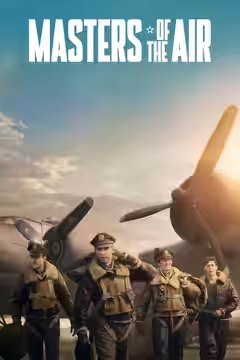
Austin Butler and Callum Turner give the crowded ensemble an initial point of focus as Maj. Gale ‘Buck’ Cleven and Maj. John ‘Bucky’ Egan. Both have the presence to hold our attention before the writing has properly established the friendship. That is useful, but the series relies on it for too long, asking us to supply affection that the early episodes have not quite earned. Anthony Boyle, as Harry Crosby, helps, although even a capable cast cannot make every supporting airman memorable.
The editing is shared by Billy Rich, Markus Czyzewski, Mark Sanger, Carmen Morrow, Saar Klein and Spencer Averick. The combat has urgency, but the repeated missions give the larger story a rhythm that becomes predictable. The opening episodes introduce more people than the writing can distinguish, so we are still placing faces when scenes require concern. A little less haste between attacks would have helped us recognise who is flying into the next one.
Chris Seagers’s production design helps enormously: the cockpits feel like working spaces that have become dangerous to occupy. Their cramped construction contributes more to the tension than the broader views of aircraft in flight. There are nevertheless stretches where the handsome presentation makes war look more attractive than the drama appears to intend. Blake Neely’s music adds to the reverence, and we sometimes wished for less encouragement to admire men whose courage is already clear.
The series becomes more affecting when it spends time on the psychological suffering beyond combat. It is easier to care about the airmen once their suffering has consequences beyond the next mission. The familiar war-drama task of making a group of uniforms into separate people begins to feel properly addressed, though some supporting characters remain indistinct. We wanted more of that attention earlier, when the sight of men under fire was doing so much of the emotional work.
We would not choose this for an unsparing examination of wartime morality. The respectful tone seldom permits much questioning of heroism, even when the fighting itself is appalling. If aerial combat is what draws you to a war drama, allow for a slower acquaintance with the men.