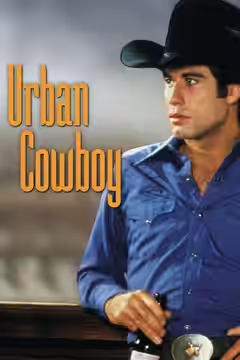
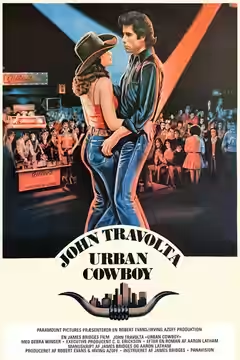
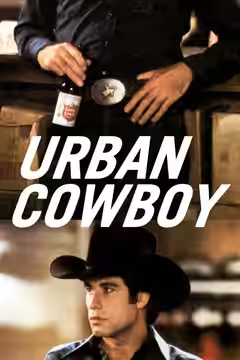
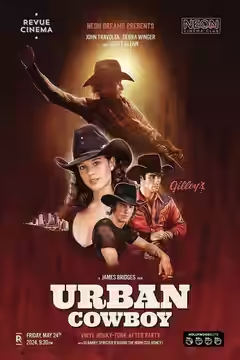
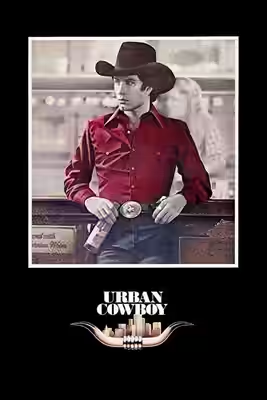
James Bridges builds a real place out of a Texas honky-tonk and its mechanical bull, then fills it with a soap opera about a sulking husband. Debra Winger is the reason to stay; John Travolta, top billed, is the reason you might not.
James Bridges directs Urban Cowboy from a script he wrote with Aaron Latham, based on Latham’s Esquire article, and the idea is a good one. The men of Pasadena, Texas, work shifts at the petrochemical plant by day and by night put on hats and boots and go to Gilley’s, a club the size of a warehouse, to be the cowboys their grandfathers were. There are no cattle, so the club buys a mechanical bull. The film runs 132 minutes and about half of it is as good as that idea deserves. The other half is a soap opera about a sulky young man, and the sulky young man is top billed.
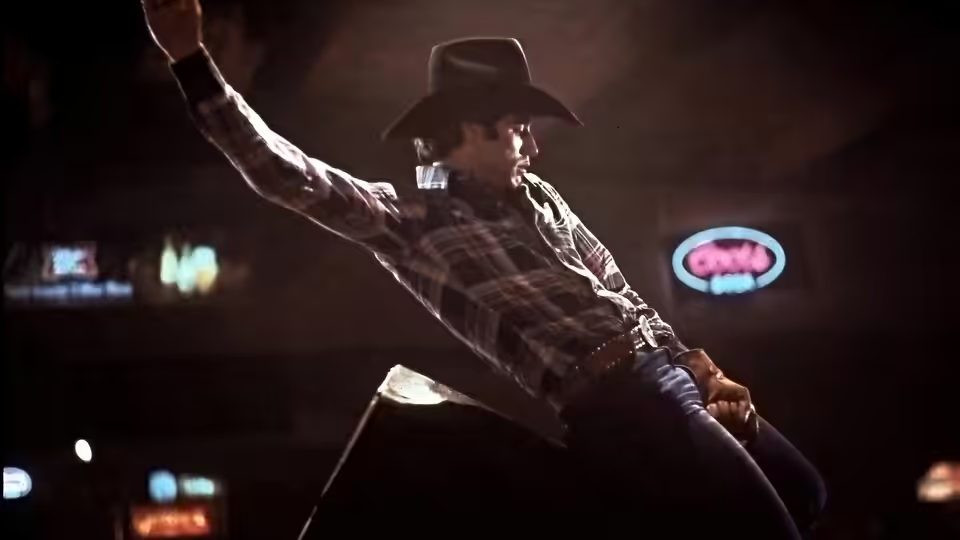
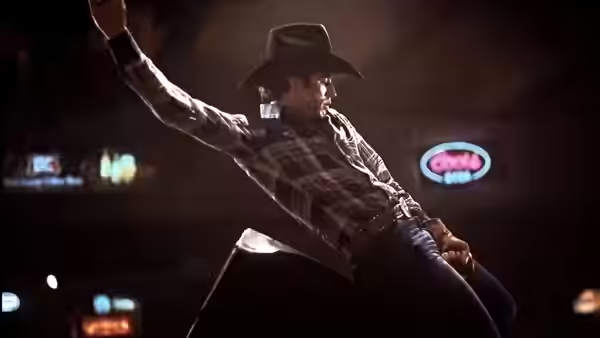
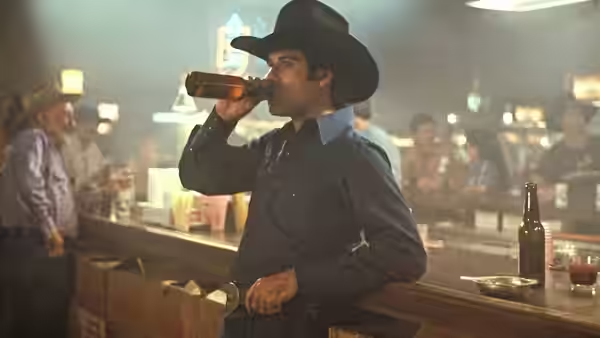
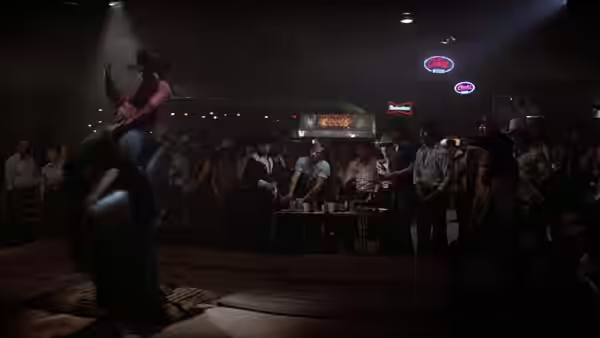
The place is the first thing you remember. Reynaldo Villalobos shoots Gilley’s in brown light and cigarette haze, neon beer signs over the bar, and he keeps the camera low enough that the hats fill the frame. Stephen B. Grimes gives the club its pool tables and its bull in a padded pen, and gives Bud and Sissy a trailer so small that an argument in it has nowhere to go. Gloria Gresham dresses everyone in pearl-snap shirts and straw hats, and the costumes do a good deal of the work. Mickey Gilley, Johnny Lee and Bonnie Raitt play themselves on the bandstand, and David Rawlins cuts the dancing to the band’s tempo and lets whole verses play. For long stretches the film is simply a good night out.
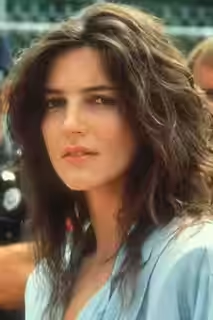
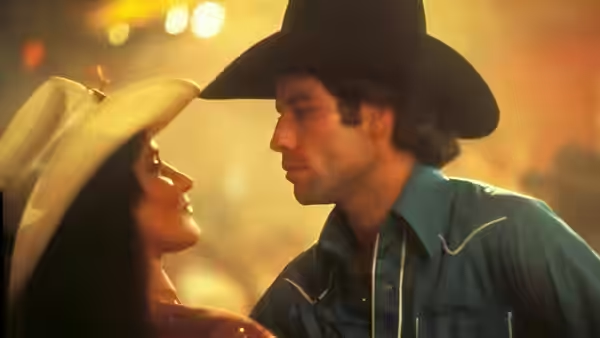
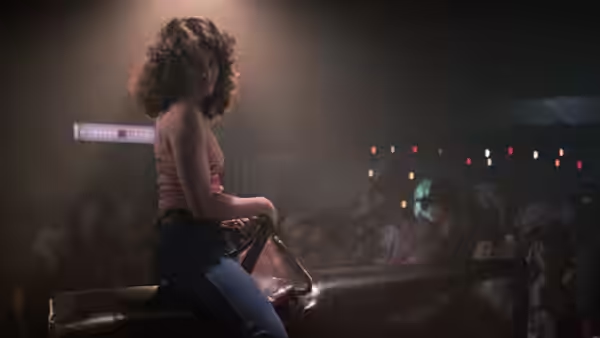
Debra Winger is the second thing you remember, and she is better than the film. Sissy asks Bud on their first meeting whether he is a real cowboy, and Winger plays it as a dare rather than a chat-up line. She plays the marriage the same way. When she first climbs onto the bull and rides it slowly with the whole club watching, we sat up and forgot the plot entirely; it is the one scene in which the film seems to know what its machine is for. Bridges and Latham then spend an hour making her pay for it, and we minded.
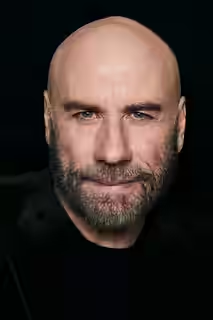
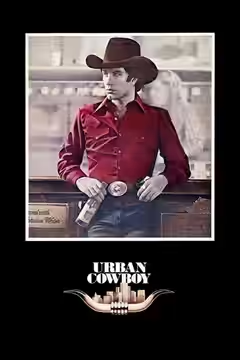
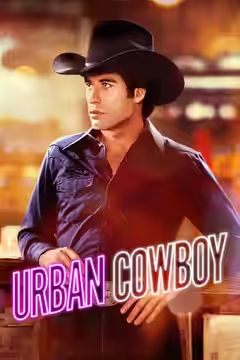
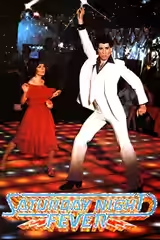
John Travolta is the problem, and not all of it is his fault. Bud is written as a man who cannot say what he feels and hits things instead, and Travolta plays him with his jaw set and his eyes down. In Saturday Night Fever (1977) the dancing told you everything the character could not. Here the bull is meant to do that job and does not, because staying on a machine for eight seconds tells you only that a man can stay on a machine. He is good on the dance floor, where he loosens and grins, and a blank nearly everywhere else. The script asks him to do something ugly early on and expects us to go on rooting for him, and we did not.
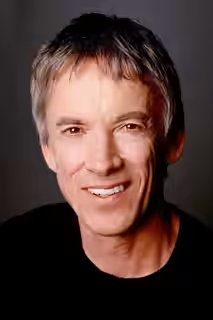
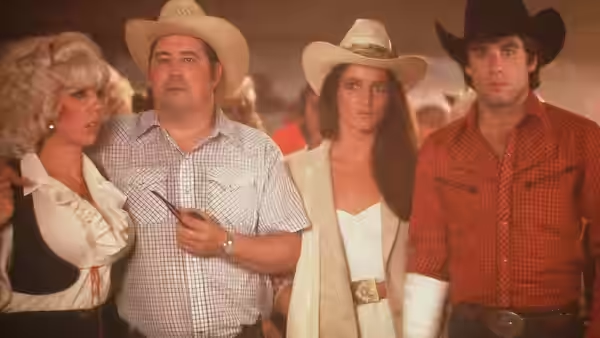
The rest of the cast is dealt out as plot. Scott Glenn’s Wes, fresh out of prison and the only man who can ride the bull properly, is lean and dangerous and given about four lines. Madolyn Smith Osborne’s Pam is a rich girl in a good coat who exists to make Sissy jealous, and the film barely pretends otherwise. Barry Corbin’s Uncle Bob is the warmest thing in it, a man who takes his nephew in without making a speech of it. Brooke Alderson’s Aunt Corene has a kitchen and not much else.
The second half takes turns we will not describe, except to say that they are the ones you would guess, and that the film believes an argument about pride can be settled on a bull, which we do not. The harshest of the reviews we have read objects that the machine is asked to stand for manhood and cannot carry the weight, and we half agree; what spares the film is that Sissy rides it too, and rides it better. Bridges’s previous film, The China Syndrome (1979), was tight as a drum. This one wanders off, picks up a strand and drops it, and keeps going back to the club.
Watch it for Gilley’s, for the band and for Winger, who is worth the evening on her own. The marriage comes free with the ticket, and feels like it.