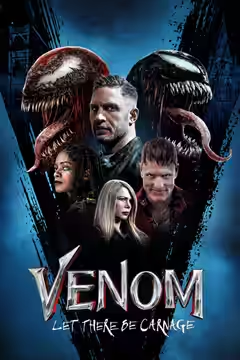
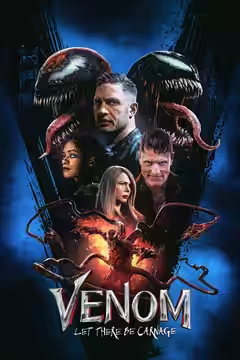
Tom Hardy makes Eddie and Venom’s quarrels intermittently worth the trouble. Andy Serkis keeps things brisk, but thin villains and muddled action leave too little around the jokes to justify an evening.
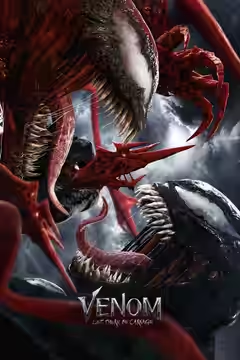
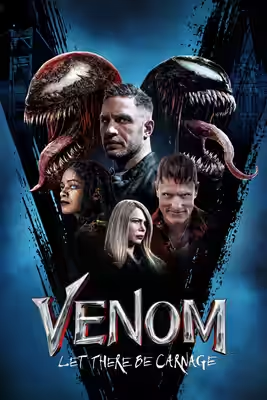
Venom: Let There Be Carnage is an intermittently funny comedy about two characters who cannot stop arguing, interrupted by action we struggled to follow. Andy Serkis understands where the laughs are and gives Tom Hardy room to pursue them. At 97 minutes, the film does not make a long evening of its modest ideas, though brevity cannot make the villains more interesting. There is enough pleasure in the quarrelling to make the rest feel like a wasted opportunity.
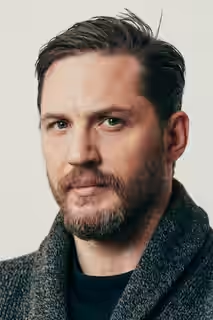
Tom Hardy plays Eddie Brock and Venom with enough distinction that their arguments can briefly make us forget we are watching one performer conduct both sides. Eddie’s exasperation and Venom’s noisy insistence are funny because each considers himself the sensible party. We laughed at their squabbling because both put such effort into making a petty disagreement sound like a serious injustice. The performance gives the relationship an affection that the dialogue would struggle to establish by itself.
Kelly Marcel’s screenplay is most comfortable when it leaves the pair to bicker, but it returns to that pleasure too often without finding much new for them to argue about. The early exchanges establish a rhythm that later scenes tend to repeat. Maryann Brandon and Stan Salfas give the comic confrontations a useful sharpness, keeping the changes of temper quick. They cannot supply the development that the writing skips, and some transitions feel as though a necessary scene has gone missing.
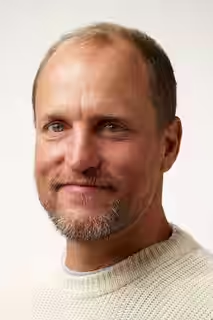
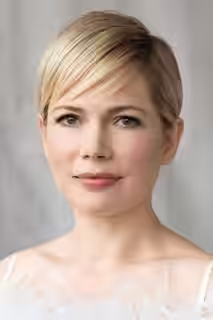
The supporting cast have less room to manoeuvre. Woody Harrelson has too little character to work with as Cletus Kasady and Carnage, and Naomie Harris is scarcely better served as Frances Louise Barrison and Shriek. Michelle Williams is similarly underused as Anne Weying, despite bringing a welcome steadiness to the exchanges. These are performers capable of making a strange situation feel inhabited, but the screenplay mostly needs them to keep it moving.
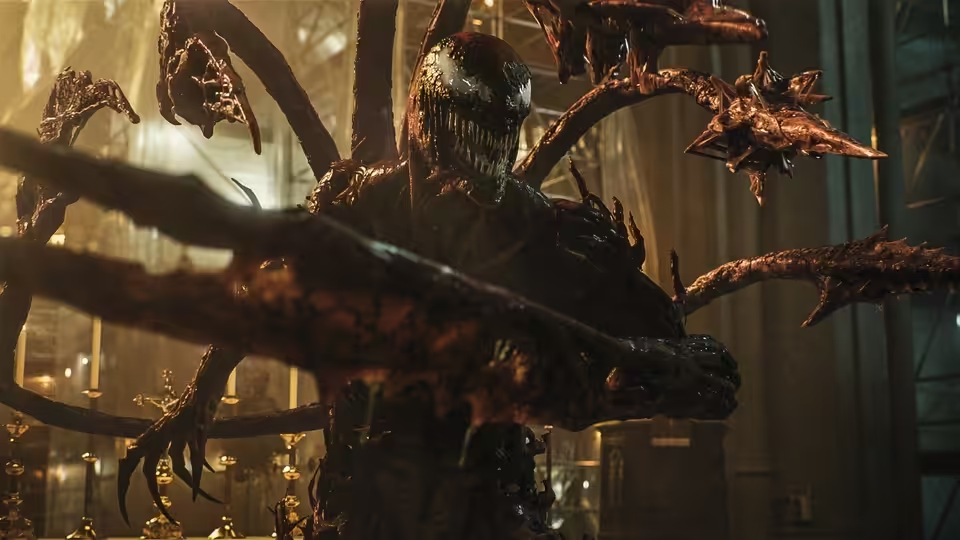
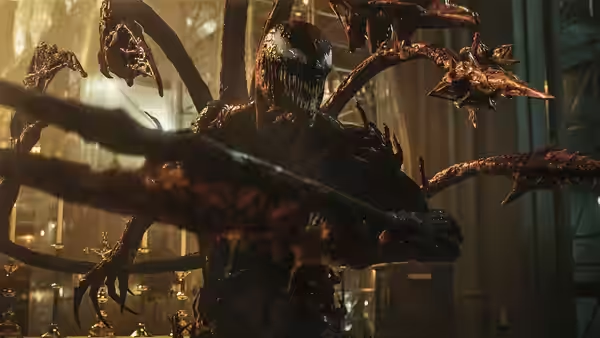
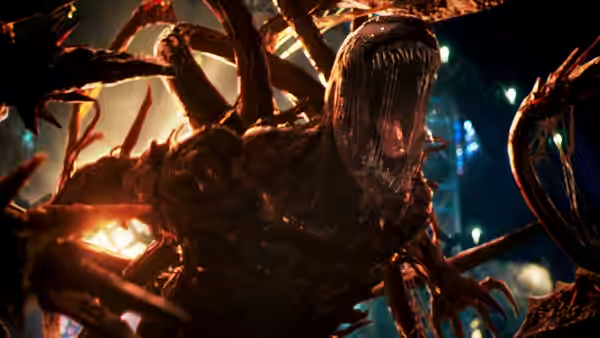
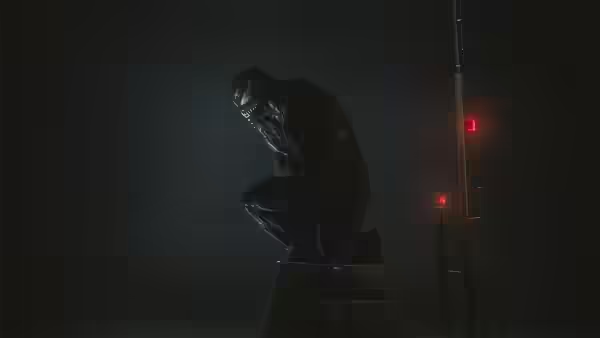
Robert Richardson’s cinematography becomes murky in the action, making it harder to distinguish the computer-generated bodies when they collide. Oliver Scholl’s production design gets swallowed up in that confusion: the surroundings rarely help us judge the space or the force of an impact. Marco Beltrami’s music supplies urgency, but does little to make these clashes feel different from one another. The result is loud and busy without being especially exciting, and the cutting does not reliably tell us where to look.
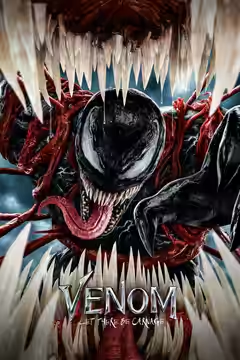
For a monster film, it is curiously reluctant to make its creatures properly unpleasant. The 15 certificate need not promise anything in particular, but the title encourages expectations of nastiness that the action does not satisfy. Nor does the film find enough inventive physical comedy to make up for that restraint. It keeps returning to arguments that the central performance has already made as funny as they are likely to get.
We can see the appeal of treating a superhero partnership as a relationship that needs counselling. The film is comfortable letting its central characters be needy and ridiculous, and that gives it a little warmth. But liking this double act means tolerating a good deal of thin plotting and unreadable combat. If Tom Hardy arguing with himself does not sound sufficient for an evening, there is little reason to stay.