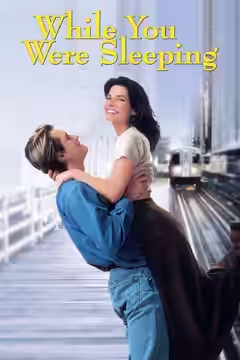
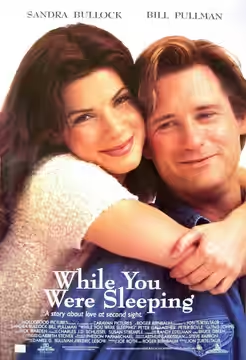
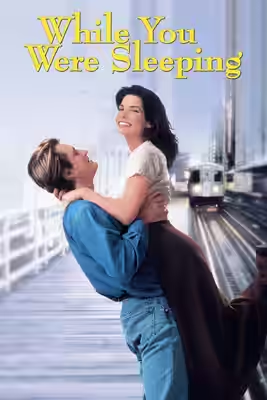
Sandra Bullock talks a lonely token clerk into a stranger’s family on a mishearing, and the film hands her a plate and lets her stay. Thin, predictable and softer than it needs to be, it is also warm company for 103 minutes.
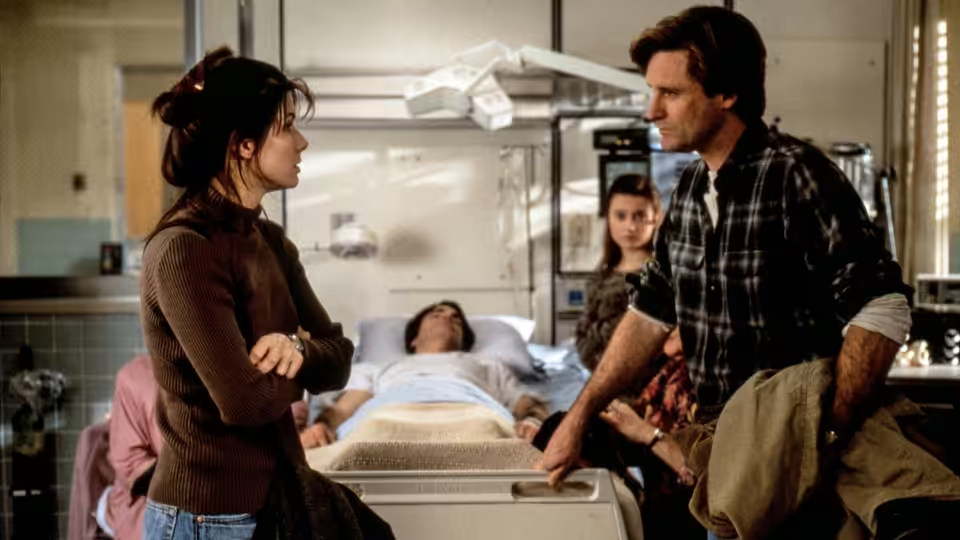
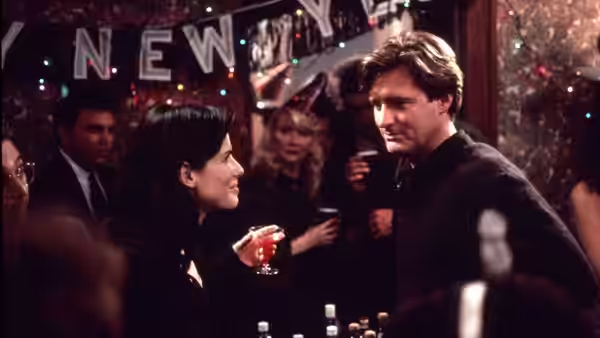
Lucy Moderatz (Sandra Bullock) sits in a token booth on the Chicago L and has fallen for a commuter she has never spoken to. On Christmas Day he is pushed onto the tracks, she pulls him off them, and at the hospital a nurse mishears a murmur and announces her to his family as his fiancée. The Callaghans arrive in a crowd and nobody has the heart to correct them. That is the whole plot, and it is not much of one. What Jon Turteltaub has built on it is a small, warm, mostly predictable comedy that is better company than it has any right to be, and almost all of the credit belongs to Bullock.
She plays Lucy as a woman who has got used to being looked past. She talks to her cat, hauls a Christmas tree in through her window because there is nobody to help her carry it up the stairs, and when the lie takes hold she keeps trying to end it and keeps being handed a plate instead. Bullock lets us see the panic and the pleasure at the same time, often in the same face. She stammers, the family takes it for modesty, and she is funny without a single joke written for her. The script by Frederic Lebow and Daniel G. Sullivan gives her situations rather than lines, which is the right call.
The Callaghans are the film’s other asset. Peter Boyle’s Ox is loud and easily pleased, Micole Mercurio’s Midge cries at everything, Glynis Johns’s Elsie says whatever arrives in her head, Monica Keena’s Mary is the only one who notices anything, and Jack Warden’s Saul, the neighbour who has been at every family dinner for decades, knows more than he lets on. The dinner scenes run three conversations at once, about the gravy, about Mary’s social life, about nothing Lucy can follow, and they are the best written stretches in the film. We were charmed, and we had not expected to be. It was Johns who did it, drifting through an argument about mashed potatoes as if she had wandered in from a different, gentler film.
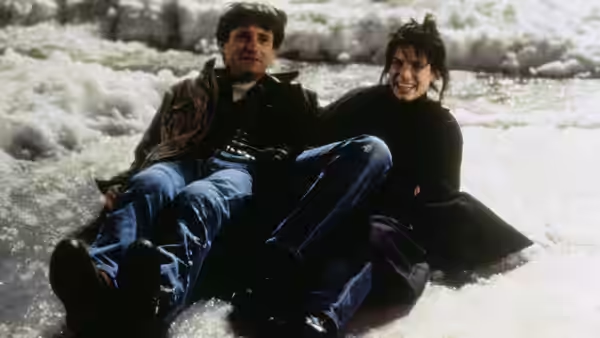
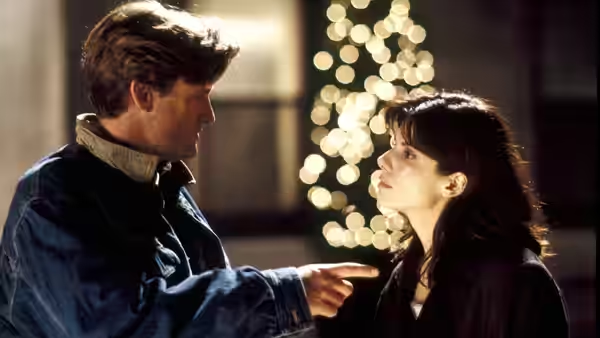
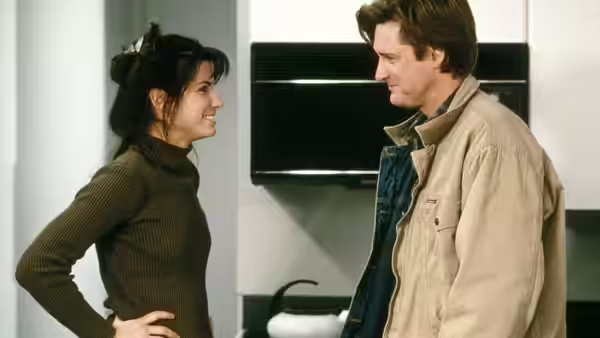
Bill Pullman plays Jack, the brother who does not believe a word of it, and he plays suspicion as curiosity, which is why the romance works. The walk home from the hospital on an icy pavement, the two of them slipping and grabbing at each other and pretending it is nothing, is the scene we grinned through like idiots and the scene the whole film exists to reach. Peter Gallagher, meanwhile, has the harder job of being handsome and unconscious, and manages both.
Phedon Papamichael shoots Chicago in winter as grey slush and yellow streetlight outside and amber lamplight inside, so the Callaghan house looks kind before anyone in it has said anything kind. Garreth Stover gives Lucy a flat with too few things in it and the family a house with too many. Betsy Cox puts Bullock in enormous jumpers and a knitted hat, which is costume as character and works. Randy Edelman’s score is the weak link: bells and strings turn up to tell us a moment is sweet when the pictures had already done it, and the film would be better with half of it gone. Bruce Green cuts the whole thing to 103 minutes without a slack scene.
The flaws are the ones you would guess. The deception needs everyone in it to be a little dim, including a hospital that admits a stranger to intensive care on her own say-so. Ally Walker’s Ashley Bacon and Michael Rispoli’s Joe Fusco Jr., the landlord’s son who will not stop knocking, exist to be obstacles and are written as nothing more. The last act does what you expect in the order you expect it, and the film knows you know. Most critics have called it sugary, and they are right; Lucy is never allowed to be anything but lovable, and a little selfishness would have cost nothing.
Moonstruck (1987) swapped a woman between two brothers with more danger in it and better food. This is the softer version, made for a sofa in December, and on those terms it does its job. Watch it with someone who has not seen it, and notice the point, somewhere around the first dinner, at which they stop minding the plot. It carries a PG and will not frighten anyone’s grandmother.