Darryl F. Zanuck’s 154-minute Woodrow Wilson biography is handsome, sincere and full of crowds, and it has decided before the first reel that its subject was never wrong. Alexander Knox is precise and likeable. We admired the making and could not make ourselves care.
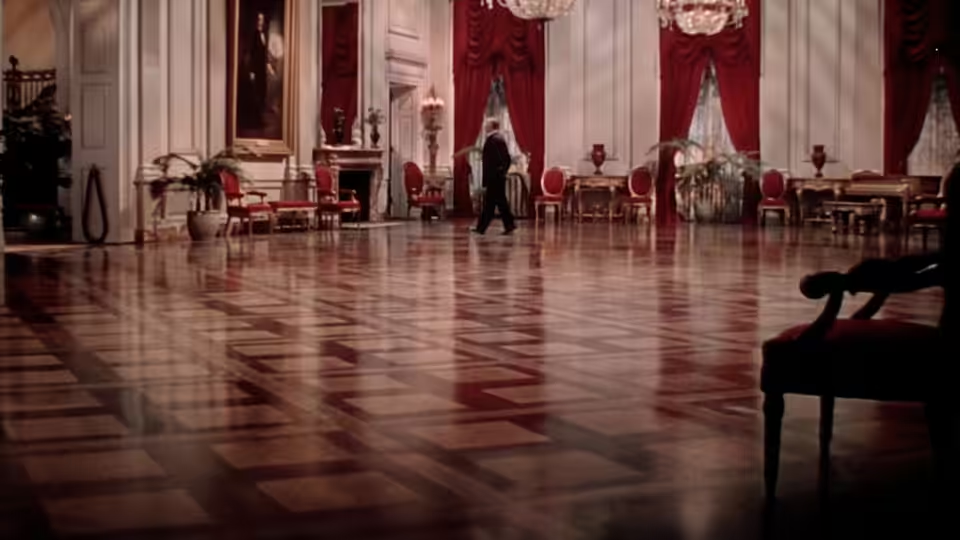
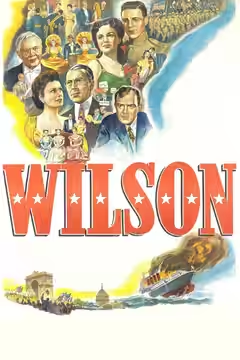
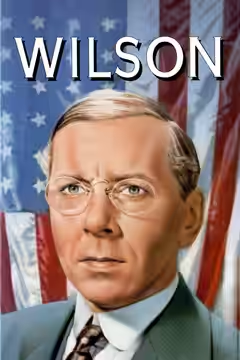
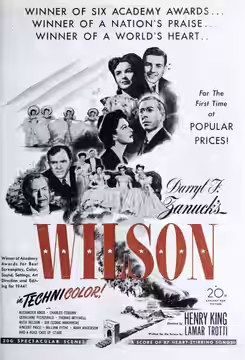
Darryl F. Zanuck wanted a monument, and he got one. Wilson, directed by Henry King from Lamar Trotti’s script, runs 154 minutes, is photographed in Technicolor by Leon Shamroy, and follows Woodrow Wilson (Alexander Knox) from the president’s house at Princeton in 1909 through two terms in the White House. It is handsome and earnest and it costs nothing to watch except time. It has also settled, before the first scene, that Wilson was right about nearly everything, and a biography that will not argue with its subject is a parade. This one has a great many bands.
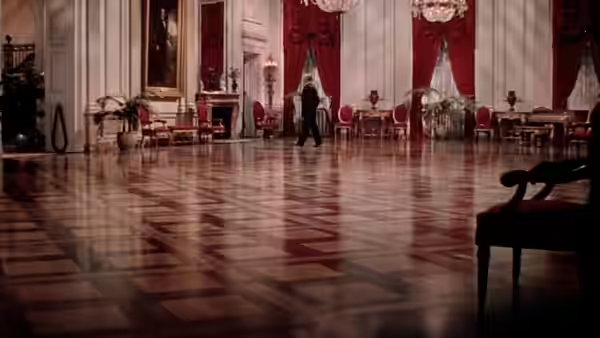
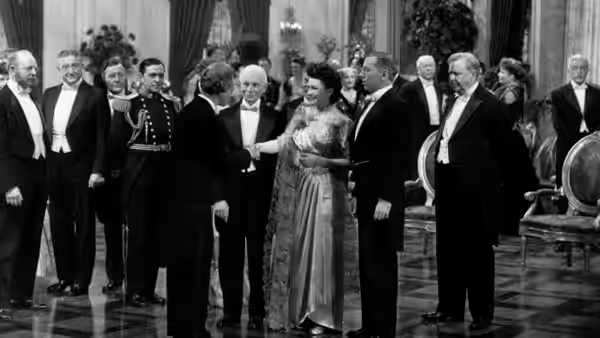
The crowds are the best of it. The opening football match at Princeton, with a stand full of undergraduates in straw hats singing across the pitch, sets the pattern: Shamroy fills the frame with faces and bunting and lets the colour do the persuading. The Democratic convention in Baltimore is the film’s set piece, and Barbara McLean cuts it so that we always know which state delegation is roaring and which is sulking, which is more than most convention scenes manage. René Hubert’s dresses for the Wilson women, high-waisted and pale, are the kind of period costume you notice because nobody on screen seems to. Alfred Newman’s score leans on the popular songs of the day, and there are a great many of them, sung on trains, in halls and, at one point, round the White House piano.
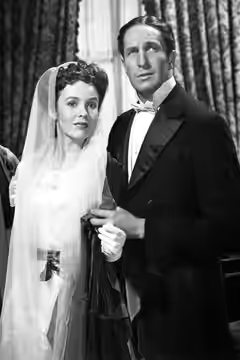
That piano scene got to us. Ruth Nelson’s Ellen Wilson sits with the three daughters (Mary Anderson, Ruth Ford and Madeleine Forbes) and the president joins in, badly, and for a minute the film stops telling us he was great and lets him be a father who cannot hold a tune. It moved us more than we expected, because it is the only stretch where anyone in the house behaves as if they do not know they are in history.
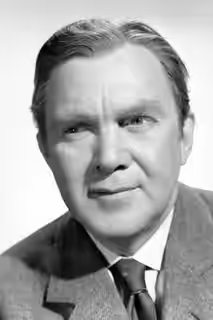
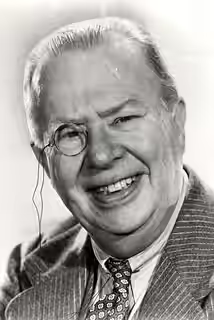
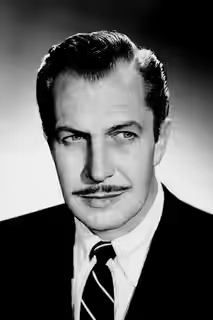
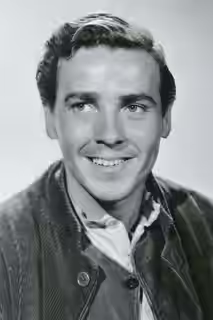
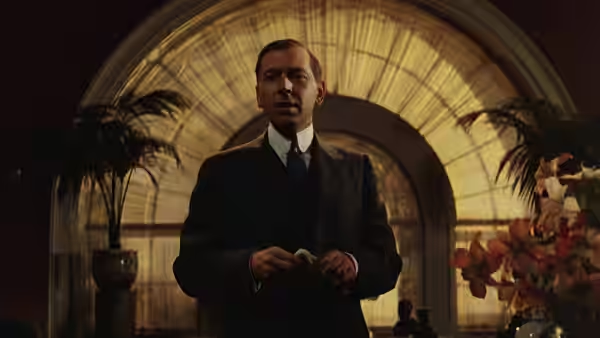
Knox is good. He plays Wilson as a dry man with a schoolmaster’s voice, and his best moments are small: a raised eyebrow at a party boss, a hand on Ellen’s arm. What he is never allowed is a fault. The real Wilson was stubborn to the point of ruin, and Trotti’s script knows it, but every time the stubbornness appears the music tells us it is principle. Thomas Mitchell’s Tumulty is warm and Irish and permitted to fret on the president’s behalf. Charles Coburn’s Professor Holmes is the friend who gets to say the unwelcome thing, and then gets to be wrong. Vincent Price, as William Gibbs McAdoo, is on screen just long enough to make us wish he had been given something to do.
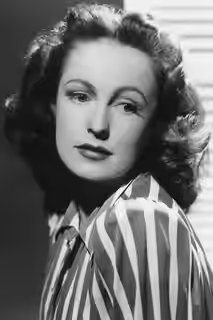
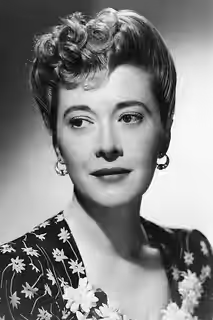
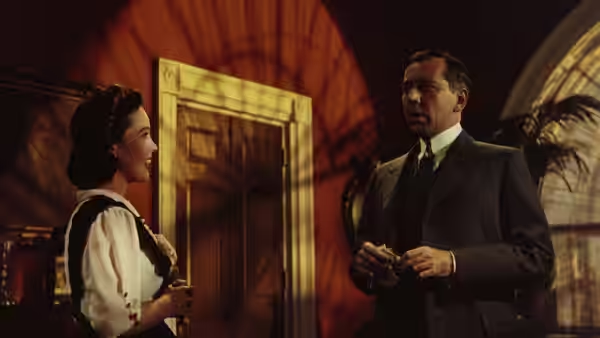
The one man who argues back is Cedric Hardwicke’s Senator Henry Cabot Lodge, and he is the film’s clearest failure of nerve. Lodge is given real objections to the League of Nations and delivers them with Hardwicke’s usual clipped authority, and the film then treats them as personal spite. A better picture would have let Lodge win a scene. This one photographs him in shadow. Geraldine Fitzgerald arrives in the second half as Edith Bolling Galt, brisk and watchful, and is the liveliest thing in it.
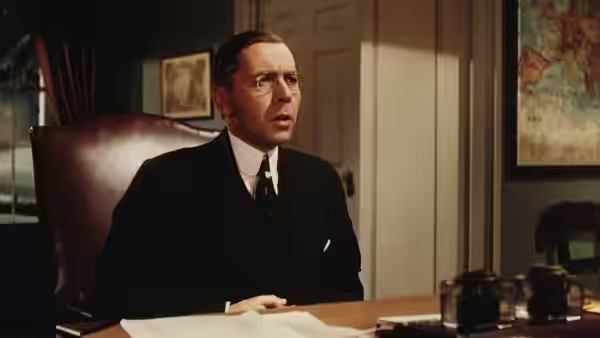
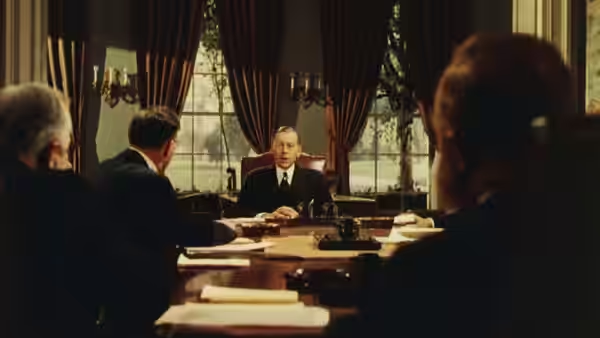
We were bored for long stretches of that second half, and then we were annoyed at being bored, because the material is not dull. The war and the League are told almost entirely in speeches, Knox at a desk, Knox at a lectern, Knox at the back of a train, and King’s answer to a speech is to hold the shot and wait for it to end. The film has spent an hour showing us it can move a camera through a crowd of thousands, and then stops moving it when the country is actually at stake.
Most critics, then and since, have thought better of it than we do. The reviews we have read praise its dignity and its authenticity, and both are there. We think the dignity is what is wrong with it. Wilson deserved a film that respected him enough to disagree with him, and Zanuck made one that stands to attention for two and a half hours.
Watch it at home, in two sittings, for the colour, the convention and the piano. It is a museum you can walk around. The exhibits are well labelled and nothing is going to happen.