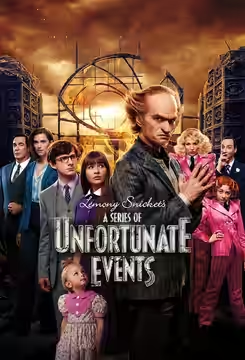
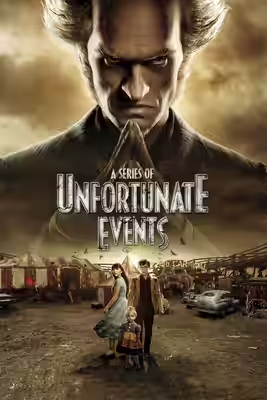
Barry Sonnenfeld’s adaptation is handsomely built and Patrick Warburton’s deadpan narrator is worth the evening on his own. But the books’ repeating shape becomes television’s repeating shape, and Neil Patrick Harris’s Olaf is funnier than he is frightening.
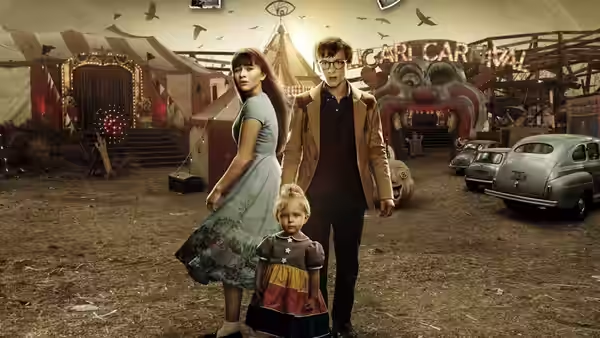
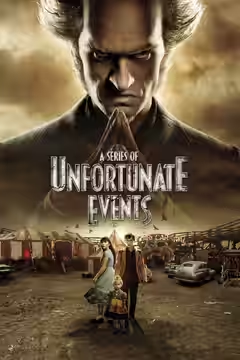
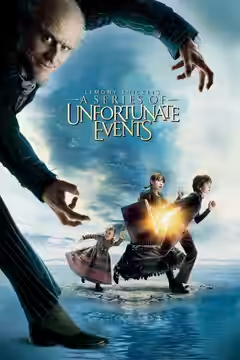
Thirteen books by Daniel Handler, published under the name Lemony Snicket, had been filmed once before, as a single 2004 feature with Jim Carrey that got through three of them and stopped. Barry Sonnenfeld’s series takes the longer road: two episodes to a book, 25 episodes over three runs, and nearly all of the novels on screen. Three Baudelaire children lose their parents in a fire and are handed by a coughing banker to a succession of guardians, the first of them Count Olaf, an actor who wants their money. The narrator keeps asking us to stop watching. We did not, though by the fourth episode we understood why he kept asking.
Patrick Warburton’s Lemony Snicket is the best thing in it. He walks into the frame in a dark suit, stands beside a weeping child or a smoking ruin, and explains in a voice as flat as a table what the word ersatz means. Warburton never winks. The joke is that the man is grieving, and that deadpan is how grief talks after years of practice. We laughed at him more than at anyone else, and then, somewhere in the second run, found ourselves unexpectedly sad about a man standing in the rain defining a word. When the show works, the joke and the sorrow are the same sentence.
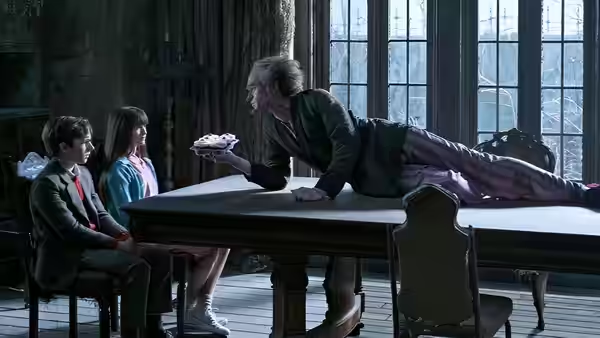
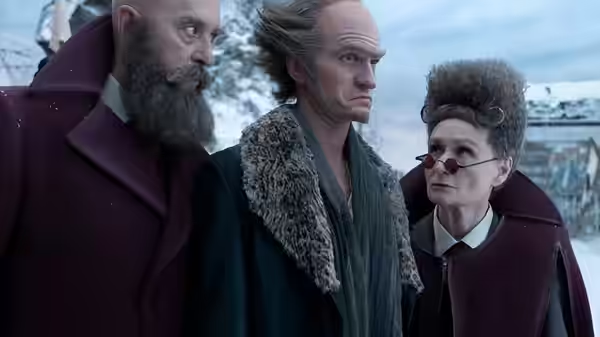
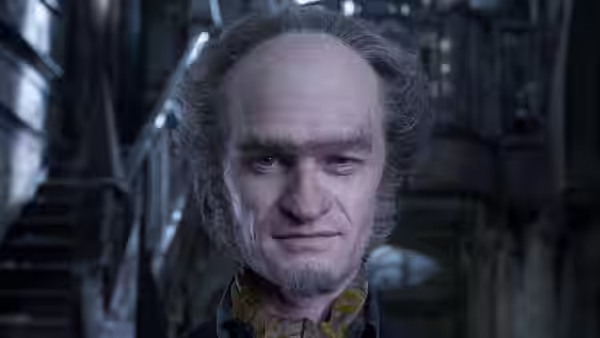
Neil Patrick Harris has the harder job. Olaf must be a bad actor played well, and Harris finds the level: a vain, lazy man who thinks his disguises are brilliant. Cynthia Ann Summers gives him a different terrible outfit for each identity, a false beard here, a peg leg and an eyepatch there, and Harris wears each one the way Olaf would, which is badly. What he does not manage, inside a PG certificate, is to be frightening. He hits Klaus across the face in the first episode, and we believed the children were afraid without being afraid ourselves. For a series that keeps telling us how dark it is, that is a real gap.
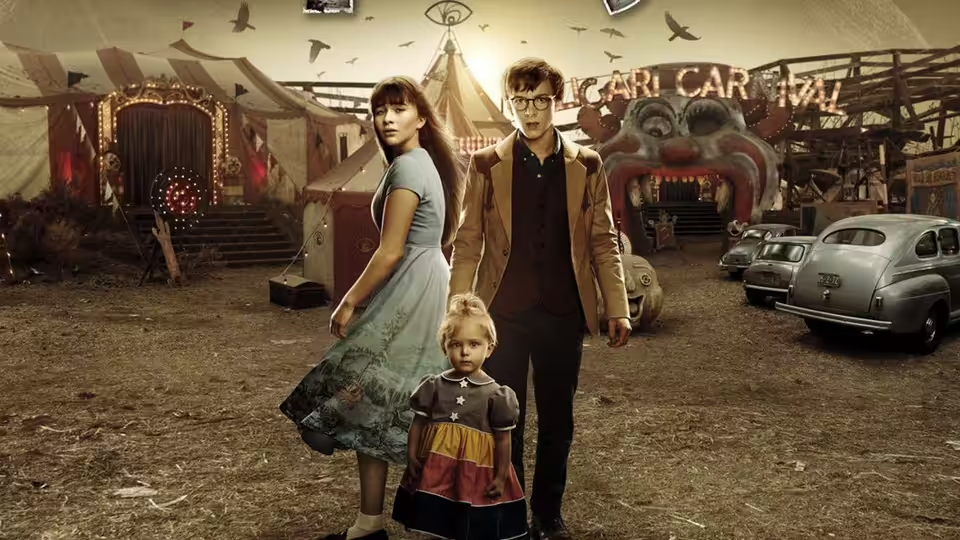
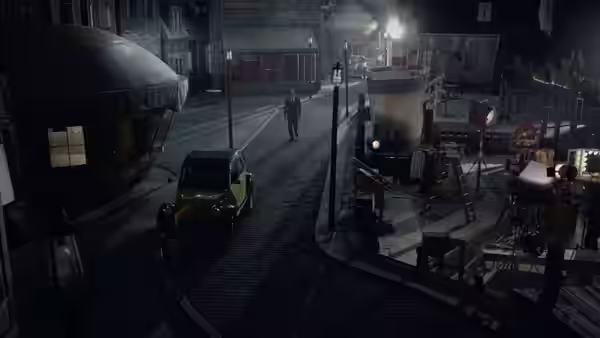
Bo Welch, who designs the production and directs some episodes, builds a place that is nowhere and no time: cars and telephones of no particular decade, a city of grey stone and green copper roofs, and Olaf’s house leaning over the street with an eye painted on it. Todd Elyzen and Bernard Couture shoot it in teal and ash, so a bright afternoon looks as if it is thinking about rain. Uncle Monty’s reptile room, all glass tanks and green light, is the one warm place in the first run, and Aasif Mandvi fills it with a kindness the show plainly means us to miss. Alfre Woodard’s Aunt Josephine, afraid of doorknobs and radiators in a house on stilts over a lake, is the funniest of the guardians. James Newton Howard’s music, written with Chris Bacon, Sven Faulconer and James Dooley, is a music box wound slightly too tight.
The children are the problem the show never solves. Malina Weissman and Louis Hynes are asked to play Violet and Klaus as the only reasonable people in any room, and they do it with a calm that reads, over 25 episodes, as not much underneath. Weissman ties her hair back to invent; Hynes pushes up his glasses to quote. Presley Smith, a baby, plays Sunny, whose remarks are subtitled and who bites things, and is the most natural performer of the three. K. Todd Freeman’s Mr Poe, failing to notice that the tall man with the eyebrows is Count Olaf, is funny the first time and the third and wearing by the sixth. That is the shape of the whole series: a new house, a new guardian, a new disguise, the same ending. We were bored around the fourth episode, and cross about it, because the sets and the narration deserved a story that moved. The editors, Stuart Bass, Steve Welch and Skip Macdonald, cannot cut what the structure insists on keeping.
Set against the 2004 film it is plainly the better version, and Warburton is a character rather than a voice. The second and third runs improve as the plot widens into something about the children’s parents and a secret organisation, and we will say no more than that. Children of about ten will take the gloom better than their parents expect. The PG is right.
Watch two episodes at a sitting, one book an evening, and then leave it alone for a week. The narrator would approve, and the plot will keep.