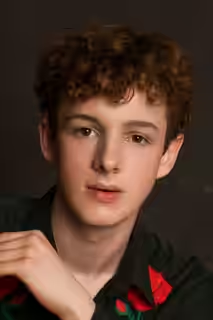
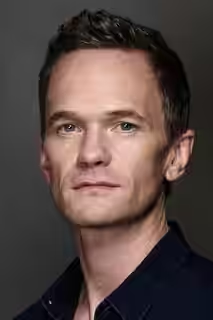
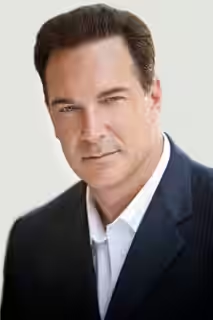
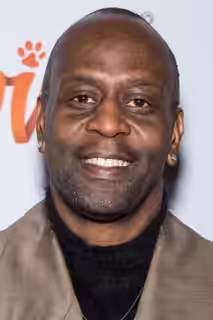
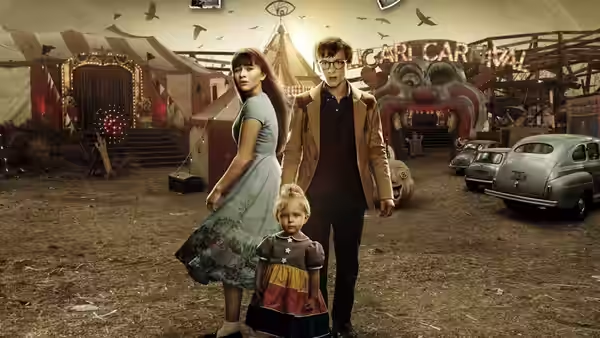
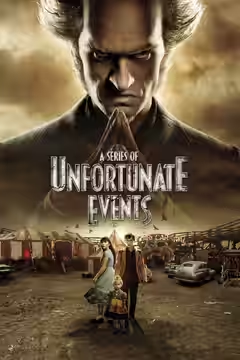
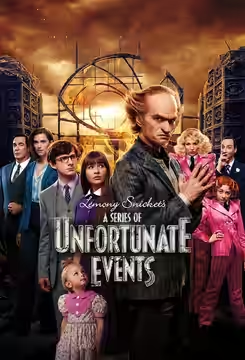
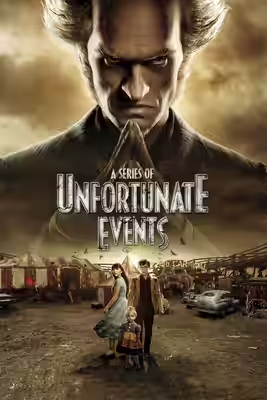
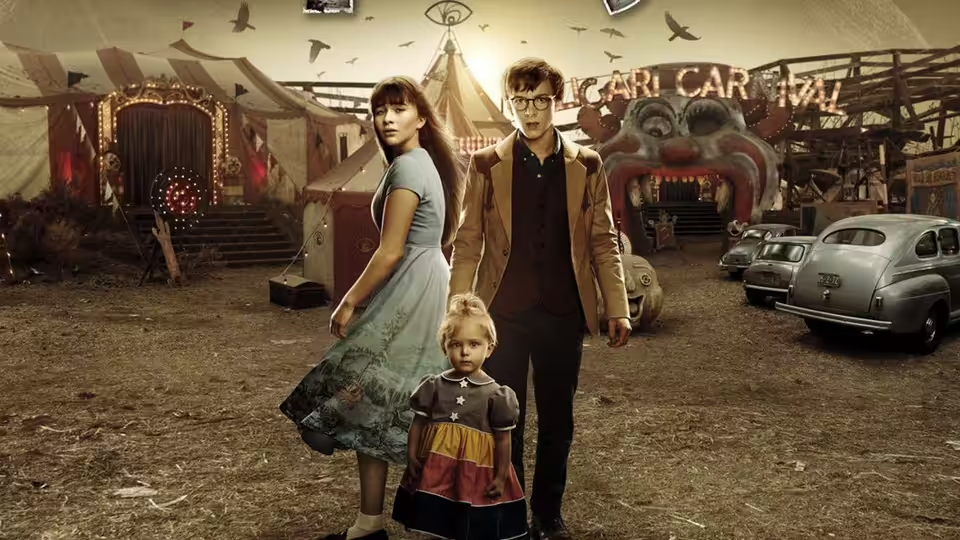
Violet (Malina Weissman), Klaus (Louis Hynes), and Sunny Baudelaire stand at a carnival entrance
Series review

A Series of Unfortunate Events

2017 · Created by Barry Sonnenfeld, Lemony Snicket · Series · 52m

In a sentenceClever children, useless adults and a narrator who keeps politely begging you to switch off

Violet (Malina Weissman), Klaus (Louis Hynes) and baby Sunny Baudelaire (Presley Smith) are on a grey beach when Mr Poe (K. Todd Freeman), a banker with a permanent cough, arrives to tell them their parents have died in a fire. Violet invents things, Klaus reads everything, Sunny bites. The Baudelaire fortune is theirs when Violet comes of age; until then Mr Poe delivers them to Count Olaf (Neil Patrick Harris), a vain actor in a crooked house with an eye painted over the door, who gives them chores and a single bed to share, and wants only their money. Lemony Snicket (Patrick Warburton) narrates from the edge of the frame and advises us to watch something else.

Plays from YouTube when you press play; nothing loads from them until then.

Fi1m review

Barry Sonnenfeld’s adaptation is handsomely built and Patrick Warburton’s deadpan narrator is worth the evening on his own. But the books’ repeating shape becomes television’s repeating shape, and Neil Patrick Harris’s Olaf is funnier than he is frightening.

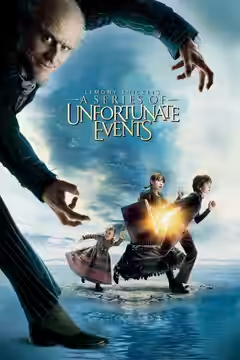
Thirteen books by Daniel Handler, published under the name Lemony Snicket, had been filmed once before, as a single 2004 feature with Jim Carrey that got through three of them and stopped. Barry Sonnenfeld’s series takes the longer road: two episodes to a book, 25 episodes over three runs, and nearly all of the novels on screen. Three Baudelaire children lose their parents in a fire and are handed by a coughing banker to a succession of guardians, the first of them Count Olaf, an actor who wants their money. The narrator keeps asking us to stop watching. We did not, though by the fourth episode we understood why he kept asking.

Patrick Warburton’s Lemony Snicket is the best thing in it. He walks into the frame in a dark suit, stands beside a weeping child or a smoking ruin, and explains in a voice as flat as a table what the word ersatz means. Warburton never winks. The joke is that the man is grieving, and that deadpan is how grief talks after years of practice. We laughed at him more than at anyone else, and then, somewhere in the second run, found ourselves unexpectedly sad about a man standing in the rain defining a word. When the show works, the joke and the sorrow are the same sentence.

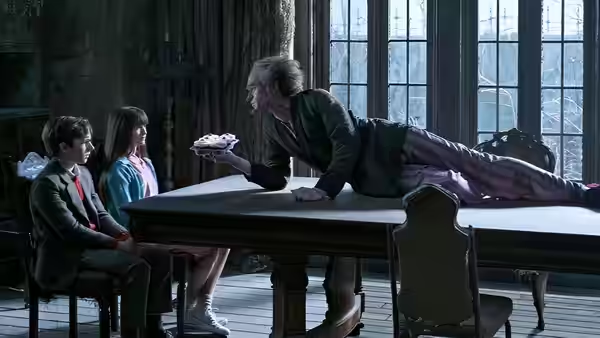
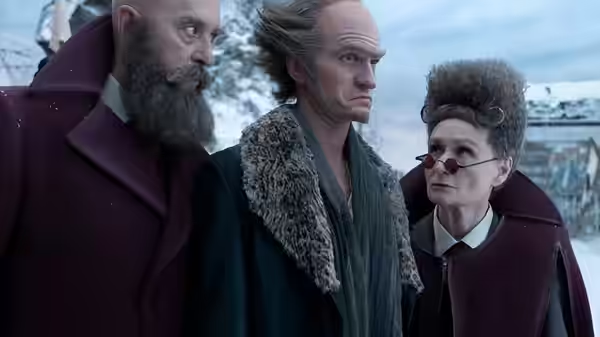
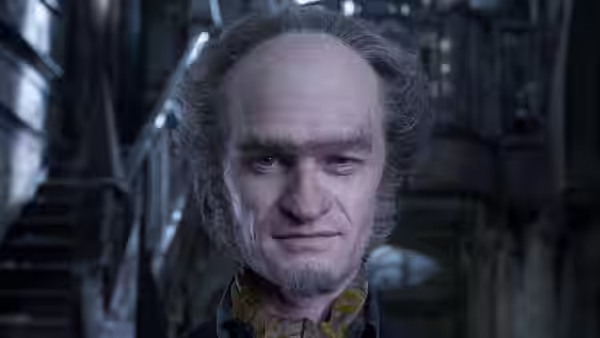
Neil Patrick Harris has the harder job. Olaf must be a bad actor played well, and Harris finds the level: a vain, lazy man who thinks his disguises are brilliant. Cynthia Ann Summers gives him a different terrible outfit for each identity, a false beard here, a peg leg and an eyepatch there, and Harris wears each one the way Olaf would, which is badly. What he does not manage, inside a PG certificate, is to be frightening. He hits Klaus across the face in the first episode, and we believed the children were afraid without being afraid ourselves. For a series that keeps telling us how dark it is, that is a real gap.

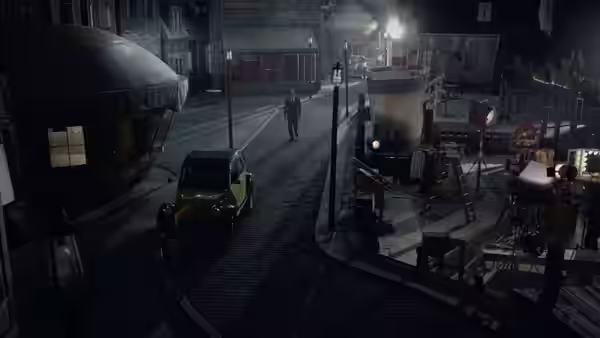
Bo Welch, who designs the production and directs some episodes, builds a place that is nowhere and no time: cars and telephones of no particular decade, a city of grey stone and green copper roofs, and Olaf’s house leaning over the street with an eye painted on it. Todd Elyzen and Bernard Couture shoot it in teal and ash, so a bright afternoon looks as if it is thinking about rain. Uncle Monty’s reptile room, all glass tanks and green light, is the one warm place in the first run, and Aasif Mandvi fills it with a kindness the show plainly means us to miss. Alfre Woodard’s Aunt Josephine, afraid of doorknobs and radiators in a house on stilts over a lake, is the funniest of the guardians. James Newton Howard’s music, written with Chris Bacon, Sven Faulconer and James Dooley, is a music box wound slightly too tight.

The children are the problem the show never solves. Malina Weissman and Louis Hynes are asked to play Violet and Klaus as the only reasonable people in any room, and they do it with a calm that reads, over 25 episodes, as not much underneath. Weissman ties her hair back to invent; Hynes pushes up his glasses to quote. Presley Smith, a baby, plays Sunny, whose remarks are subtitled and who bites things, and is the most natural performer of the three. K. Todd Freeman’s Mr Poe, failing to notice that the tall man with the eyebrows is Count Olaf, is funny the first time and the third and wearing by the sixth. That is the shape of the whole series: a new house, a new guardian, a new disguise, the same ending. We were bored around the fourth episode, and cross about it, because the sets and the narration deserved a story that moved. The editors, Stuart Bass, Steve Welch and Skip Macdonald, cannot cut what the structure insists on keeping.

Set against the 2004 film it is plainly the better version, and Warburton is a character rather than a voice. The second and third runs improve as the plot widens into something about the children’s parents and a secret organisation, and we will say no more than that. Children of about ten will take the gloom better than their parents expect. The PG is right.

Watch two episodes at a sitting, one book an evening, and then leave it alone for a week. The narrator would approve, and the plot will keep.

Critical consensus AI synthesised

77
Positive
14
Mixed
2
Negative
0

The reviews lean clearly positive, and most critics agree the adaptation gets the books right: the wordplay, the ghoulish whimsy, the balance of real darkness with broad comedy. Praise clusters on two performances. Neil Patrick Harris’s Count Olaf is called inventive, exuberant and note-perfect, and Patrick Warburton’s deadpan Lemony Snicket draws nearly as many compliments. The production design, with its inventive sets and distinctive costumes, is the other department singled out again and again.

The reservations are mild and mostly structural. Several critics find the episodes repetitive, particularly early on, and a few think the young leads come across as flat or overly precious. The Guardian breaks with the majority on Olaf, finding him short on menace, and The i Paper is the coolest voice, calling the series only intermittently engaging and awkwardly split between adult and child audiences. The spread is narrow: no review is negative, and even the dissenters still find it watchable.

IndieWire
13 January 2017 · A- · Ben Travers
90

Travers finds the series inspirational and endearing despite its bleak premise. He especially praises the Baudelaire children’s resilience and the production design’s vivid, carefully realized darkness.

Read the full review →
Variety
6 January 2017 · Sonia Saraiya
90*

Saraiya praises the series as a weird, wonderful, bewitching modern fairy tale. She especially applauds how the performances, production design, set pieces, and pacing cohere into a complete vision.

Read the full review →
Empire
13 January 2017 · Nick de Semlyen
82*

The critic says the adaptation largely nails the books and is entertaining despite some baggy, repetitive episodes. He especially praises its witty wordplay and Patrick Warburton’s dry narration.

Read the full review →
Evening Standard
13 January 2017 · Emma Powell
80*

The critic finds the series entertaining and its time well spent. They praise its ghoulish whimsy and Neil Patrick Harris’s exuberant Count Olaf.

Read the full review →
The Hollywood Reporter
5 January 2017 · Keith Uhlich
80*

The critic finds the series a perversely delightful and engaging adaptation. Neil Patrick Harris’s inventive comic performance as Count Olaf stands out for praise.

Read the full review →
The AV Club
5 January 2017 · B · Erik Adams
77

Adams finds the Netflix adaptation a much better home for the story, though its early episodes become repetitive. He especially praises Patrick Warburton’s dry, deadpan portrayal of Lemony Snicket.

Read the full review →

Straight answers AI written, from our review

Is A Series of Unfortunate Events worth watching?
A Series of Unfortunate Events is worth watching for families with children of about ten and for anyone who will enjoy Patrick Warburton's deadpan narrator, and we scored it 74. The sets are handsome and Neil Patrick Harris's Olaf is funny, but the books' repeating shape becomes television's, and by the fourth episode we were bored and cross about it. Two episodes an evening, then a week off, is the way to take it.
How long is A Series of Unfortunate Events, and what is it rated?
A Series of Unfortunate Events has episodes of about 52m. It is an action & adventure and family series.
Where can I watch A Series of Unfortunate Events in Sweden?
A Series of Unfortunate Events is streaming on Netflix in Sweden. Availability is checked daily; the links above go straight to each service.
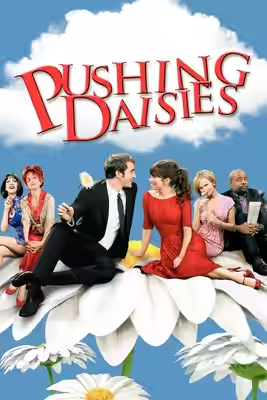
How does A Series of Unfortunate Events compare to Pushing Daisies?
A Series of Unfortunate Events and Pushing Daisies are both Barry Sonnenfeld confections about death with a narrator at the edge of the frame, but the earlier series is the better of the two. Pushing Daisies makes its impossible romance matter, where the Baudelaires' story keeps resetting to the same house, guardian and disguise. Choose the children's series for the gloom and the word definitions; choose the pie shop for warmth, if you can stand the sweetness.
What should I watch after A Series of Unfortunate Events?
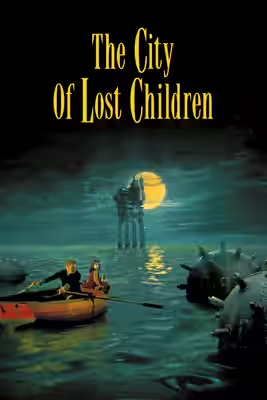
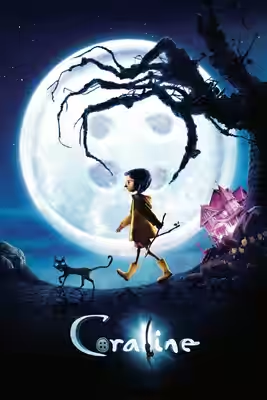
After A Series of Unfortunate Events, try Pushing Daisies (2007, Fi1m 82): Sonnenfeld’s other sugared-death confection, with a narrator and a pie shop. Then The City of Lost Children (1995, Fi1m 78): French orphans, a stolen-dreams villain and sets built to lean the wrong way; and Coraline (2009, Fi1m 85): Stop-motion gloom for children, with a villain who is properly frightening.

Cast

If you liked this, try…

  1. Pushing Daisies (2007, Fi1m 82)Sonnenfeld’s other sugared-death confection, with a narrator and a pie shop.

  2. The City of Lost Children (1995, Fi1m 78)French orphans, a stolen-dreams villain and sets built to lean the wrong way.

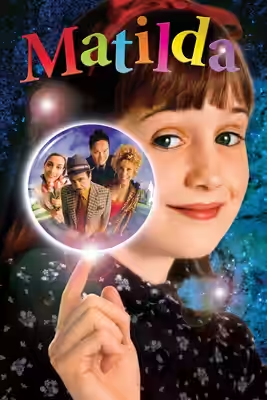
  3. Matilda (1996) · not reviewed yetA reading child against monstrous adults, played straight enough to sting.

  4. Coraline (2009, Fi1m 85)Stop-motion gloom for children, with a villain who is properly frightening.

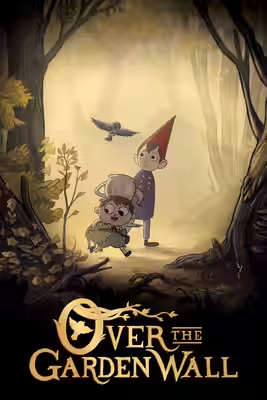
  5. Over the Garden Wall (2014, Fi1m 86)Two brothers lost in an autumn wood; ten short episodes, no wasted one.

Free account

Know what to watch tonight

Two lists that know where things are streaming, collections you can share, your own score beside ours, and Discover that remembers what you have seen.

  • Want to see, sorted by what is streaming now
  • Seen, with your score out of ten
  • No adverts, ever