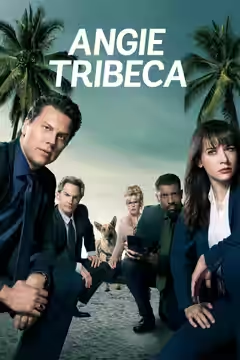
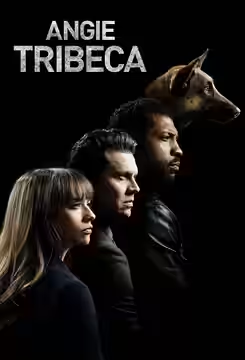
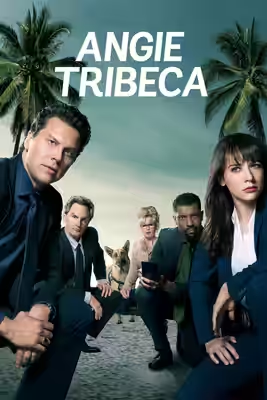
Steve and Nancy Carell’s spoof of the American cop show fires jokes faster than it can aim them, and Rashida Jones’s unsmiling detective holds it together. Watch two episodes and you will laugh; watch five in a row and the jokes start to blur.
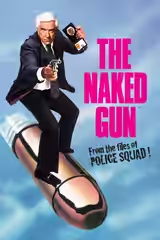
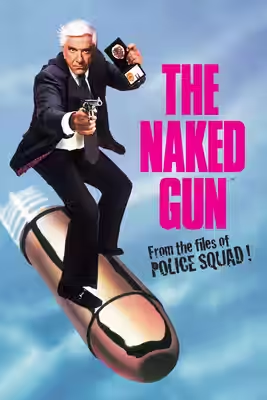
Steve and Nancy Carell have made a cop show in which nobody is allowed to know they are in a comedy. Angie Tribeca takes the American police procedural, the gravel-voiced detective, the lieutenant shouting about the mayor, the coroner breaking bad news over a body, and plays all of it straight while the jokes pile up at the edges of the frame. It is in the line of The Naked Gun and does not pretend otherwise. At 25 minutes an episode it is the right length for the idea. About half the jokes land, which is a better rate than it sounds.
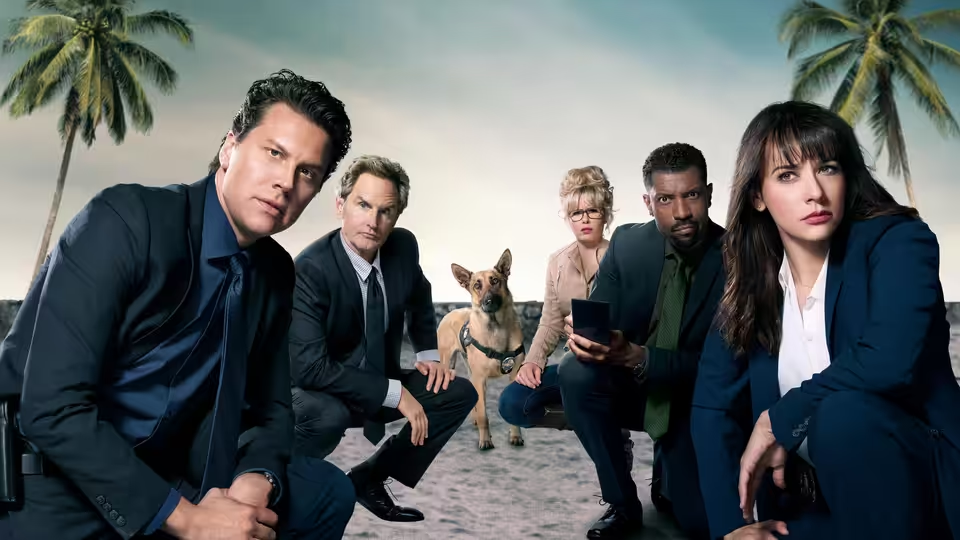
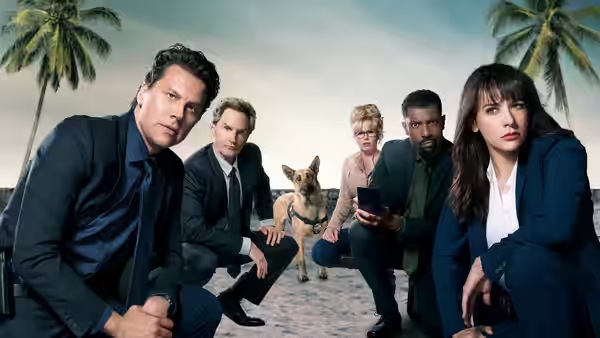
Rashida Jones is the reason to watch. She plays Tribeca as a detective who has had a long line of partners and buried most of them, and she delivers the stock lines of the genre with the flat conviction of someone who has never heard them before. She does not wink. When she takes an instruction literally, Jones lets the misunderstanding sit on her face for exactly as long as it needs. Hayes MacArthur, as her new partner Jay Geils, matches her note for note, and their running gag of near-kisses interrupted by gunfire, telephones and corpses is the one joke the show never wears out.
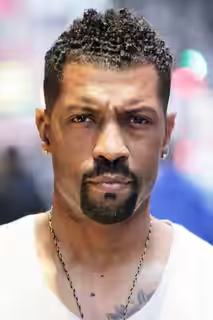
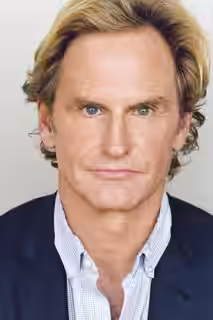
Around them the Carells have built a precinct with a gag on every desk. Jere Burns shouts as Lieutenant Chet Atkins and is best when the shouting is about nothing at all. Deon Cole’s DJ Tanner has a partner, David Hoffman, who is a dog, played by a dog called Jagger, and the show’s most reliable device is to cut to Hoffman doing something a detective would do, filling in a form or taking a call, with no comment from anybody. Andree Vermeulen’s Monica Scholls announces causes of death that no one could have survived long enough to be killed by. Kiersey Clemons, as Maria Charo, is given less than the others and makes what she can of it.
The directing roster is long and mostly of a piece. Steve Carell directs some episodes himself, Peter Segal, who made the third Naked Gun film, directs others, and you would struggle to tell them apart, which is the point. The house style is the well-lit, locked-off frame of network drama, so that the sign in the background is always in focus and the faces in the foreground are always serious. Ludwig Göransson and Nathan Matthew David supply the thudding pulse of a weeknight procedural and keep it entirely straight, so that a dog climbing into a squad car is scored like a raid.
Here is where it went wrong for us. We laughed hard at the pilot, out loud and more than once, mostly at Hoffman and at Jones’s refusal to notice anything strange about him. By the fourth episode in a sitting we realised we had stopped laughing and started counting, and that the second and third jokes in every scene were there to fill a quota rather than because anyone had thought of a good one. The misses arrive before the hits have had time to land. The Zucker films let a gag breathe for a second before the next one; the Carells and their large writers’ room have not learned that yet.
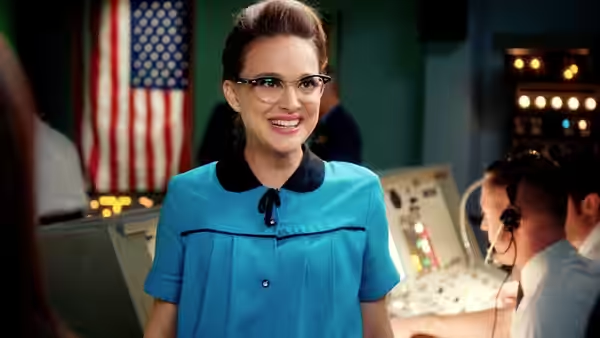
There are four seasons of ten episodes, and the second tries something the first did not: a mystery that runs across the whole run, to be solved by the end of it. The reviews so far prefer that season, and we can see why, since a case that lasts gives the jokes somewhere to go. The guest stars are asked to play it straight. Adam Scott appears as a surgeon, Gary Cole as a Professor Everett Lamereau, James Franco as a Sergeant Eddie Pepper and Sarah Chalke as a Mrs Parsons, each as though auditioning for the show being mocked.
Next to The Naked Gun, which it plainly loves, it has more jokes and less patience. Watch one episode at a time, after something serious, and let the dog see you out. Four in a row and you will start to feel like the lieutenant.