Dennis Lehane’s six-part prison drama sends a charming drug dealer in to befriend a suspected killer, and lives or dies on their conversations. Paul Walter Hauser makes those conversations unbearable in the right way; the police work around them is ordinary, but we recommend it.
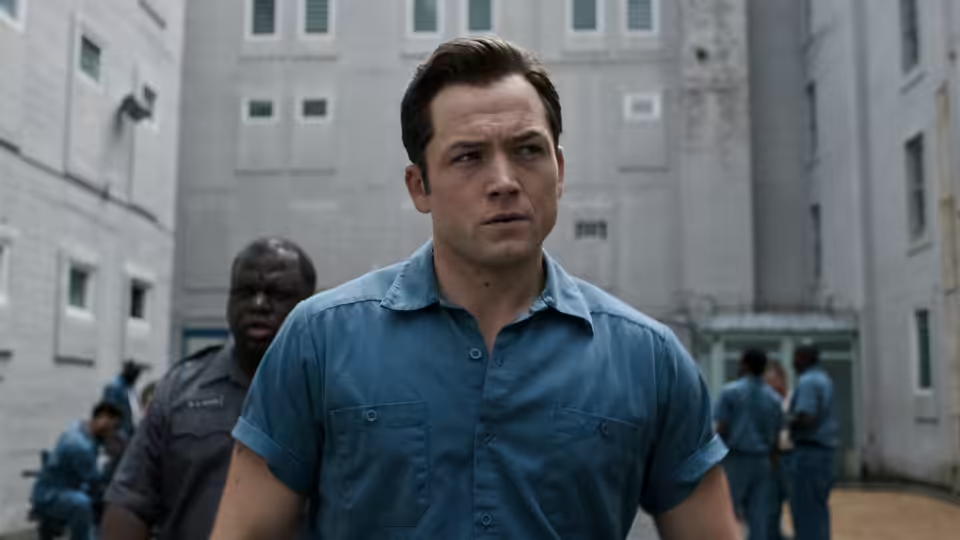
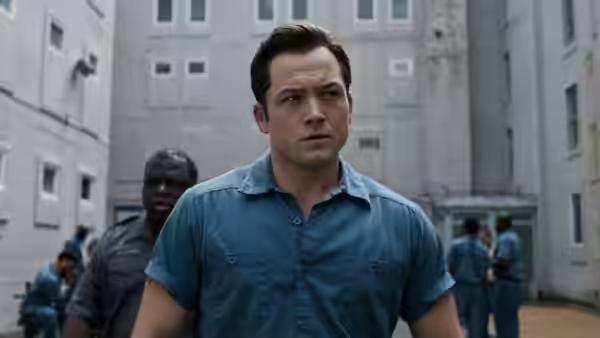
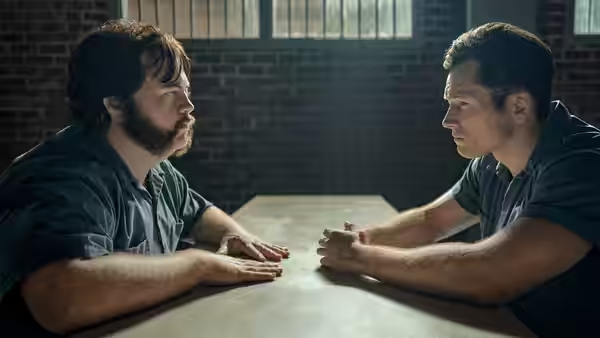
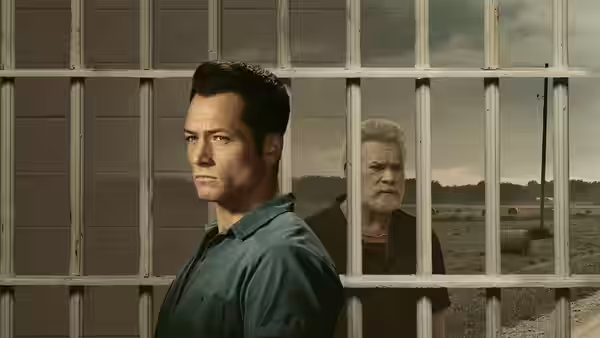
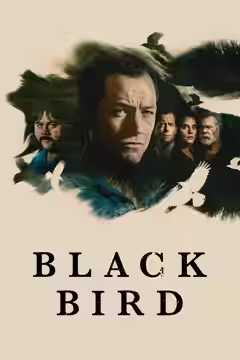
Black Bird rests on one arrangement. Jimmy Keene (Taron Egerton), a drug dealer who has just been sentenced to ten years without parole, is offered his freedom if he will move to a prison for the criminally insane in Springfield, Missouri, befriend Larry Hall (Paul Walter Hauser) and get him to say where he buried the girls he is suspected of killing. Dennis Lehane, who created the six-part series and wrote its story with Steve Harris, knows what he has: two men in a room, one of whom must charm the other. When the series stays in that room it grips. When it leaves, it is a decent police procedural.
Hauser is the reason to watch. His Larry Hall has muttonchop sideburns, a soft high voice and the manners of a man who has been told off a great deal and would rather not be told off again. He apologises. He carves wooden falcons in the prison woodshop. He talks about his dreams, in which he does terrible things to women, and he wants Jimmy to agree that dreams are only dreams. We were horrified, and what horrified us was the gentleness: Hauser never raises his voice or moves quickly, so every awful sentence arrives sounding like a confidence between friends. It is the quietest performance of a killer we can remember.
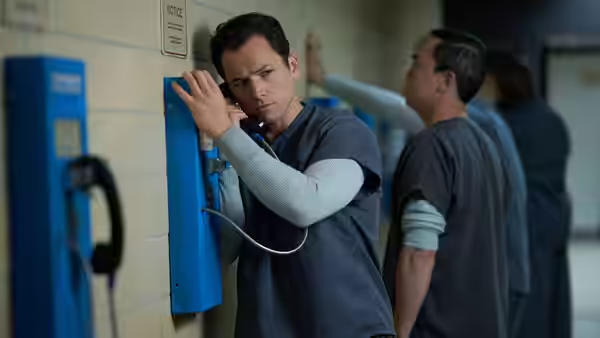
Egerton has the harder job, because Jimmy is written as a charmer and the script keeps telling us he is also clever. Egerton plays the gap. His Jimmy grins, flatters and lifts weights in the yard, and underneath he is a frightened man counting the days he can stand this. Natalie Kingston shoots him close and low-lit, so the prison, which production designer Charisse Cardenas has done in pale institutional paint and steel mesh, presses in from the edges of the frame. Amy Roth puts him in shiny shirts and leather in the flashbacks to his old life and in khaki inside. The score by Dominic Aitchison, Stuart Braithwaite, Martin Bulloch and Barry Burns, the members of Mogwai, is low guitar drone that hardly ever resolves.
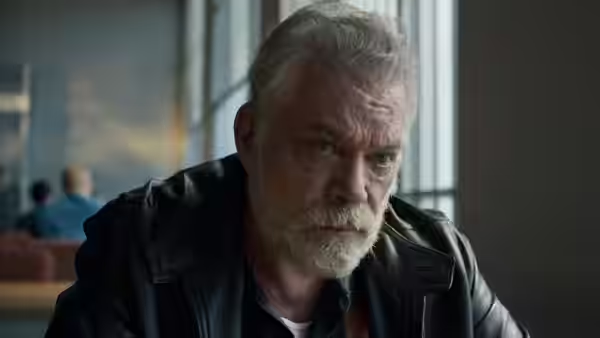
Ray Liotta plays Big Jim, Jimmy’s father, a former policeman whose health is failing, and he moved us more than we expected. Liotta died before the series aired, and it is hard to watch him now without knowing that, but the performance would land regardless. He sits across a table from his son and tries to be tough and cannot manage it, and in one visit he cannot get to the end of what he wants to say, and Egerton simply waits for him. There is no music. It is the best-acted thing in the six episodes, and it has nothing to do with the plot.
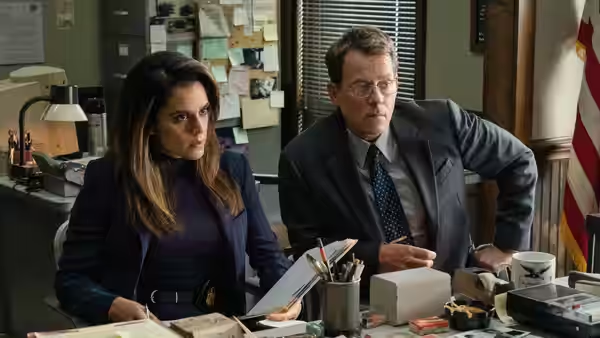
The rest is less sure. Greg Kinnear’s detective, Brian Miller, works the murder of Jessica Roach (Laney Stiebing) in a parallel strand, and Kinnear is patient and decent, but the strand is standard: files, interviews, superiors who would rather he stopped. Sepideh Moafi’s FBI agent, Lauren McCauley, recruits Jimmy and then has little to do beyond phoning him with warnings. Editors Jonathan Alberts and Rob Bonz cut between the timelines steadily, and in the middle episodes the rhythm sags: Jimmy nearly gets Larry talking, Larry closes up, a week passes. The series also stages some of what Hall describes, at a distance and from the roadside, and Hauser’s telling has already done the work.
The three directors, Michaël R. Roskam, Jim McKay and Joe Chappelle, hold one look across the run, which is not to be taken for granted. Lehane’s crime fiction has always been about men explaining themselves to other men, and this is the most concentrated version of it, with the sentimental streak of Mystic River mostly kept out. Against other true-crime dramas it is careful with its victims; Jessica Roach is a girl on a bicycle before she is a case, and the series makes sure we notice.
It is an 18 certificate, earned mostly by the talk. Watch it two episodes at a time, and expect an ending quieter than the trailer promises.