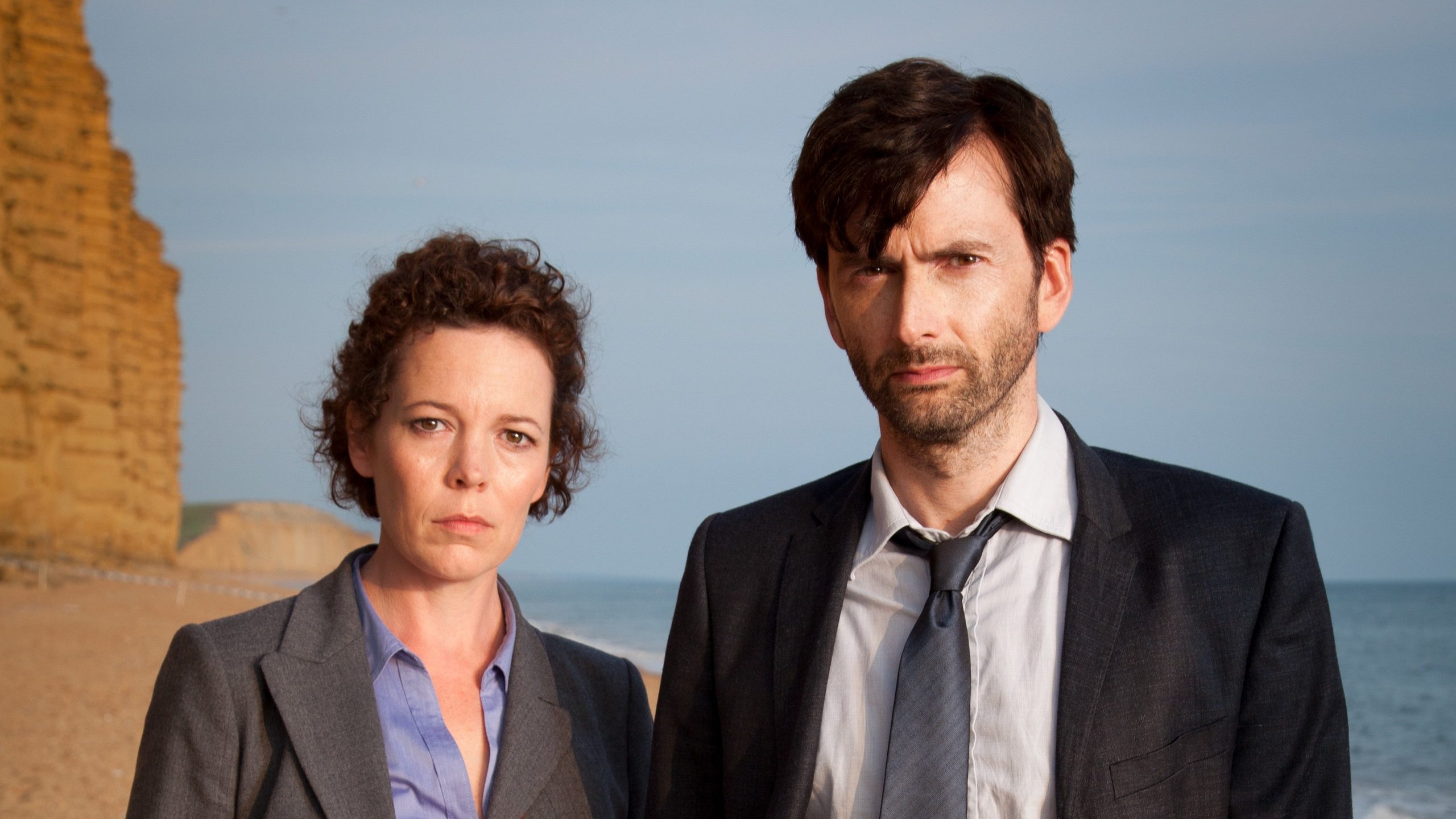
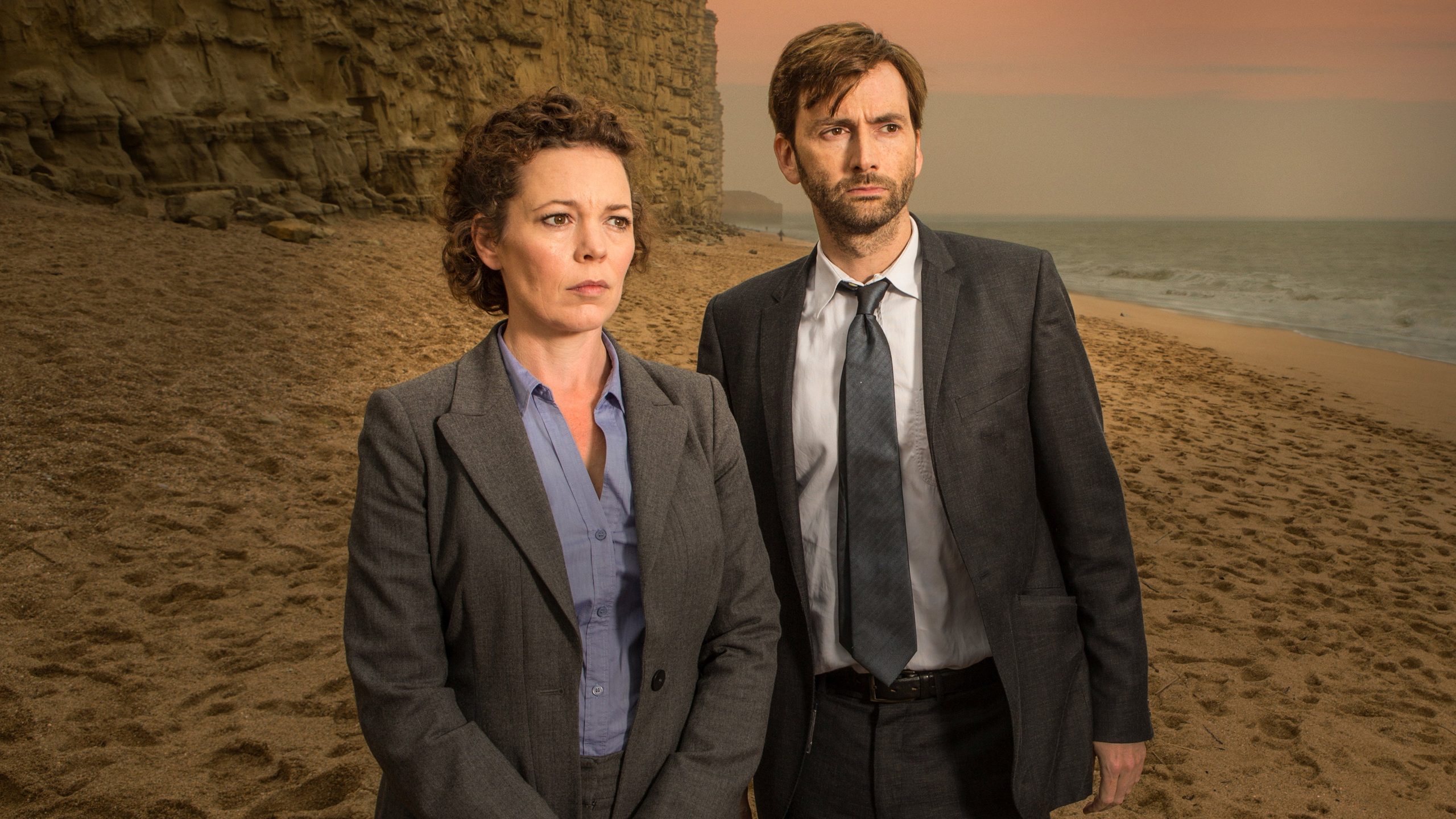
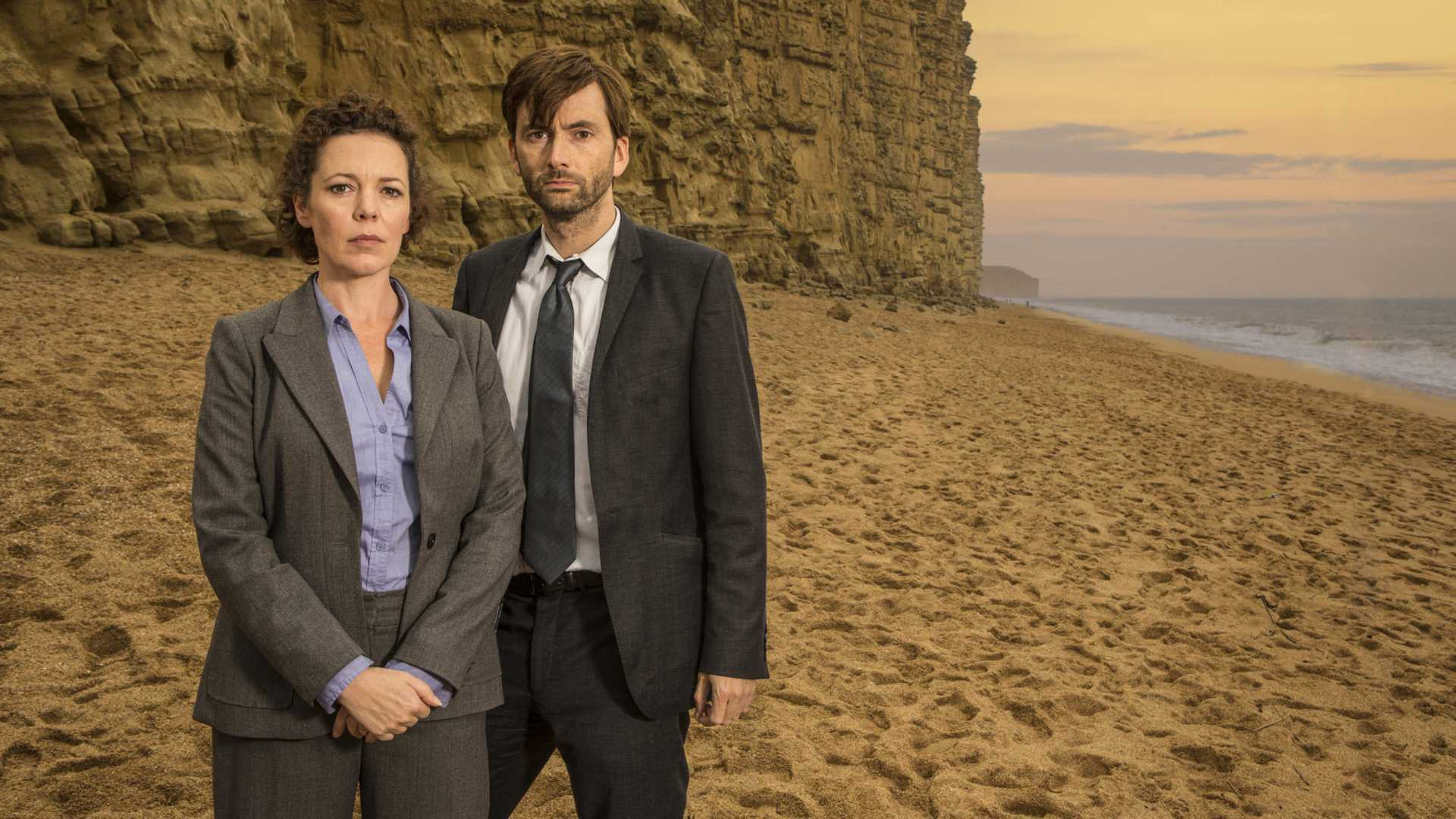
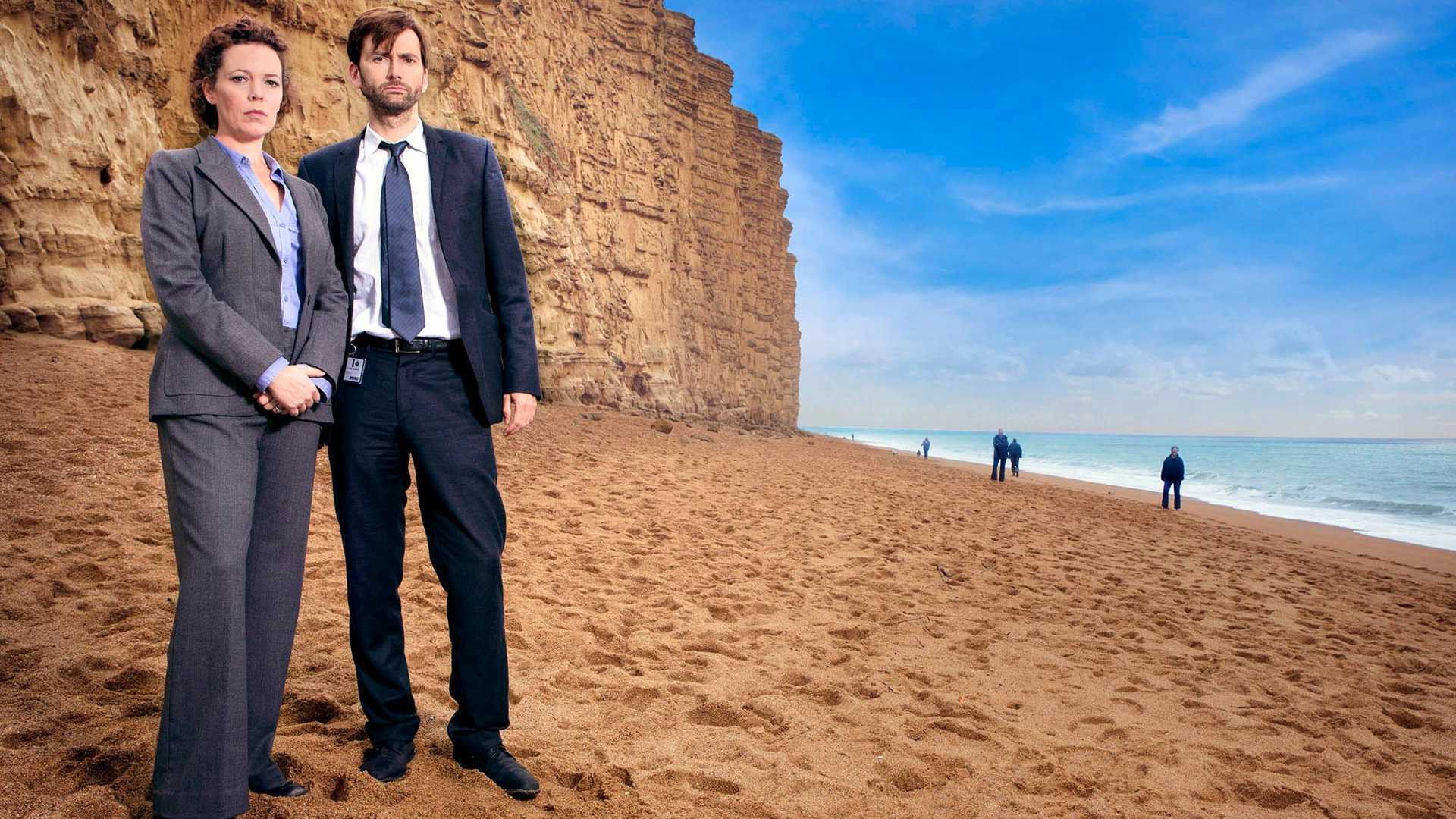
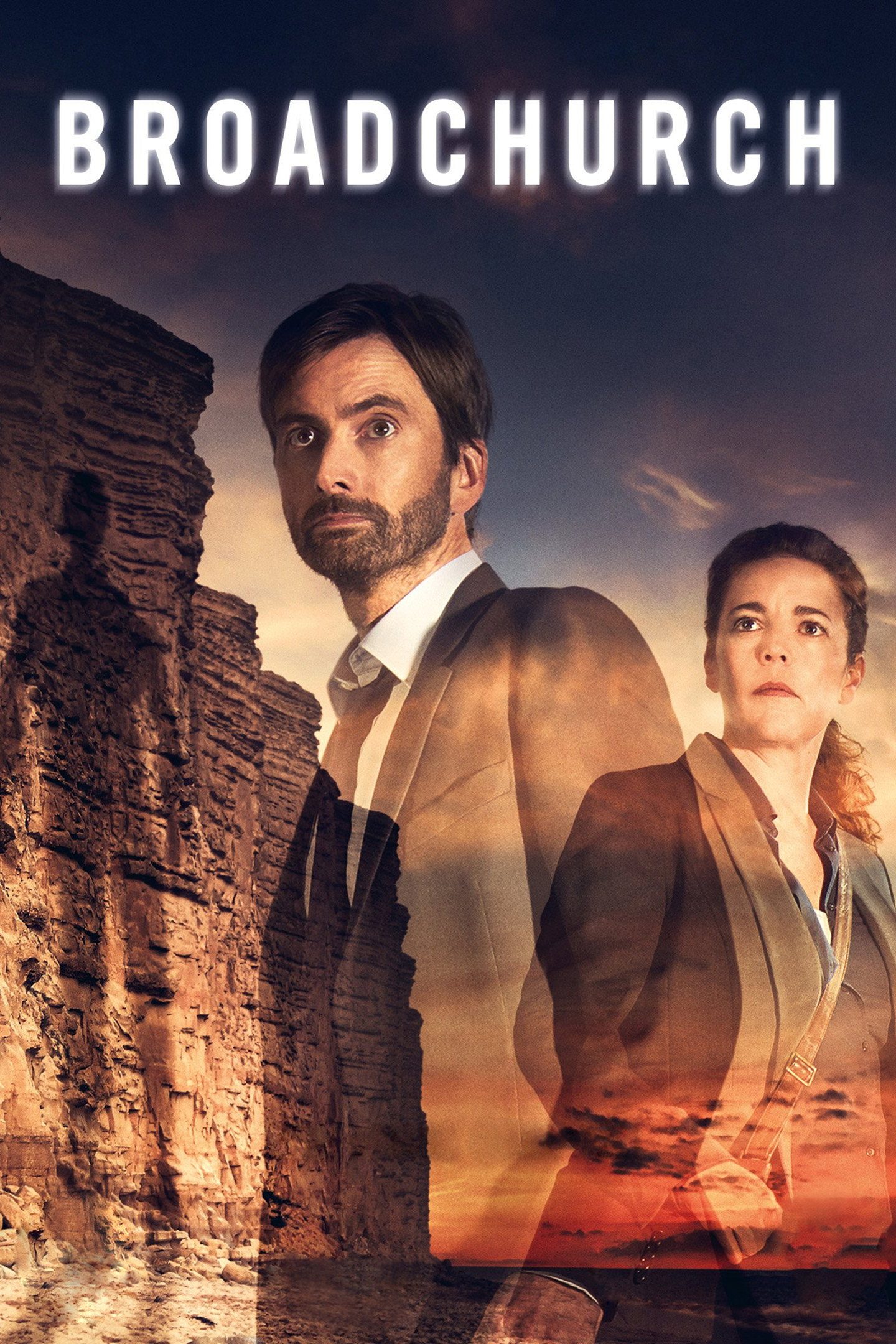
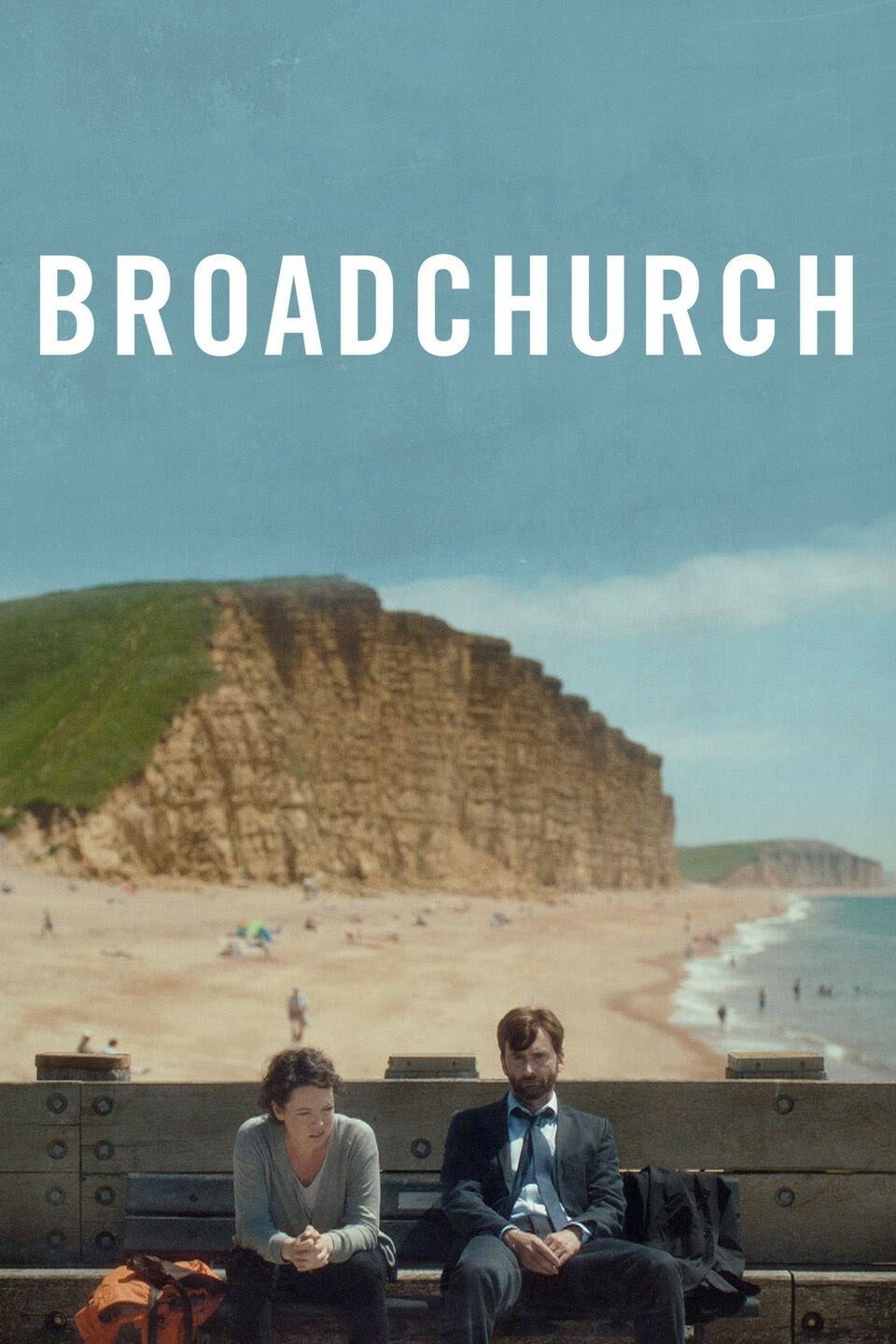
The first series is a crime drama that cares more about grief than about its puzzle, with Olivia Colman at its centre, and it is one of the better things British television did with a murder. Series 2 should not have happened; Series 3 recovers much of the ground.
Chris Chibnall’s Broadchurch begins with a man walking to work. Mark Latimer (Andrew Buchan), a plumber, crosses a small Dorset town on a bright morning and says hello to half of it, and the camera follows him past the shops, the hotel and the church. By the end of the first episode a boy is lying dead at the foot of the cliffs and every face Mark greeted has become a suspect. That is the trick of the first series, and Chibnall plays it patiently over eight hours. It is a whodunnit, and a fair one, but the thing that stays with you is the grief.
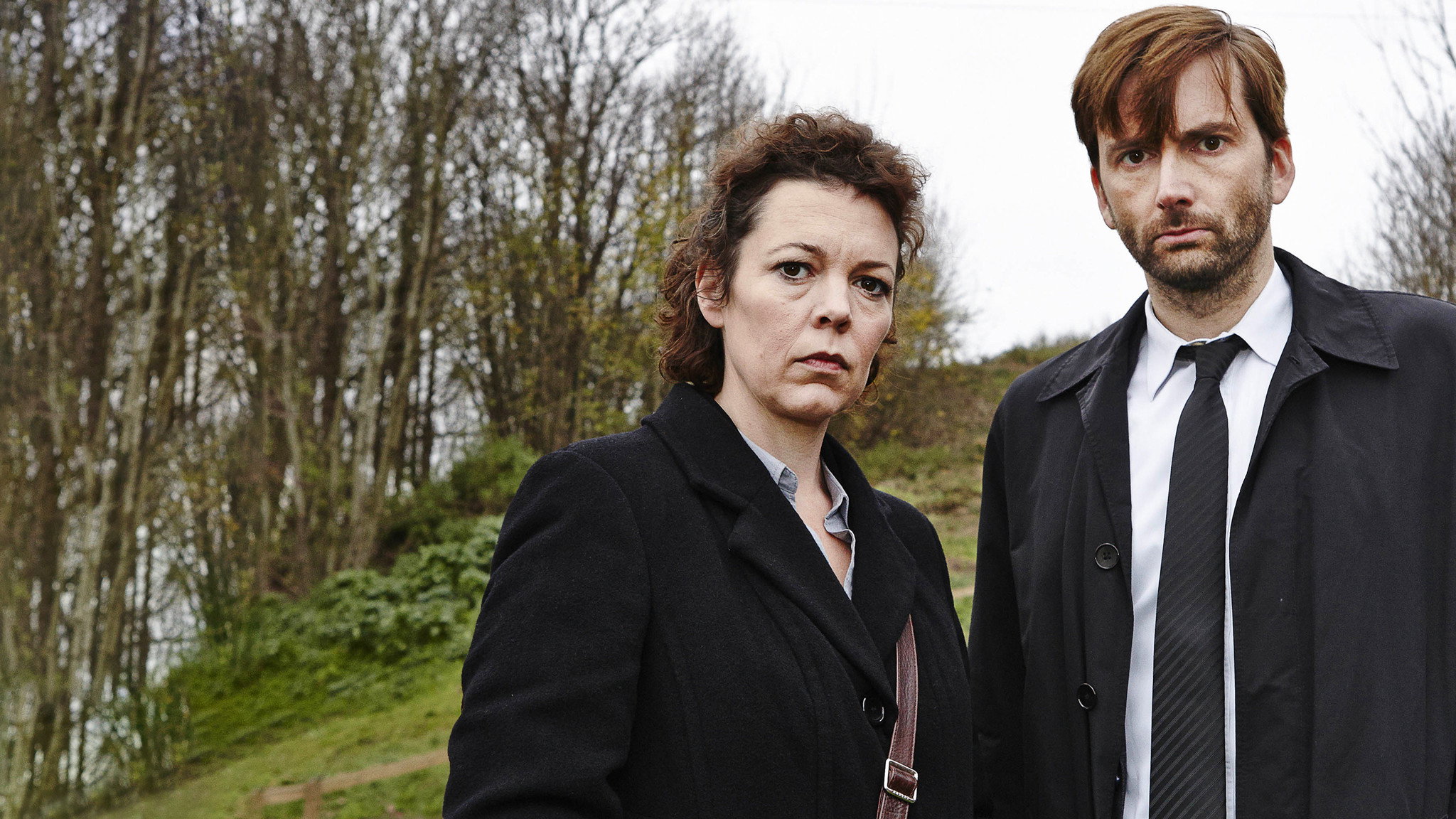
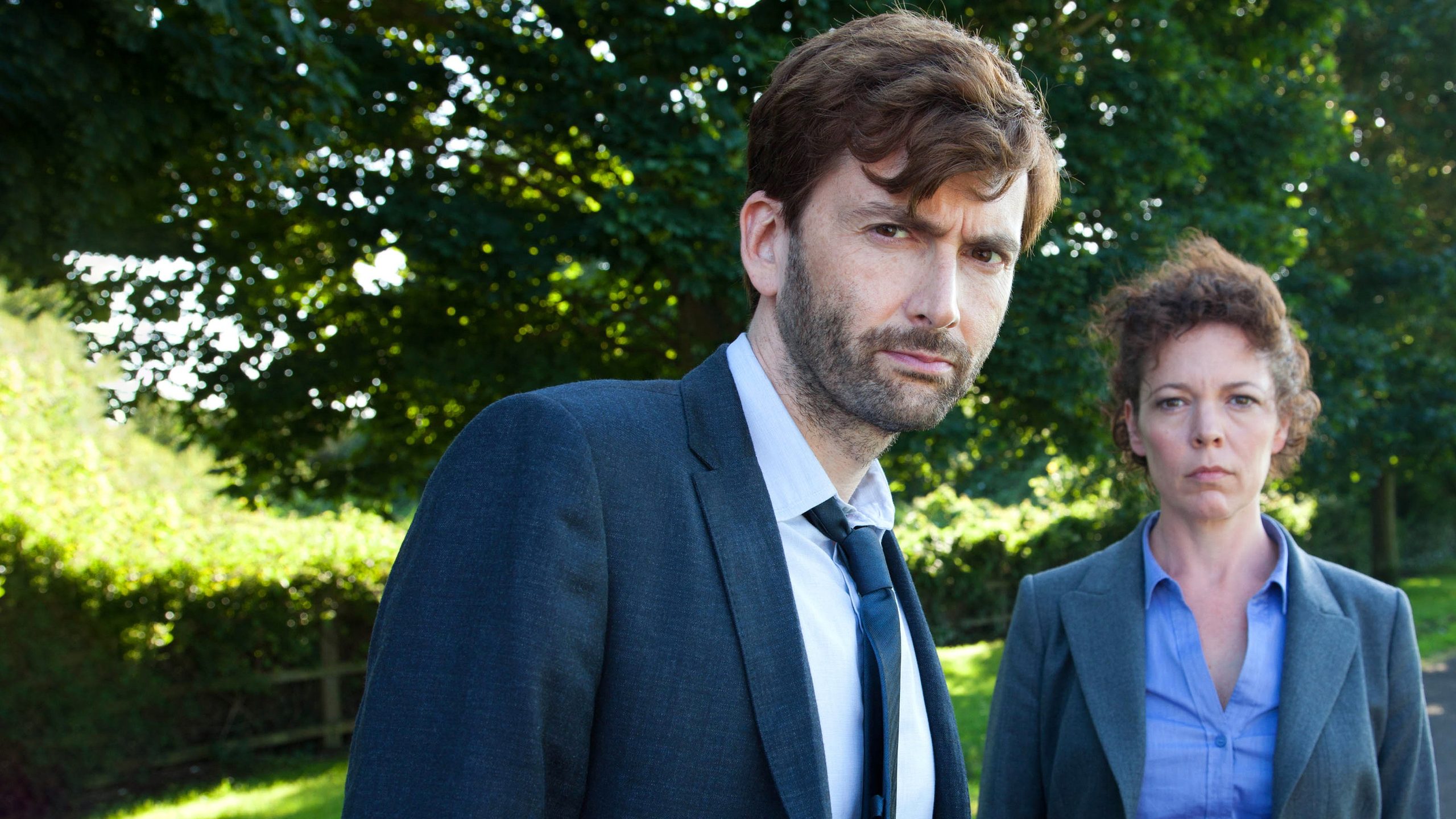
DI Alec Hardy (David Tennant) has arrived from elsewhere and taken the promotion DS Ellie Miller (Olivia Colman) had been promised. Tennant plays him grey-faced and short with everyone, a man who has decided that knowing nobody in town is an advantage. Miller knows everybody. She went to school with half the suspects and her son was the dead boy’s best friend. Colman does most of her work listening, mouth slightly open, taking things in a second before she wants to, and when the series finally asks her for more she gives it without ever seeming to act. It is the performance the whole thing rests on.
Jodie Whittaker is the one who got at us. Beth Latimer hears that a child has been found on the beach and runs, and the directors slow the picture down and let the sound drop away as she comes over the sand towards the police tape. We watched it feeling like intruders, and we had to stop the episode for a moment before going on. Nothing in the hours that follow is as raw as that, and it should not be; Whittaker spends the rest of the series showing what happens after the running stops. Buchan, as a husband with things he would rather not say, is nearly as good.
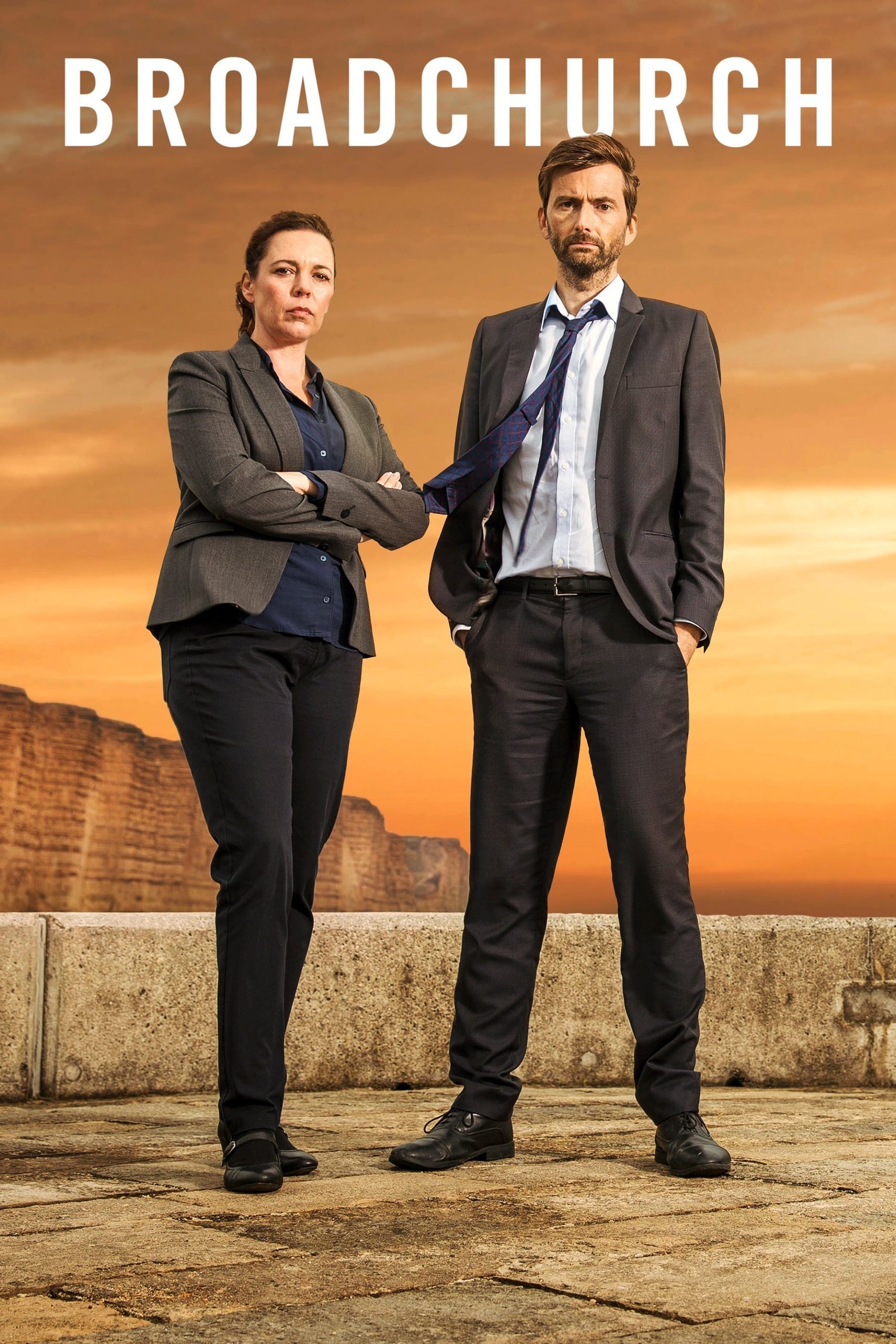
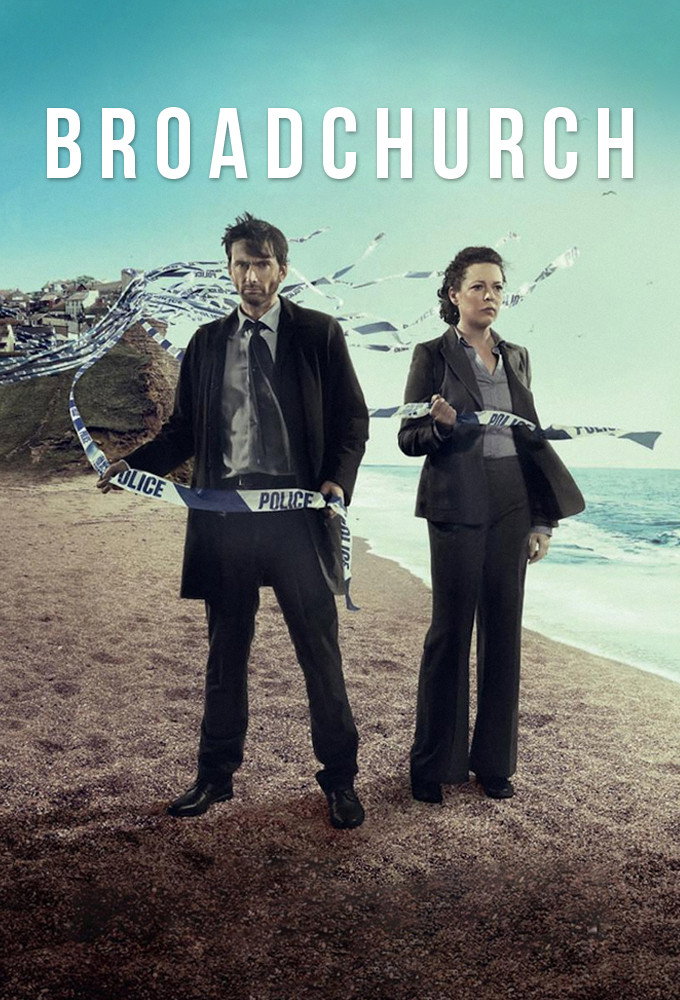
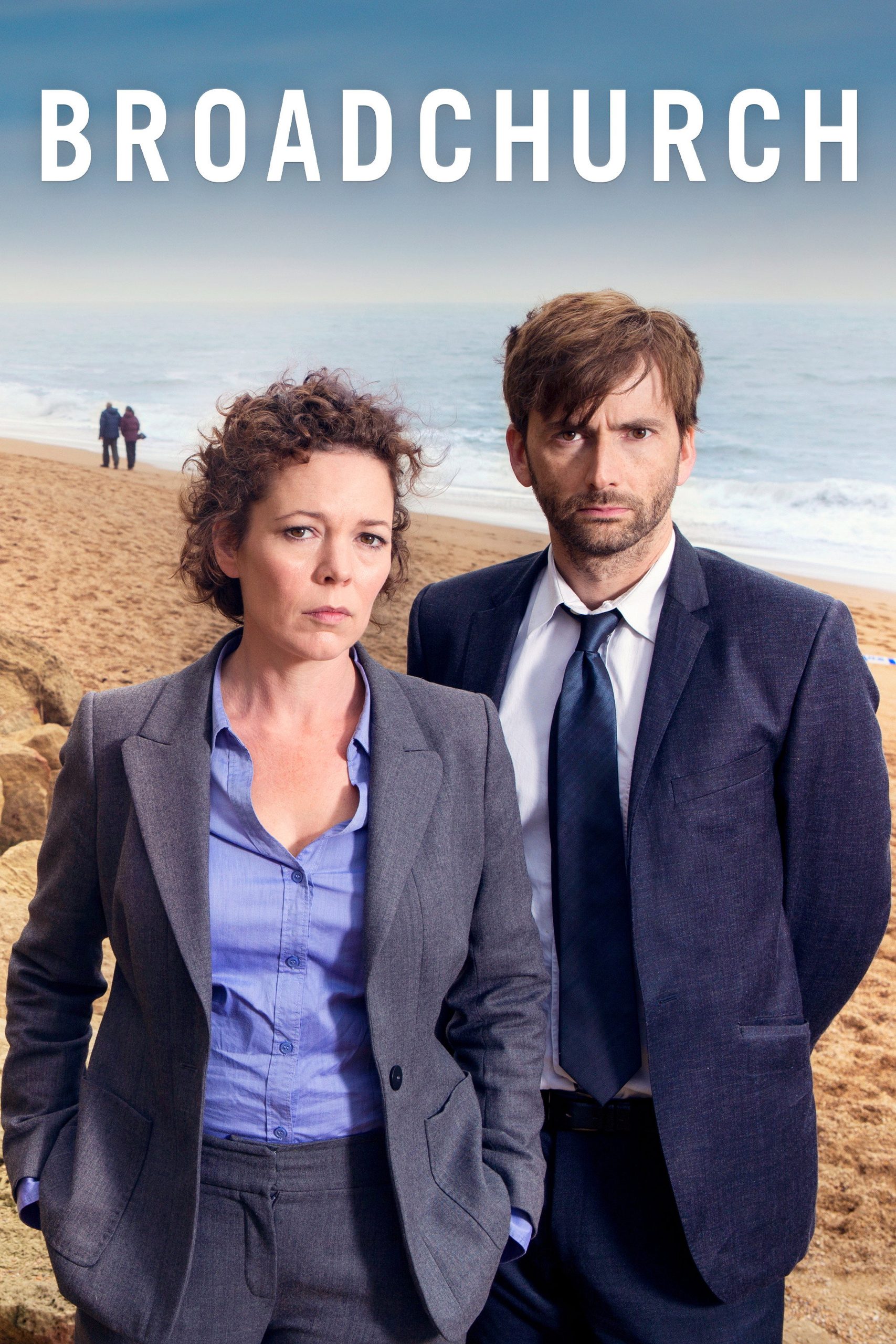
The look of it has been much copied since. The cliffs are gold, the sea is grey, and the eight directors credited across the run, James Strong and Euros Lyn among them, shoot the town from above so often that we came to know its roofs. There is a great deal of slow motion, more than the story needs, and by the fourth episode we had started to notice it. Ólafur Arnalds’ score is piano over strings, quiet and sad, and it returns so often that it starts doing the acting for people who did not need the help.
Most critics wrote about the first series alone, and their reservations were about familiarity: another small town, another closet in every house, another detective with a past. That is fair as far as it goes. Chibnall is not much interested in the puzzle, and the answer, when it comes, is less than the road to it. What he is interested in is a town watching itself: the local paper deciding what to print, the church deciding what to say, neighbours crossing the street to avoid each other. That part has not dated.
Series 2, which began on 5 January 2015, is the caveat, and it is a large one. It will not let the first case rest, it revives an older case of Hardy’s that the first series had only mentioned, and the two stories spend eight episodes getting in each other’s way. We were bored, and then we were annoyed at being bored by people we had come to like.
Series 3, from 27 February 2017, gives Hardy and Miller a new case and brings in Julie Hesmondhalgh as Trish Winterman, with Lenny Henry, Sarah Parish and Mark Bazeley in the town around her. Chibnall and Louise Fox are the credited writers. It is a harder subject than the first, an assault on a grown woman rather than the death of a child, and Hesmondhalgh plays it plainly, and the series has the sense not to decorate what she does. It is not the first series, but it is recognisably the same programme, which the second was not.
Watch the first series over several nights rather than one. It was built around the week’s wait, and the cliffs look better when you have been away from them. Then go straight to the third.