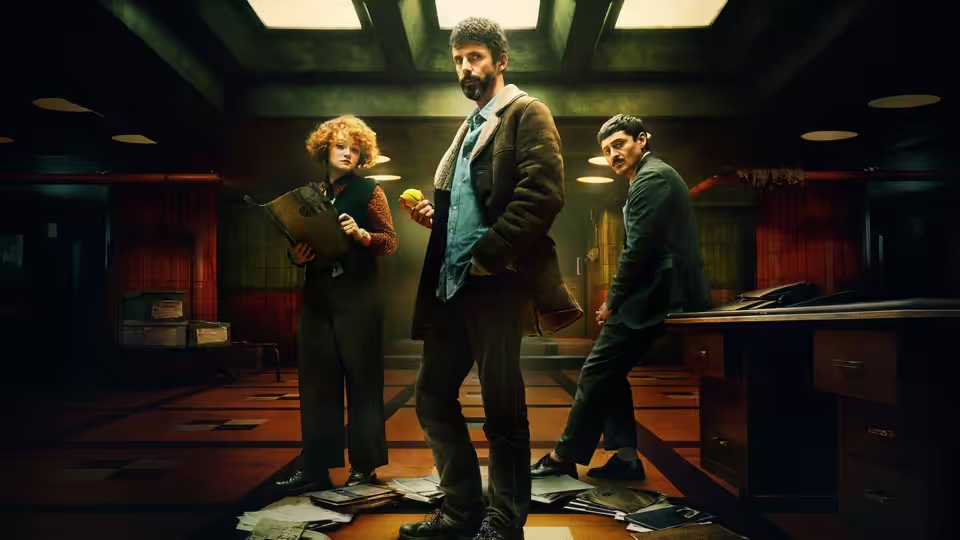
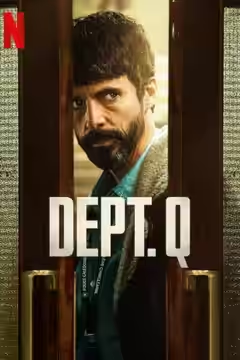
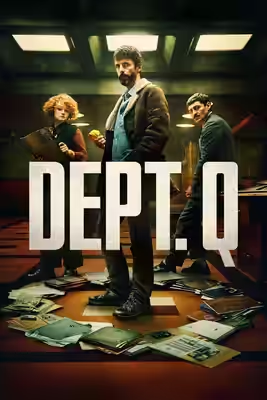
Matthew Goode and a well-matched ensemble make Dept. Q worth the time, though it asks for more than it needs. The mystery is involving, the humour welcome, and the middle episodes could use a firmer cut.
Dept. Q is a good crime drama with a familiar detective and too much time to fill. Its Edinburgh cold-case unit gives Scott Frank and his fellow writers a serviceable way to put difficult people together, then see what they can get done. The mystery holds our attention, but the people matter more. Matthew Goode makes DCI Carl Morck’s bad temper funny without making him easy company. That performance is the main reason to accept a leisurely nine episodes.
Adapted from Jussi Adler-Olsen’s crime novels, the series belongs to the crowded field of procedurals about troubled investigators. It offers little that is new, and is sensible enough not to spend its time pretending otherwise. Frank and fellow director Elisa Amoruso understand the appeal of watching capable actors test one another’s patience. The interest comes from these particular people, whose prickliness gives the routine police work some welcome humour.
Goode gets the balance mostly right. Morck’s abrasiveness is wearing, as it ought to be, but Goode gives the grumbling enough comic timing to keep him watchable. The humour in the team’s exchanges made us laugh; his bad temper is better with other people there to react to it. He can dominate without making the rest of the cast seem unnecessary. There are still moments when the series seems rather too pleased with how difficult he can be.
Alexej Manvelov and Leah Byrne help make the ensemble worth returning to, while Kelly Macdonald brings welcome assurance as Dr Rachel Irving. The series is often more engaging when it gives these actors space than when it adds another complication to the case. Their chemistry encourages us to care about the group before the writing starts asking for sympathy. Some of that sentiment feels overinsistent, particularly in a programme that otherwise gets so much pleasure from people being awkward.
Grant Montgomery’s production design makes the Edinburgh cold-case unit feel like somewhere people have to work together, which helps the comedy. Carlos Rafael Rivera’s music sustains the unease, though atmosphere cannot make a slow stretch feel shorter. Frank and Amoruso keep the characters at the centre of the procedural business, where this material is strongest. There is care in the way the series is put together, even when the writing gives it more to accommodate than it needs.
Nine episodes leave room for a middle section that needs firmer decisions. The writing, credited to Frank, Stephen Greenhorn, Chandni Lakhani and Adler-Olsen, keeps more subsidiary storylines than the central investigation can comfortably carry. We grew impatient when those detours delayed a mystery that had already persuaded us to pay attention. By this point, the cast are doing more of the work than the plotting should ask of them. With fewer diversions, there would still be ample room for the ensemble.
Against the standards of the troubled-detective procedural, this is solid work, helped considerably by its lead and by a team we would happily spend more time with. The case remains worth following through the slower stretches, even if the supporting stories could have been pruned. We recommend it to those who enjoy the company of a detective team as much as the solution to its case. If the abrasive detective has already exhausted your patience, Goode may not be enough to restore it.