Steven Conrad’s suburban murder mystery is worth watching for its awkward friendships and the warmth of David Harbour’s performance. The investigation is less compelling, and the pace sometimes slackens, but the comedy has enough bite to keep us interested.
DTF St. Louis is a good dark comedy with a murder mystery that too often holds it up. Writer-director Steven Conrad follows two middle-aged men exploring affairs through a local dating app, with friendship becoming as important as sex. The appeal is in how awkwardly those appetites sit together, and in the care taken over people who could easily have been reduced to dirty jokes. We recommend it for the company, with some patience required for the investigation.
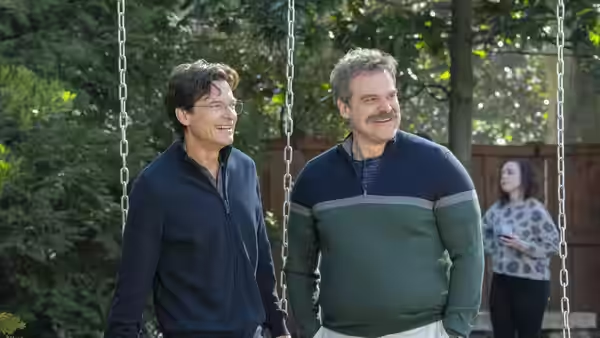
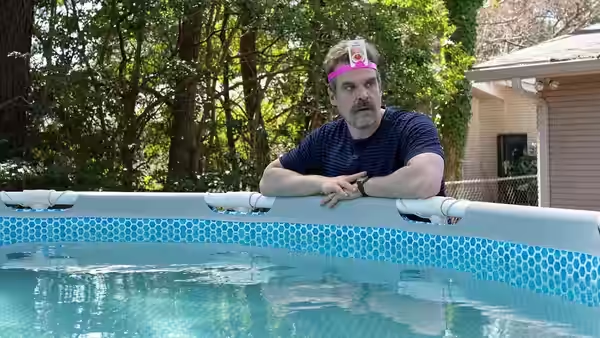
Jason Bateman plays Clark Forrest, David Harbour is Floyd Smernitch, and Linda Cardellini completes the central triangle as Carol Love-Smernitch. Bateman and Harbour make the friendship convincing enough for the jokes about midlife dissatisfaction to carry some weight. We were more moved than we expected by Harbour’s performance. He makes Floyd’s wish for company seem painfully ordinary, even when Conrad’s dialogue is working hard to sound peculiar. Cardellini supplies enough comic force for the love triangle to compete with the men’s friendship.
James Whitaker’s cinematography and Laura Fox’s production design make useful comedy out of the ordinary Midwestern setting. Sex and betrayal need not look glamorous, and here the banal surroundings help make them funny. We understand why reinvention might appeal to these people, while doubting that a change of partner will solve much. Conrad lets the setting do some of the satirical work rather than asking the dialogue to explain every dissatisfaction.
The writing is less sure when it moves from coarse humour into tenderness. Conrad wants room for absurdity, romance and the hurt beneath the men’s behaviour, which is a reasonable ambition for a comedy about middle age. The coarse humour and the gentler scenes do not always sit comfortably together, and some of the eccentricity begins to feel laboured. Alex Wurman supplies the music, though the most persuasive emotional work comes from the actors. They make it possible to care without demanding approval.
The more persistent difficulty is the investigation. Editors Ross, Koepke and Scheidegger handle a story whose flashbacks are more engaging than its murder-mystery passages, and the returns to detection can feel like an interruption. Those passages follow a more familiar course than the peculiar friendship at the centre, slowing a series that is already happy to take its time. Across seven episodes, there is room to indulge the characters, but also too much opportunity to let a scene linger.
Among dark comedies about badly behaved adults, this stands out for taking loneliness seriously without making everyone solemn. It is often funny about the lengths people go to for company, and Harbour gives those lengths a sadness that the plotting cannot supply. Come for that untidy friendship, and do not expect the investigation to hurry.