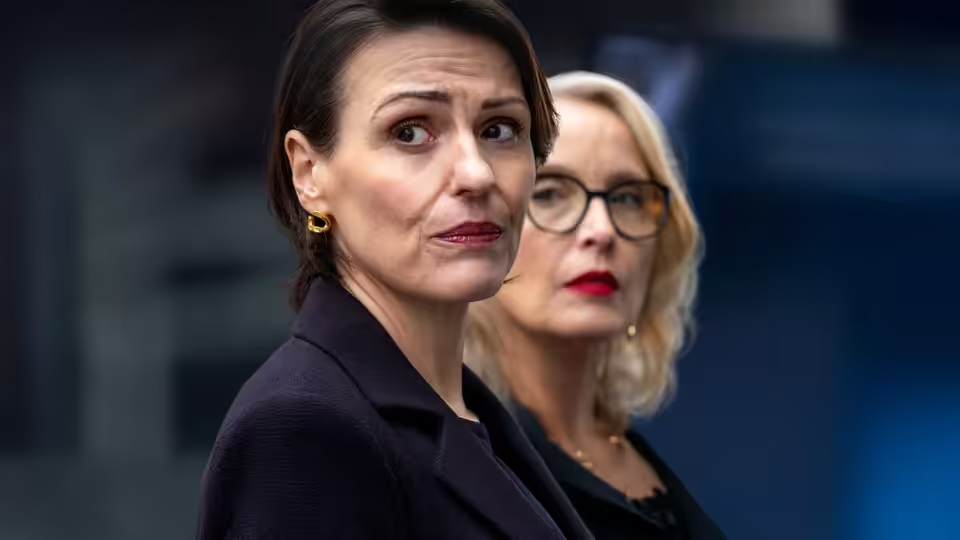
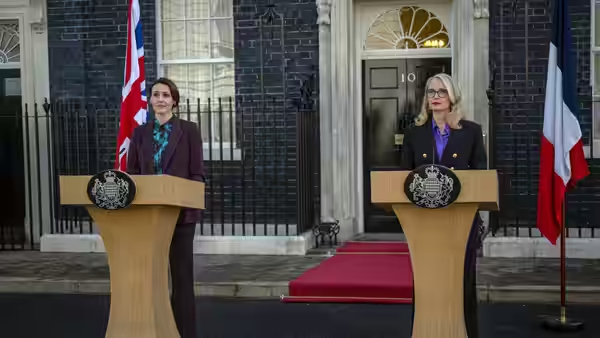
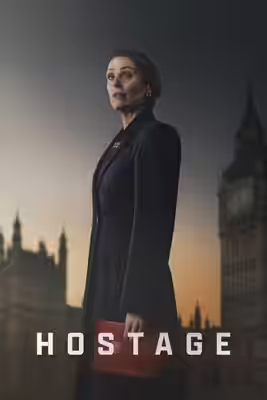
Suranne Jones and Julie Delpy keep Hostage watchable through political crises that rarely withstand scrutiny. Across five brisk episodes, it offers enough tension for thriller devotees, but little reason to take its politics seriously.
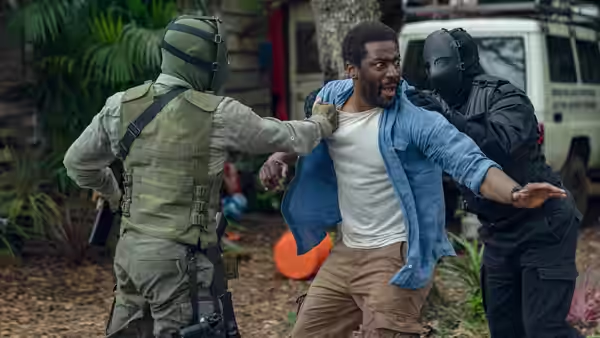
Hostage is a watchable political thriller whose two leads deserve a more convincing script. Matt Charman sets a drug shortage and a kidnapping among the crises facing political leaders, giving the drama ample reason to hurry. Across five episodes, it asks how women exercise power under pressure and amid misogyny, although it rarely stays with a decision long enough to examine it. The pace helps, particularly when the alternative would be another opportunity to question the plot.
Suranne Jones, as Abigail Dalton, and Julie Delpy, as Vivienne Toussaint, provide most of the reason to continue. Their partnership gives the series a centre that the succession of crises cannot supply on its own. We were gripped by the kidnapping more than we expected to be, because the leads make the pressure feel serious even when the plotting is doubtful. Their conviction keeps our attention on the people affected, and for a while that is enough.
Charman is less persuasive when those people have to exist beyond the immediate emergency. The writing invokes power and misogyny, but offers too little detail about how either shapes the leaders’ choices. A shortage of medicines ought to produce difficult questions about priorities and responsibility; here, its chief value is that it gives the thriller another urgent problem. We need a firmer sense of what these women believe before their decisions can carry the importance the series assigns them.
Directors Isabelle Sieb and Amy Neil keep events moving, with little temptation to linger over the weaknesses. Editors Ben Drury and Jesse Parker maintain the brisk pace, and the five-episode length is a sensible fit for this material. There is little of the waiting that can drain a television thriller, and the series benefits from getting on with its emergencies. The compactness is welcome even when the speed conceals a weak connection between events.
Catherine Derry’s cinematography is unobtrusive, which suits a drama carried so heavily by its performers. Arwel Jones’s production design is less helpful: this political world feels too generic to tell us much about the people working in it. Jeff Russo’s music adds urgency without giving the crises much additional weight. The supporting craft is competent, but it is the casting that makes the programme worth considering.
A political thriller need not offer a civics lesson, and the melodrama is not itself the problem. There is pleasure in watching capable actors commit to an implausible emergency without apologising for it, something this cast understands. But even a cheerfully unlikely thriller needs characters whose behaviour we can follow and decisions that have convincing consequences. Charman’s writing provides too few of those, so the excitement becomes harder to sustain once we stop granting it the benefit of the doubt.
There is still enough entertainment here for viewers who enjoy a political thriller and can forgive some loose plotting. We would recommend it chiefly for Jones and Delpy, with a firm warning that its interest in government is limited. Choose it for the company, and resist the temptation to pause and discuss whether any of this makes sense.