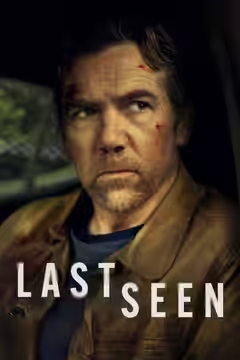
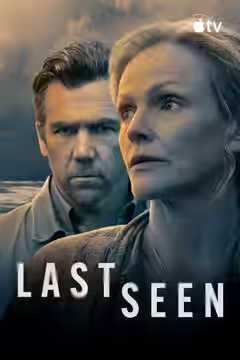
Patrick Brammall gives Last Seen a convincing grieving father, and the family drama earns our attention. The mystery is less reliable, with coincidences and predictable turns that the performances cannot quite disguise.
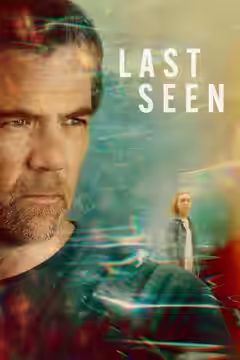
Last Seen is a good family drama with a less dependable crime story, and we would choose it chiefly for Patrick Brammall. Writer Kris Mrksa gives its central father a reason to keep searching: a mysterious call suggests that his missing daughter may still be alive. Director Christian Schwochow keeps the investigation moving, though the series is more persuasive about grief than about the mechanics of detection. That distinction matters for anyone expecting the pleasure of a mystery whose details withstand inspection.
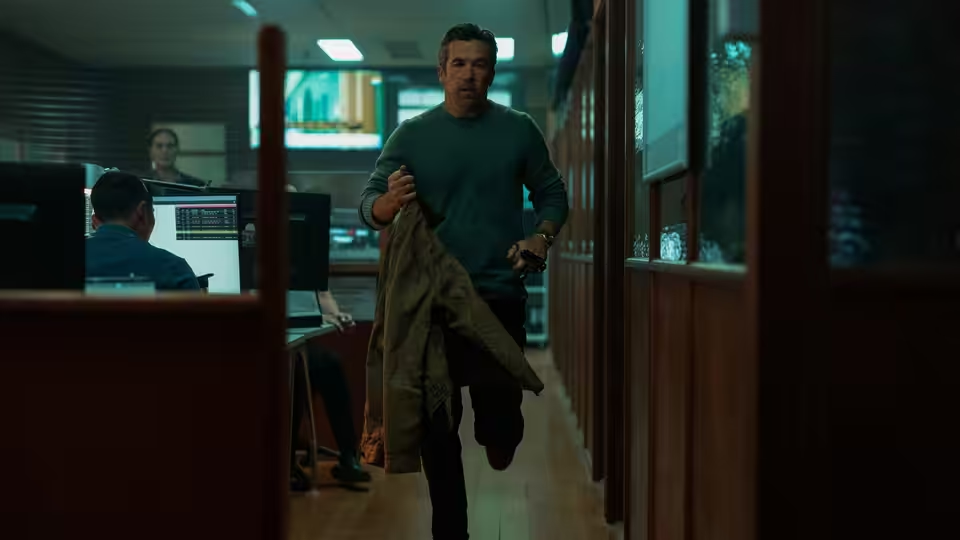
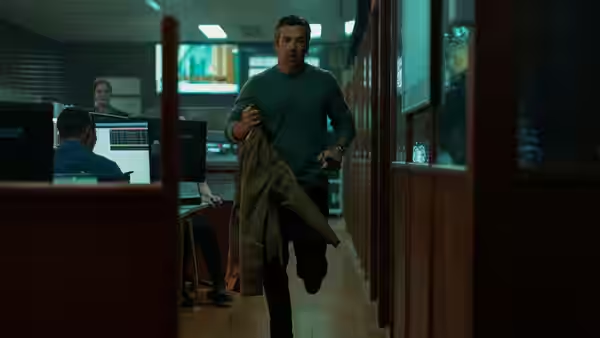
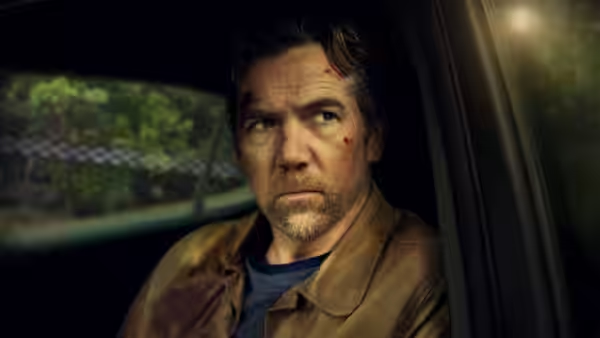
Brammall plays Ian Ridley, a dispatcher whose renewed hope makes an already difficult life harder to bear. The premise unsettles us: that call gives a grieving father fresh hope without giving him certainty. Brammall’s performance allows for desperation, bitterness and flashes of humour, avoiding the monotony of a man required to look stricken in every scene. The humour is particularly valuable because it gives Ian something to do beyond demonstrating his suffering. His flaws also leave room to question his judgement without losing interest in his search.
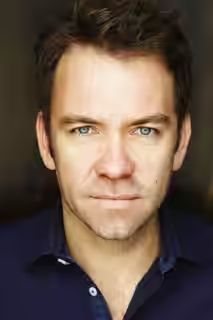
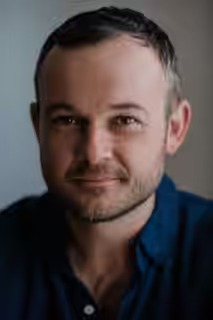
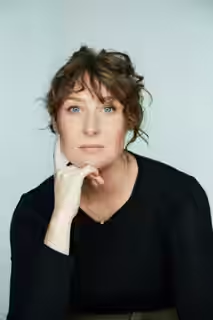
The family material benefits from an ensemble that includes Brendan Cowell as Henry Reid, Maxine Peake as Jenna Reid and Daniel Henshall as Donald Reid. Chloe Jean Lourdes, playing Sarah Reid, makes a strong impression within that company. There is enough attention to relationships for the supporting characters to matter beyond their usefulness to the investigation. Mrksa’s writing is most effective when it allows the disappearance to affect more than the person leading the search.
The coastal setting is another asset, giving the family story a sense of place that helps it hold attention when the plotting becomes strained. Bonnie Elliott handles the cinematography, with production design by Chris Kennedy. The setting works because the drama remains concerned with the people living there, rather than treating the coast as sufficient entertainment in itself. A recognisable community matters to this sort of mystery, especially when its inhabitants are more convincing than some of its developments.
Fiona DeSouza and Richard Graham edit a six-episode series, and that limited length helps keep the narrative’s weaknesses manageable. Schwochow provides momentum, although a slower passage later on interrupts it and makes the amount of explanation more noticeable. Isobel Waller-Bridge supplies the music, while the strongest emotional pull comes from Brammall’s handling of Ian’s desperation. The pacing is generally controlled enough to sustain interest without making every part of the investigation equally persuasive.
The trouble is the reliance on coincidence and developments that are easier to anticipate than the surrounding tension suggests. Mrksa can make a grieving father’s behaviour credible, but the connections between events need the same care. Several turns ask for indulgence where a crime mystery ought to reward attention, and the performances cannot repair those logical gaps. The family story remains involving, but anyone principally interested in following clues will have more objections than someone watching for the characters.
Within the crime genre, this is a familiar bargain: strong acting and emotional detail compensate for an imperfect investigation. We think the compensation is sufficient, though it does not make the objections disappear. Brammall gives the series enough range to keep parental grief from becoming its only note. Choose it for the family, and be prepared to forgive the investigation.