David Mitchell has been waiting his whole career for a part this shape, and Mark Brotherhood’s puzzle-setter-turned-detective fits him exactly. The cases are neat and the station is well cast; the brother who vanished in episode one is forgotten for hours at a time.
Mark Brotherhood’s idea is a simple one and he knows who it is for. A man who has spent his life setting puzzles is dropped into a police station full of them, among people who believe he is his brother. David Mitchell has played anxious, exacting Englishmen on television for years, and this is the first time a script has needed one. The first series runs six episodes, each with a body, a room of suspects and a solution, and underneath them the question of what happened to James Taylor. It is well made, it is funny and it is gentler than it needs to be.
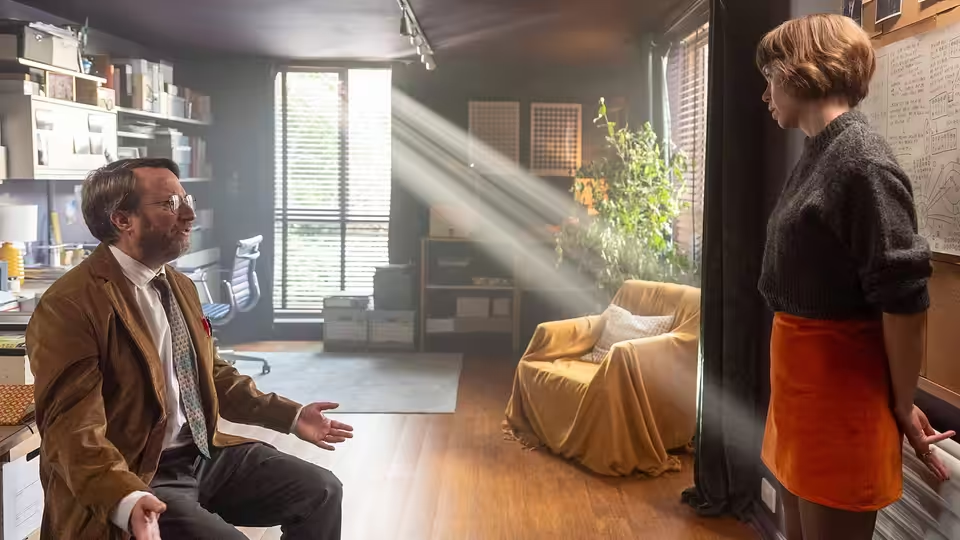
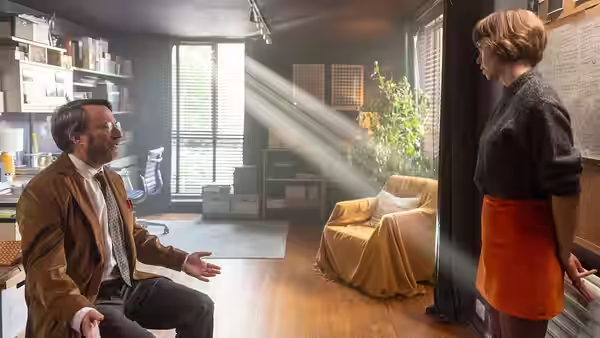
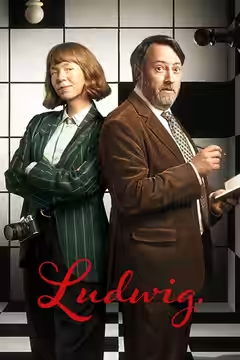
Mitchell is the reason it works. John Taylor cannot lie, so he tells the truth in a way that sounds like a lie, and Mitchell plays every conversation as a small emergency: eyes down, hands busy with a briefcase, sentences that start out apologising and end up correcting someone. The solutions are delivered standing up, to the whole station, as he talks himself through the timeline and finds the one piece that will not fit. We laughed hardest when he is introduced to officers who all know him and tries to work out, from their faces, which of them he is supposed to like. We were also more moved than we expected, watching him come home to the empty house and understand that he had enjoyed himself, and that this was a problem.
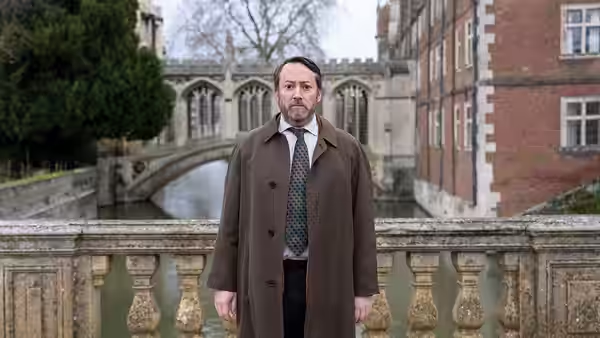
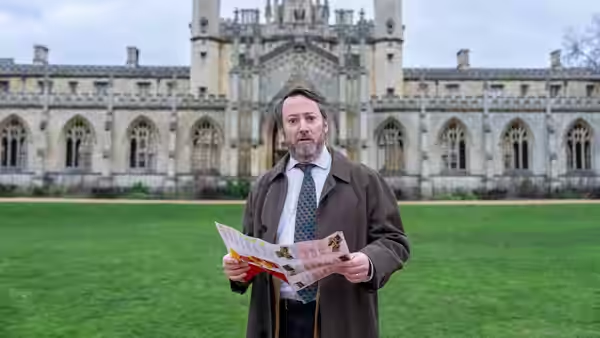
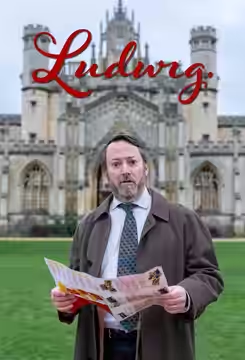
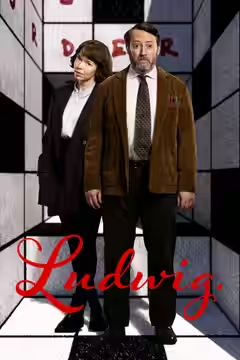
The look holds together across five directors. Nick Martin and Annika Summerson shoot Cambridge in low warm light, brick and river and college stone, with a taste for the shot from directly above, so that a body on a floor becomes a diagram and the detectives round it become pieces. Simon Reglar and Nikki McChristie cut the reveals as replays, back to the earlier scene with one detail now in focus, and keep them short. Nathan Klein and Finn Keane’s music ticks along in plucked strings and small percussion, and stays out of the way when Mitchell is talking.
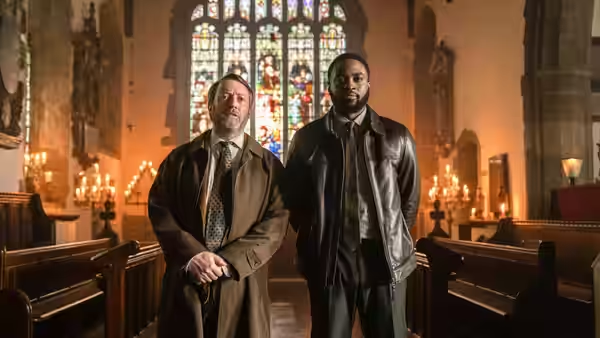
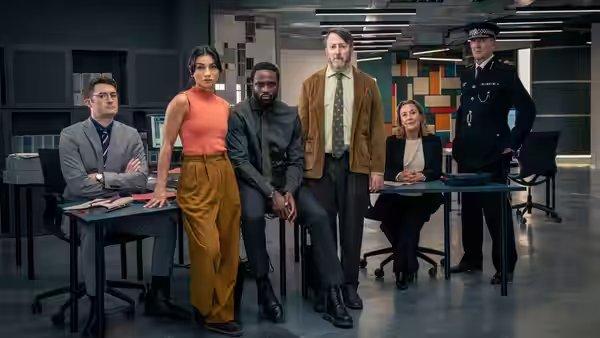
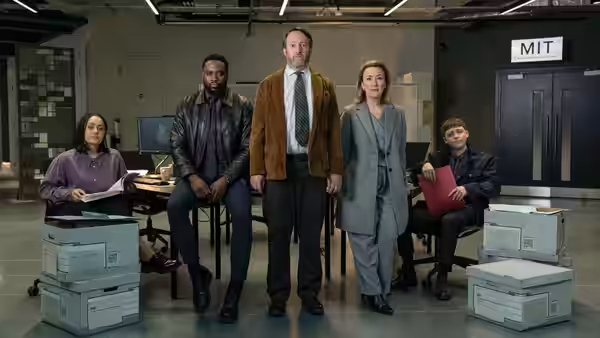
The station is well cast. Dipo Ola’s DI Russell Carter was James’s partner, and Ola plays him as decent, tired and slow to say what he sees. Izuka Hoyle’s DS Alice Finch is sharper and less patient, and the series is better whenever she is on screen. Gerran Howell and Ben Ashenden, as DCs Simon Evans and Ethan Cole, are a double act in the background of scenes, and Dorothy Atkinson’s DCS Carol Shaw runs the place like someone who has read all the forms. Ralph Ineson arrives as Chief Constable Ziegler and does what Ralph Ineson does, which is stand still and make everyone nervous.
Anna Maxwell Martin has less to do than she should. Lucy is the one who put John in the suit, and the scenes in which she coaches him down the phone are quick and good, but for long stretches she is kept at home with Dylan Hughes’s Henry and a worried face. Maxwell Martin can do a great deal with a worried face. The script gives her one note.
The larger problem is James. His disappearance is the engine of the first episode and then it is parked. Whole hours pass in which nobody mentions him until the last ten minutes, when a photograph or a phone call reminds us there was a story here, and the cases of the week, neat in the first two episodes, grow more ordinary as the series goes on. By the fourth hour we were admiring the furniture and waiting for the plot to come back, and we were a little cross, because the opening had promised more. When the brother strand returns it moves fast, and we will say nothing about where it goes.
Cosy crime forgives almost anything if the lead is likeable, and this lead is. Set against the shows it descends from it is better lit, better cut and less frightened of a joke than most. Watch it two episodes at a time and do not expect the murders to keep you up; the pleasure is in watching a man who would rather be at home become good at being somewhere else.