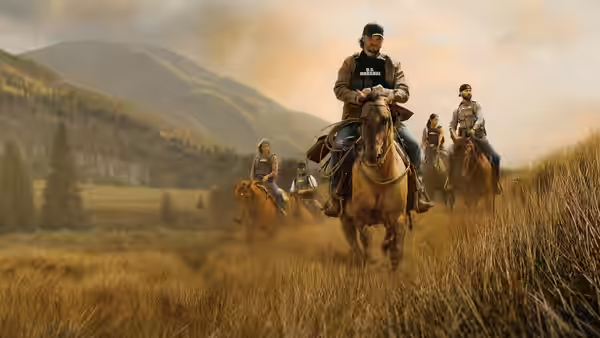
Spencer Hudnut moves Kayce Dutton from the ranch to a Marshals task force and finds a procedural where a saga used to be. Luke Grimes and Gil Birmingham do good, quiet work; the cases around them could belong to any network cop show.
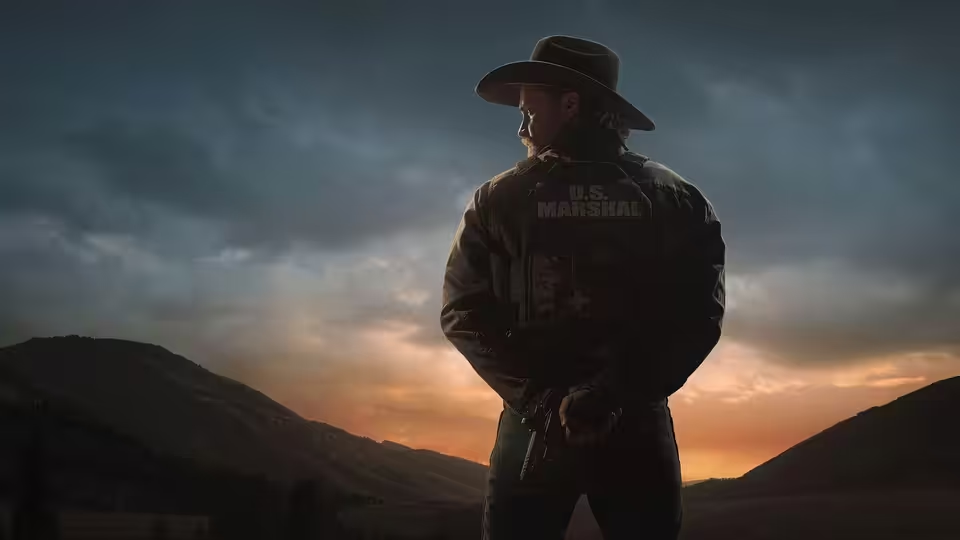
Spencer Hudnut’s Marshals takes Kayce Dutton, the quiet son from Taylor Sheridan’s Yellowstone, and gives him a badge, a truck and a case a week. The tagline calls it a new era of Yellowstone. What it is, in practice, is a competently made American crime procedural with a famous surname attached, and the surname does most of the work. The first season runs to thirteen episodes.
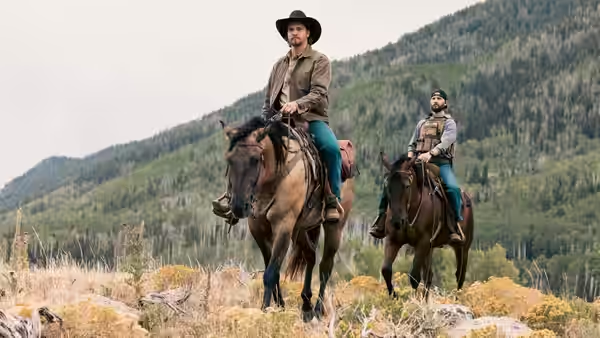
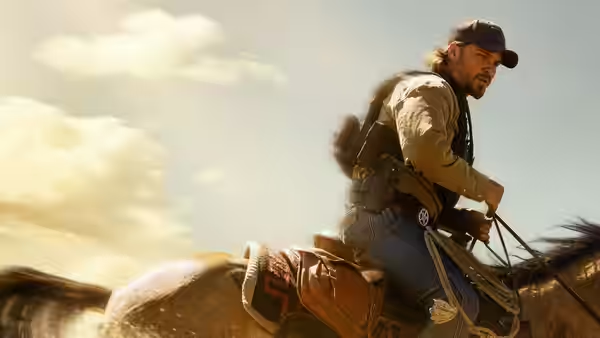
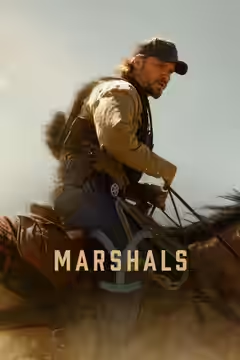
Luke Grimes was always the stillest thing in the parent show, and he is still good at it here. He plays Kayce as a man who would rather not speak and does not trust anyone who speaks easily, which is a workable centre for a cop show if the cop show is willing to be quiet with him. Logan Marshall-Green’s Pete Calvin is the one who fills the silence, and the scenes with the two of them in a vehicle, one talking and one not, are the closest the series comes to a voice of its own. It is a decent double act, and not, over thirteen hours, a substitute for a story.
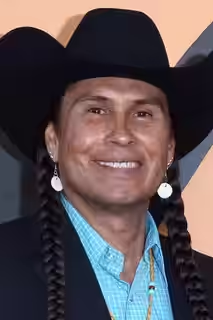
The story that does hold is on the Broken Rock reservation. Gil Birmingham’s Thomas Rainwater has spent years being the most measured man in Sheridan’s Montana, and he still is; he speaks slowly, says less than he knows, and the directors keep the camera on him longer than on anyone else because they have plainly worked out that he can carry it. Moses Brings Plenty’s Mo stands at his shoulder. The question of who polices the reservation, and on whose authority, is the one place the series seems to care about the answer. We sat forward each time the show went there, and slumped back a little each time it left.
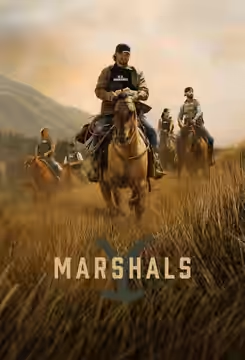
It leaves often. The Marshals’ cases are the weekly business and they are ordinary: a fugitive, a warehouse, a stand-off, an arrest before the credits. Seven directors are credited across the season, four editors and three cinematographers, and the effect is of a rota rather than a hand. Eric Leach, Thomas Yatsko and Christopher Faloona shoot the plains and the low sun well enough, as anyone with that landscape would, and then the show goes indoors to the rooms Maria Caso has dressed as a federal office, and the light goes flat and the coverage goes standard. Brian Tyler, who wrote the music for Yellowstone, shares the score with Breton Vivian, and the strings swell where a series of this kind always swells. Somewhere in the middle episodes we realised we had stopped listening to the dialogue and were watching the weather behind it. That is not a compliment to the dialogue.
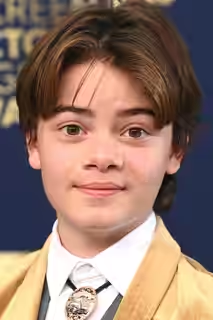
Arielle Kebbel’s Belle Skinner, Ash Santos’s Andrea Cruz and Tatanka Means’s Miles Kittle round out the task force, and each is given a job description in place of a character; Means in particular has a presence the scripts do not use. Brecken Merrill’s Tate is on hand to remind Kayce, and us, that there is a family to be worried about. Seven writers are credited, and the lines are functional, the kind that tell you the plan and then tell you the plan has gone wrong.
The genre has done this better. Justified put a US Marshal back in the state he grew up in and made every case a conversation about the man; Marshals puts one in Montana and makes every case a case. Against Yellowstone itself the comparison is stranger. That show was often absurd and always sure of itself, and this one is neither; the rows here happen in offices, at normal volume.
Most critics have landed near where we have, and the one dissent so far argues that the show is still finding itself, which may be true. If you followed the Duttons to the end and want to know how Kayce is getting on, there is an evening or several here, with a 12 certificate and nothing in it to frighten anyone. If you did not, the series gives you little reason to start now, and Birmingham deserves a show that has one.