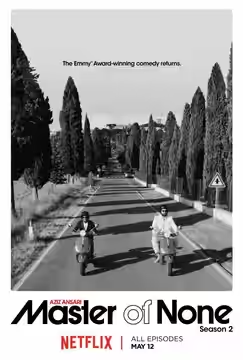
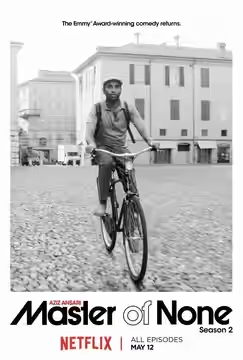
Aziz Ansari and Alan Yang made a comedy about a New York actor who cannot decide anything, and made it warm, well shot and honest about parents, race and dating. Ansari the actor is its limit; the people around him are its strength.
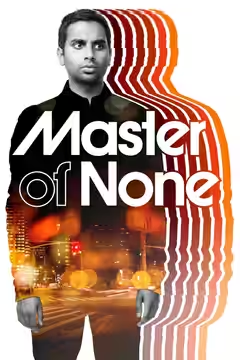
Aziz Ansari and Alan Yang made Master of None as a comedy about a New York actor in his early thirties who cannot decide anything: what to eat, whom to see, whether he wants children. Dev Shah (Ansari) spends the opening episode researching the best taco in the city and rather less time on a pregnancy scare. The first season arrived on 6 November 2015. It is warm, handsomely made and honest about things comedy usually skips, and its limit is the man at the centre of it. Ansari the writer is generous to everyone; Ansari the actor can do the jokes and struggles with the rest. We recommend it, with that caveat attached.
Each episode takes a subject and sits with it: parents, dating, being an Indian actor in American television, what women put up with walking home at night. Indians on TV is the one people remember. Dev is asked at an audition to do an accent, declines, and then finds out what the people casting the show say about actors like him when they think nobody is listening. The episode is funny about it and does not let anyone off, including Dev, who wants the job.
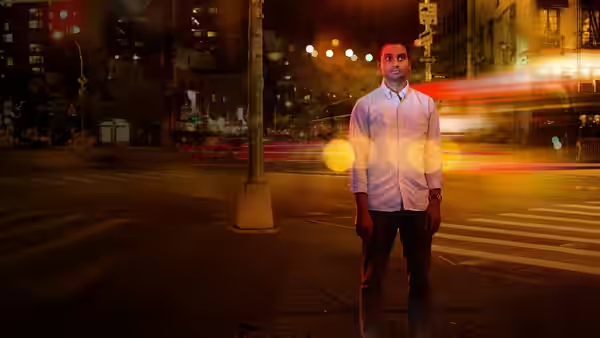
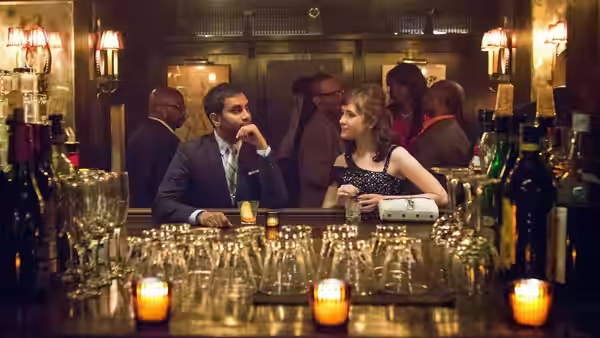
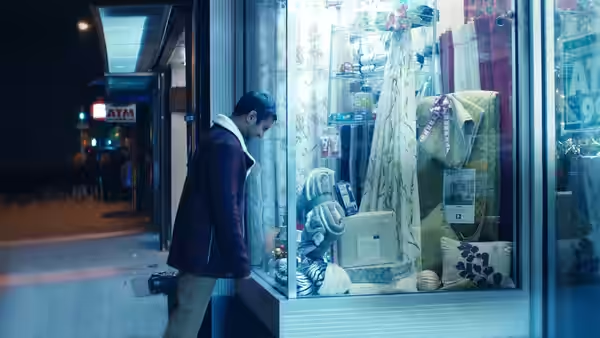
Mark Schwartzbard shoots it wide and still. Two people at a restaurant table are held in one frame for the length of the conversation, and the camera does not go looking for reactions. New York is filmed at dusk, in brick and amber. Amy Williams’s production design gives Dev a flat full of books and a city of bars with real menus. Dana Covarrubias puts him in shirts that fit and trainers he has thought about. Suzy Elmiger cuts slowly, letting scenes run past the joke to the awkward bit after it. Joe Wong and Didier Leplae write sparing music, and the programme mostly plays records.
The episode about parents is where the show declared what it was. Dev and a friend take their fathers to dinner and ask them, for the first time, how they came to America. The programme cuts to the fathers as young men, and then back to the restaurant, where the sons are checking their phones. It moved us more than we expected a comedy to manage, because the fathers are allowed to finish their sentences. Most sitcoms would have cut to the son’s face for the laugh; Elmiger holds on the old man until he has finished talking.
Lena Waithe is the best thing in it. Denise is Dev’s friend, a woman who has sorted her own life out and watches him fail to sort out his with the patience of someone who has already said everything twice. Waithe plays her dry, unbothered and never once as the sidekick. Waithe also writes for the programme, and the episode that follows Denise and her mother through years of the same holiday dinner is the best single thing it made.
Ansari himself is the problem. He is good at wanting things and less good at losing them. The second season, which arrived in May 2017, builds towards a romance that has been arranged too neatly and that Ansari cannot make hurt; when Dev is meant to be in pain, he looks mildly inconvenienced. The conversations, so good when they are about tacos, can turn into panels when they are about principles: a character makes a point, another agrees, Dev nods. Claire Danes and Noah Emmerich, as a married couple Dev finds himself between, show what the lead cannot do by doing it. Danes plays Nina as a woman who knows exactly what she is doing and enjoys it.
The third season, five episodes in 2021, is a different programme, with Naomi Ackie as Alicia Jackson and Waithe moved to the centre. We will say no more about it here.
The first two seasons set the shape for a good deal of half-hour comedy: one subject per episode, a camera that keeps still, jokes that are allowed to be sad. Watch it two episodes at a time, after dinner. You will not want to watch it hungry.