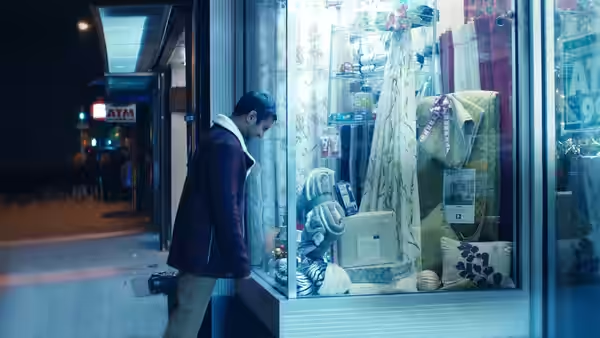
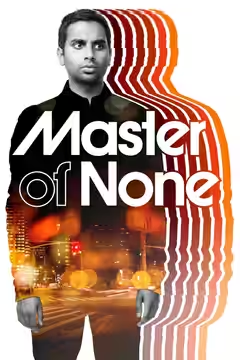
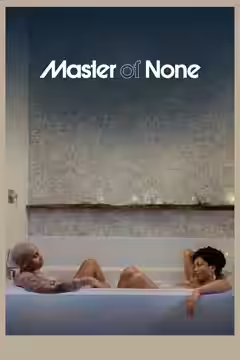
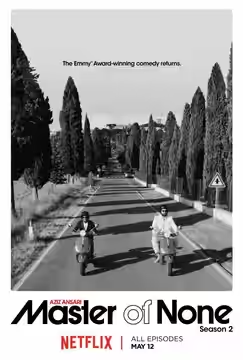
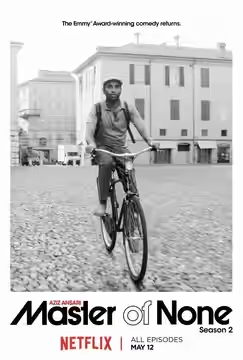
A scene from Master of None
Series review

Master of None

2015 · Created by Alan Yang, Aziz Ansari · Series

In a sentenceA man who will research a taco for an hour and a marriage for a minute, and a show that finds this reasonable

Dev Shah (Aziz Ansari) is an actor in New York, in his early thirties, getting by on adverts and auditions while his friends marry and have children. In the first episode a condom breaks, and a trip to the pharmacy for the morning-after pill sets him wondering whether he wants a family. He takes his questions to his friend Denise Watkins (Lena Waithe), who reads his text messages and says what she thinks of them. His parents, who came to America from India, would like him to ask about their lives for once. He is asked at an audition to do an accent, and finds himself between a married woman, Nina (Claire Danes), and her husband Mark (Noah Emmerich).

Fi1m review

Aziz Ansari and Alan Yang made a comedy about a New York actor who cannot decide anything, and made it warm, well shot and honest about parents, race and dating. Ansari the actor is its limit; the people around him are its strength.

Aziz Ansari and Alan Yang made Master of None as a comedy about a New York actor in his early thirties who cannot decide anything: what to eat, whom to see, whether he wants children. Dev Shah (Ansari) spends the opening episode researching the best taco in the city and rather less time on a pregnancy scare. The first season arrived on 6 November 2015. It is warm, handsomely made and honest about things comedy usually skips, and its limit is the man at the centre of it. Ansari the writer is generous to everyone; Ansari the actor can do the jokes and struggles with the rest. We recommend it, with that caveat attached.

Each episode takes a subject and sits with it: parents, dating, being an Indian actor in American television, what women put up with walking home at night. Indians on TV is the one people remember. Dev is asked at an audition to do an accent, declines, and then finds out what the people casting the show say about actors like him when they think nobody is listening. The episode is funny about it and does not let anyone off, including Dev, who wants the job.

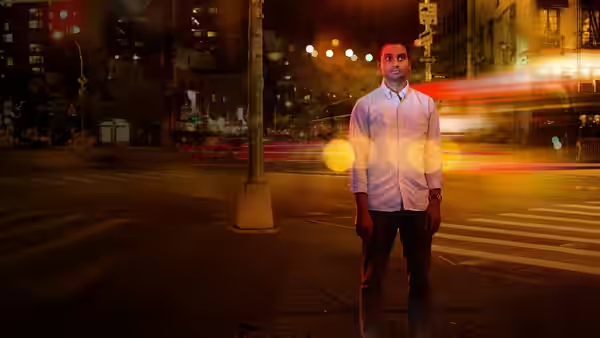
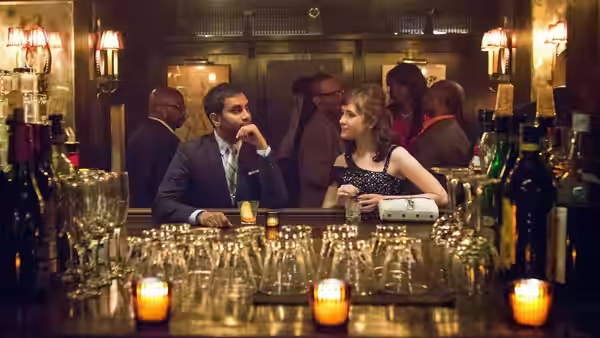
Mark Schwartzbard shoots it wide and still. Two people at a restaurant table are held in one frame for the length of the conversation, and the camera does not go looking for reactions. New York is filmed at dusk, in brick and amber. Amy Williams’s production design gives Dev a flat full of books and a city of bars with real menus. Dana Covarrubias puts him in shirts that fit and trainers he has thought about. Suzy Elmiger cuts slowly, letting scenes run past the joke to the awkward bit after it. Joe Wong and Didier Leplae write sparing music, and the programme mostly plays records.

The episode about parents is where the show declared what it was. Dev and a friend take their fathers to dinner and ask them, for the first time, how they came to America. The programme cuts to the fathers as young men, and then back to the restaurant, where the sons are checking their phones. It moved us more than we expected a comedy to manage, because the fathers are allowed to finish their sentences. Most sitcoms would have cut to the son’s face for the laugh; Elmiger holds on the old man until he has finished talking.

Lena Waithe is the best thing in it. Denise is Dev’s friend, a woman who has sorted her own life out and watches him fail to sort out his with the patience of someone who has already said everything twice. Waithe plays her dry, unbothered and never once as the sidekick. Waithe also writes for the programme, and the episode that follows Denise and her mother through years of the same holiday dinner is the best single thing it made.

Ansari himself is the problem. He is good at wanting things and less good at losing them. The second season, which arrived in May 2017, builds towards a romance that has been arranged too neatly and that Ansari cannot make hurt; when Dev is meant to be in pain, he looks mildly inconvenienced. The conversations, so good when they are about tacos, can turn into panels when they are about principles: a character makes a point, another agrees, Dev nods. Claire Danes and Noah Emmerich, as a married couple Dev finds himself between, show what the lead cannot do by doing it. Danes plays Nina as a woman who knows exactly what she is doing and enjoys it.

The third season, five episodes in 2021, is a different programme, with Naomi Ackie as Alicia Jackson and Waithe moved to the centre. We will say no more about it here.

The first two seasons set the shape for a good deal of half-hour comedy: one subject per episode, a camera that keeps still, jokes that are allowed to be sad. Watch it two episodes at a time, after dinner. You will not want to watch it hungry.


Critical consensus AI synthesised

82
Positive
7
Mixed
0
Negative
0

The reviews are uniformly warm. Most critics take to the show’s tone first: gentle, observational comedy that treats its characters kindly rather than mocking them, and several note how much less cynical it is than the half-hour comedies it resembles. The praise clusters on Ansari’s writing and on the episodes that deal with race and family, particularly the one about Indian actors on television and the one about immigrant parents, which critics single out as the sharpest and most humane material in the run.

The reservations are small and scattered. Variety finds the direction stilted in the early episodes; Vulture notes occasional underacting; The Telegraph thinks Ansari is a little too old for the millennial he is playing. Nobody is negative and the spread is narrow, running from good to very good. The two lowest scores, from Variety and Paste, are still recommendations, and Paste is judging on the premiere alone.

The Guardian
6 November 2015
90*

The series is a triumphant, joyful and very funny exploration of human connection, like a kinder Curb Your Enthusiasm. It stands out for its humane tone, insightful take on race in the 'Indians on TV' episode, and focus on meaningful relationships rather than cynicism.

Read the full review →
The Hollywood Reporter
21 October 2015 · Tim Goodman
90*

The critic highlights Ansari's creative breakout and evolution as a writer-director-star, commending the fresh, multicultural coming-of-age story in modern New York, natural integration of race and family themes, and the show's growing depth, charm, and originality across episodes.

Read the full review →
Vulture
4 November 2015
85*

The critic praises the show's naturalistic dialogue, casual yet urbane aesthetic, and tender regard for its characters as they navigate romance, race, gender, and everyday life, calling it a thrillingly assured and effective series that feels like the point of contemporary half-hour television despite minor hiccups like occasional underacting.

Read the full review →
The Telegraph
9 May 2016 · ★★★★ · Ed Power
80

Ansari's show offers a perfect mix of sarcasm and sincerity as he plays a less successful version of himself navigating relationships and career setbacks with underachieving friends. The humour is gently observational rather than zinger-heavy, though the lead is slightly too old for the millennial role.

Read the full review →
Variety
2 November 2015 · Maureen Ryan
70*

The critic praises the show's ambitious plans to investigate love, romance, race, and gender through nimble comedy and cultural commentary, singling out episodes on immigrant parents and sexism for their insight and humor while noting some early stilted direction.

Read the full review →
Den of Geek
6 November 2015 · 4 out of 5 · Daniel Kurland
90*

The critic calls Master of None the freshest take on modern romance and dating in a long time, praising its organic integration of contemporary material like texting and social media along with its beautiful filming, strong ensemble cast, and honest exploration of relationships and social issues.

Read the full review →

Straight answers AI written, from our review

Is Master of None worth watching?
Master of None is worth watching for anyone who wants a half-hour comedy that takes parents, race and dating seriously, and we scored it 80. Aziz Ansari and Alan Yang write it warmly and shoot it handsomely, and Lena Waithe is the best thing in it. Ansari the actor is the limit: he is good at wanting things and less good at losing them.
Where can I watch Master of None in Ukraine?
Master of None is streaming on Netflix in Ukraine. Availability is checked daily; the links above go straight to each service.
How violent or frightening is Master of None, and is it suitable for children?
Master of None is not violent or frightening; it is a UK 15 for sex and swearing rather than anything alarming. It opens with a broken condom and a trip for the morning-after pill, and the dating episodes are frank about adult life. It is not for children, and younger teenagers will find little in it aimed at them.
How does Master of None compare to Frances Ha?
Master of None and Frances Ha both follow a New Yorker who cannot decide anything, but the series is warmer and wider, with a whole episode given to parents or to being an Indian actor. Frances Ha is the sharper piece, and its friendship at the centre is more affecting than anything Dev manages. Pick the film for an evening, the series for a fortnight.
What should I watch after Master of None?
After Master of None, try Frances Ha (2012, Fi1m 82): Black and white New York, a woman who cannot decide, and no tidy ending. Then Before Sunrise (1995, Fi1m 89): Two people talking for a whole film, which is where the show learned its manners.

Cast

If you liked this, try…

  1. Atlanta (2016) · not on Fi1m yetOne subject an episode, a still camera, and a lead who can act the sad bits.

  2. Please Like Me (2013) · not on Fi1m yetAn Australian comedy about a drifting twentysomething that is kinder and braver than it looks.

  3. Frances Ha (2012, Fi1m 82)Black and white New York, a woman who cannot decide, and no tidy ending.

  4. Ramy (2019) · not on Fi1m yetA New Jersey son of immigrants asks the questions Dev never quite gets round to.

  5. Before Sunrise (1995, Fi1m 89)Two people talking for a whole film, which is where the show learned its manners.