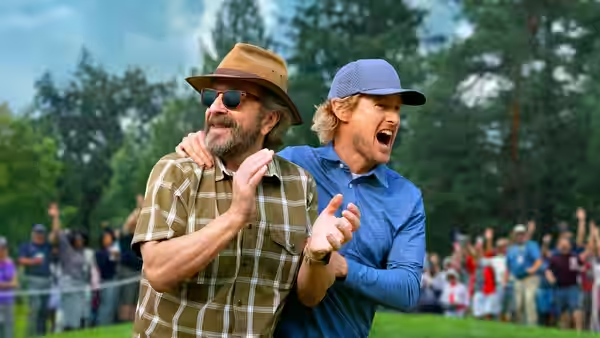
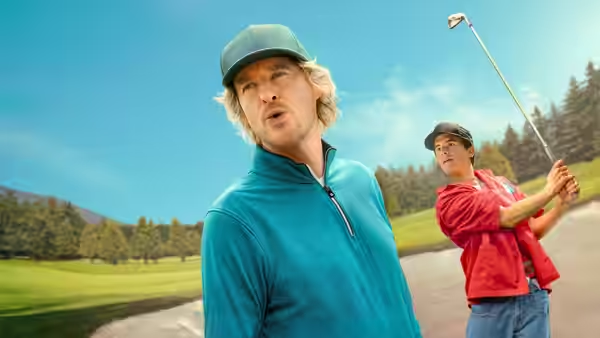
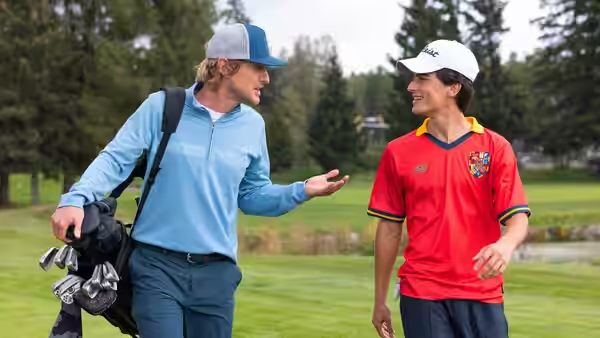
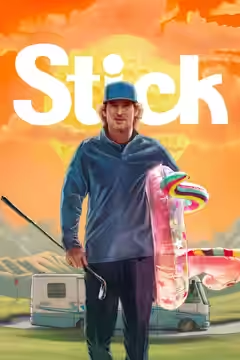
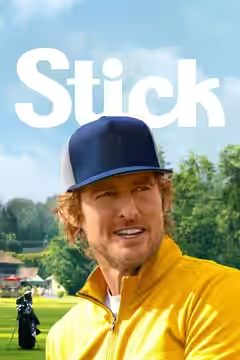
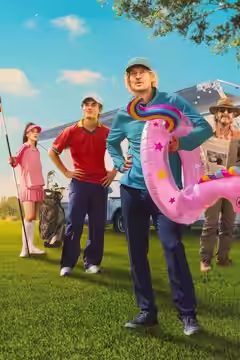
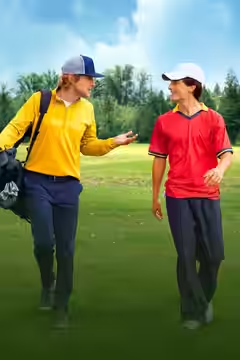
Pryce Cahill (Owen Wilson) holds a pink inflatable golf-course prop beside a camper van and group
Series review

Stick

2025 · Created by Jason Keller · Series · Medierådet 11

In a sentenceTen episodes of Owen Wilson being agreeable, which turns out to be nearly enough

Pryce Cahill (Owen Wilson) is a golfer whose playing days are behind him. Broke, divorced and not dealing with a loss in his own family, he sees a teenager called Santi (Peter Dager) hitting balls at a driving range and decides the boy is his way back into the game. He sets about persuading Elena (Mariana Treviño) that he should be the one to coach Santi, and brings in Mitts (Marc Maron) to help. Zero (Lilli Kay) takes an interest in Santi and joins them, and the five of them go to work on turning a boy with a swing into a player.

Plays from YouTube when you press play; nothing loads from them until then.

Fi1m review

Owen Wilson is easy company as a washed-up golfer coaching a teenage prodigy, and the series around him is pleasant, safe and thin. It borrows the shape of Ted Lasso without the jokes, and it handles its grief plot clumsily.

Jason Keller’s Stick runs ten episodes and has one idea, which is that Owen Wilson would be pleasant to spend them with. He is. Pryce Cahill is a golfer whose game and marriage went some time ago, until he sees a teenager called Santi (Peter Dager) hit a ball at a range and decides the boy is his way back. He talks round Elena (Mariana Treviño), collects Mitts (Marc Maron), picks up Zero (Lilli Kay), and the five of them go to work on Santi’s game. It is agreeable, it is familiar, and it is thin in the places a show like this needs to be thick.

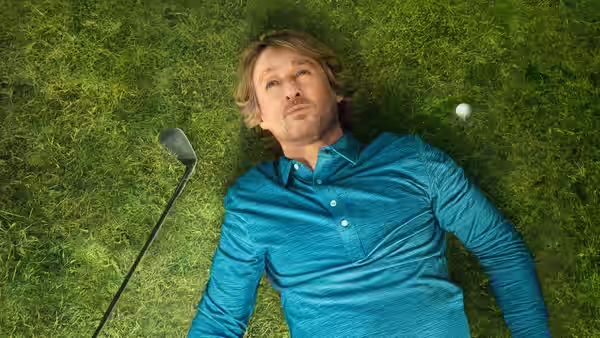
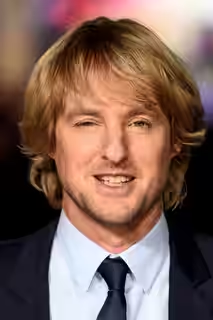
Wilson plays Pryce in the mode he has made his own: the drawl, the head tilt, the sentence that starts confident and ends somewhere else. It suits a man whose whole trade is talking people into things, and Wilson makes you see why Elena says yes against her better judgement. We liked him from the first scene and never stopped, which is the show’s great asset and its alibi. Whenever the writing runs out, and it runs out often, the camera goes back to Wilson looking rueful and the episode gets away with it.

The rest of the ensemble is unevenly served. Maron’s Mitts gets the laughs, because Maron has spent a career sounding like a man who has just been told the price of something, and every line of encouragement comes out as a complaint. Dager has an easy, unshowy way with Santi’s sulks and makes the boy’s talent believable without much help from the script. Treviño and Kay have the harder jobs. Elena is written as the one who worries and Zero as the one who explains the modern world to the older men, and both actors find more in the roles than is on the page; Kay in particular does the most with the least.

The golf is shot with more wit than it is written. Stephen Maier and Corey Walter send the camera up with the ball and hold on the top of the backswing, and the editors Ivan Victor, Melissa McCoy and Daniel Gabbe cut the rounds as short bursts of impact and reaction rather than the long quiet walks the real game consists of. It is lively the first three times. By the sixth it is the same shot, and we noticed we had stopped watching the ball. Diane Lederman’s production design keeps the interiors modest, more strip mall than country club, which suits the show’s idea of Pryce as a man past his best, and Christine Thomson dresses him as someone who last bought clothes around the time he last won anything.

Six directors are credited, among them Jonathan Dayton, Valerie Faris and David Dobkin, and the episodes all look and move the same way, which tells you the tone was set by the writers rather than on set. The writing plays safe. Conflict arrives, is talked over, and is over by the credits. The show also carries a loss in Pryce’s past that it keeps in a drawer and brings out whenever an episode needs weight. Here is where we were got at: there is a scene, around the midpoint, of Wilson alone with something from that past, and it moved us, and then we heard Zachary Dawes’s guitar come in a beat before Wilson’s face had finished, and the feeling turned into the sense of being managed. The score does this throughout. It is warm, it is acoustic, and it arrives early.

The comparison most critics have made is to Ted Lasso, and it is fair, since both are about a sad American man coaching people who did not ask for him. The difference is jokes. Lasso gave its bench players punchlines; Stick gives them positions to hold, and a comedy in which two of five characters are funny is running at less than half power.

It gets better as it goes, oddly, by giving up. The later episodes stop pushing the tournament and let the five of them sit around and bicker, and that is the show we would have watched ten of. Take it one episode at a time, in the evening, with someone who is fond of Owen Wilson; it does not reward being watched in a run, and it does not need to be.

Critical consensus AI synthesised

61
Positive
4
Mixed
4
Negative
1

Most critics find Stick pleasant rather than remarkable, and the praise settles almost entirely on Owen Wilson. Review after review credits his easy charm with holding the series together, with several noting that it makes Pryce’s late shot at redemption believable even when the writing does not. Peter Dager’s Santi and his rapport with Wilson are mentioned warmly, and a handful of reviewers single out the supporting cast, Lilli Kay and Mariana Treviño among them, for finding life in thin parts.

The reservations cluster on the writing. Nearly everyone notes the debt to Ted Lasso and the familiar sports-drama beats; the difference is how much that bothers them. The kinder reviews call it comfort viewing. The harsher ones, IndieWire and The AV Club, find the characters underdeveloped and the emotional stakes thin. Vulture is the lone dissenter, arguing that a formulaic trauma plot keeps sinking the lighter golf comedy. The spread is wide for a show nobody calls a disaster.

The Guardian
4 June 2025 · 3 out of 5 stars.
78*

The critic finds the comedy-drama pleasant and solid, with feelgood appeal. Owen Wilson’s charm is singled out as its chief strength.

Read the full review →
The Hollywood Reporter
3 June 2025 · Angie Han
75*

Han finds the series a consistently pleasant, likable comfort watch, despite its familiar formula and timid approach to golf. She particularly praises the lively chemistry of the cast and Peter Dager’s performance as Santi.

Read the full review →
Radio Times
30 May 2025 · David Craig
70*

The review presents the series as a heartwarming comedy that is more than a Ted Lasso imitation. It singles out Owen Wilson as especially impressive.

Read the full review →
Variety
4 June 2025 · Alison Herman
65*

Herman finds the series bumpy but enjoyable, with Owen Wilson’s charm making it worthwhile despite thin conflict and overt golf boosterism. She especially praises Wilson’s charisma, which anchors the show and makes Pryce’s second chances feel convincing.

Read the full review →
IndieWire
4 June 2025 · C · Ben Travers
57

Travers finds the series a shallow, predictable imitation of Ted Lasso, with underdeveloped characters and rushed emotional turns. He praises the energetic, visually inventive golf scenes, though they eventually become monotonous.

Read the full review →
Empire
6 June 2025 · John Nugent
50*

The series is just about on par: familiar sports-drama beats and schmaltzy lessons hold it back, though its found-family dynamics have heart. Owen Wilson’s performance is the standout, bringing charm and emotional depth to the lead role.

Read the full review →

Straight answers AI written, from our review

Is Stick worth watching?
Stick is worth watching only if you are fond of Owen Wilson and want something undemanding, and we scored it 58. Wilson is easy company as a washed-up golfer, and Marc Maron gets the laughs, but the writing plays safe and the grief plot is handled clumsily. Take it an episode at a time rather than in a run.
How long is Stick, and what is it rated?
Stick is rated 11 by the Medierådet in Denmark. It is a comedy and drama series.
Where can I watch Stick in Denmark?
Stick is streaming on Apple TV in Denmark. Availability is checked daily; the links above go straight to each service.
How violent or frightening is Stick, and is it suitable for children?
Stick is a UK 15 comedy-drama with no violence to speak of and nothing frightening; the certificate reflects adult language and themes, including a loss in the lead character's past. It is not made for children, who would find little in ten episodes about coaching a teenage golfer, but older teenagers will find nothing in it to trouble them.
How does Stick compare to Ted Lasso?
Stick borrows the shape of Ted Lasso, a sad American coaching people who did not ask for him, and Ted Lasso is the better of the two. The difference is jokes: Lasso gives its whole bench punchlines, while in Stick only two of the five leads are funny. Choose Stick if you want Owen Wilson specifically; otherwise start with Lasso.
What should I watch after Stick?
After Stick, try Ted Lasso (2020, Fi1m 78): The template Stick is working from, with a bench that actually gets punchlines. Then Little Miss Sunshine (2006, Fi1m 78): Another lot of failures crammed into a van, and the family earns its bickering.

Cast

If you liked this, try…

  1. Ted Lasso (2020, Fi1m 78)The template Stick is working from, with a bench that actually gets punchlines.

  2. Tin Cup (1996) · not on Fi1m yetKevin Costner’s stubborn driving-range pro, and the golf is written as well as shot.

  3. Little Miss Sunshine (2006, Fi1m 78)Another lot of failures crammed into a van, and the family earns its bickering.

  4. The Bad News Bears (1976) · not on Fi1m yetWalter Matthau coaching children he cannot stand; sour where Stick is sweet.

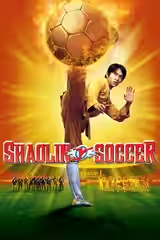
  5. Shaolin Soccer (2001) · not on Fi1m yetA washed-up coach, a gifted nobody, and none of the solemnity.