Dallas Jenkins’s series retells the Gospels as an ensemble drama about the people around Jesus, and the squabbling apostles are its best idea. It is warm, sincere and often slow, and looks like what it is: television paid for by its own audience.
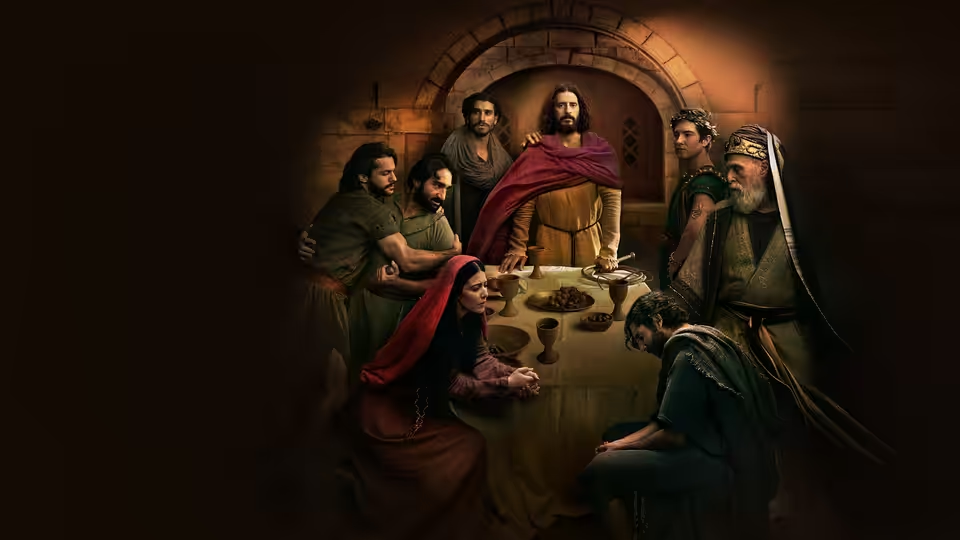
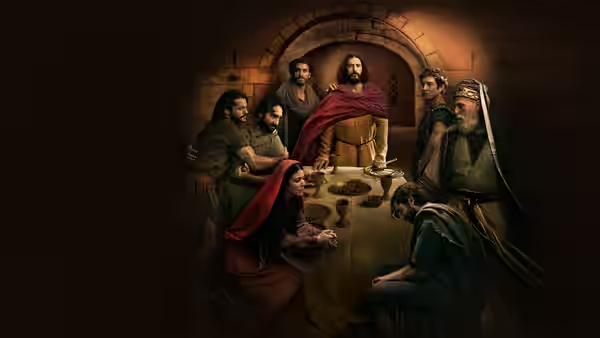
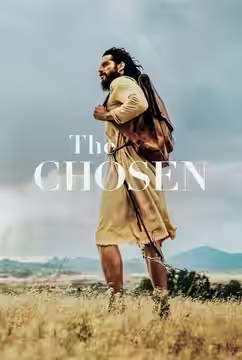
Dallas Jenkins has taken the four Gospels and turned them into a television serial, with regulars who bicker over supper. The Chosen began on 21 April 2019 with eight hour-long episodes and has now run to six seasons. Jenkins created it, directs it and writes it with Tyler Thompson and Ryan Swanson, and the idea is simple: tell the story from the edges, through the fishermen, the tax collector and the nervous Pharisee, and let Jesus walk in late as a stranger. It is a good idea. The show is sincere, well cast where it counts and, for long stretches, flat, and we came away fond of it and only occasionally gripped.
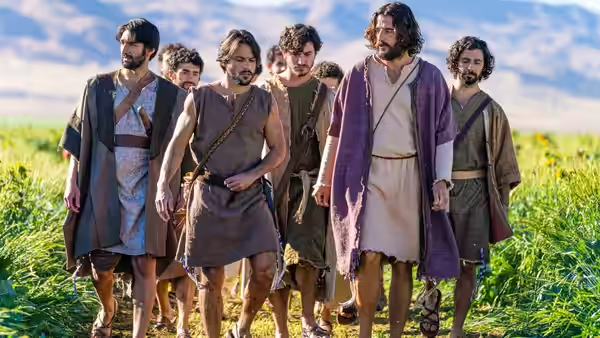
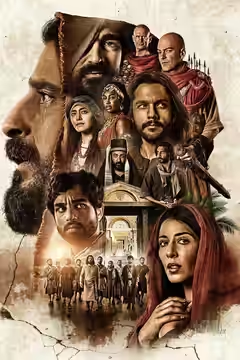
The apostles are the reason to watch. Shahar Isaac plays Simon Peter as a hothead with debts, a man who fishes on the Sabbath because Rome wants its money, and Noah James’s Andrew spends most of the first season apologising for him. Paras Patel gives Matthew, the tax collector nobody will sit with, a fussiness and a literal mind that the writers plainly enjoy, and his scenes with Isaac, two men who loathe each other and have been told to share a table, are the best written in the show. Nobody here is a saint yet.
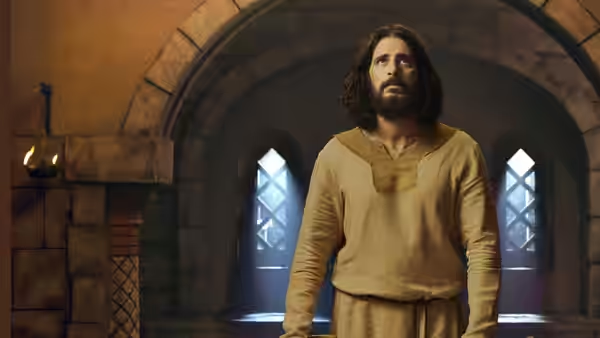
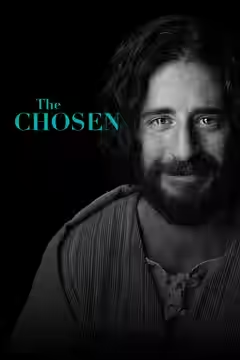
Jonathan Roumie has the impossible part and plays it by doing very little. His Jesus is a carpenter with dust on his hands who laughs at his own jokes and gets tired in the evening, and when he is asked a hard question he asks one back and lets the silence sit. Erick Avari, top-billed as Nicodemus, plays the Pharisee as a clever man who has just seen something his cleverness cannot explain, and his scenes are where the first season finds what unease it has.
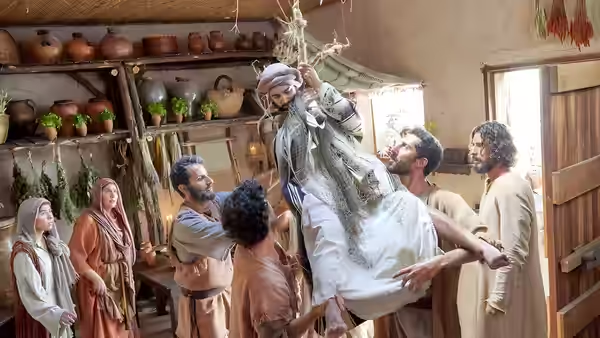
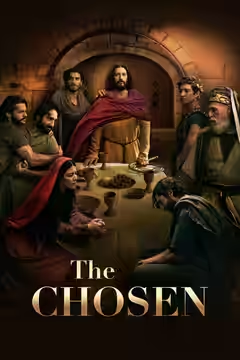
Petros Antoniadis and Akis Konstantakopoulos shoot the interiors by lamplight, all amber and brown, and the streets in hard white sun, and James R. Cunningham’s Capernaum is dust, rough stone and low doorways. Pamela Incardona and Leila Heise dress the disciples in layered, faded wool that looks slept in and the Romans in red that does not. All of it is competent and none of it stays with you; the first season has the even, shadowless look of a television film. Dan Haseltine and Matt S. Nelson’s title theme, a stomping blues over an animation of grey fish in which one turns gold, is the liveliest minute in most episodes. Their score under the drama is less welcome. The strings arrive a beat before every moment of grace, in case we had missed it.
The pace is the larger trouble. John Quinn and Adam Lutge cut each hour to give every conversation room, which is right for a show about people learning to live together and wrong for the Sanhedrin, where men in fine robes explain Roman politics to each other at length. We were bored by the fourth of these scenes and impatient by the sixth. The dialogue also has a habit of stating the theme: somebody says aloud what the scene has already shown, and a show that trusts its actors’ faces does not trust ours to have read them.
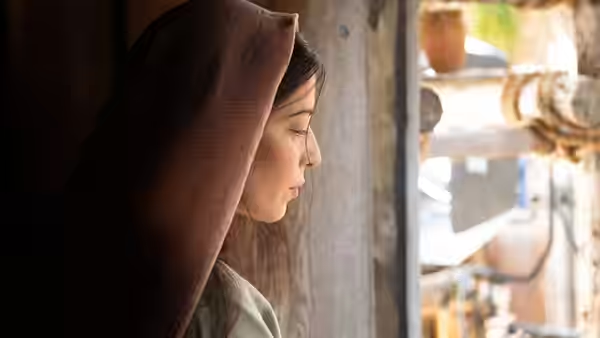
And then it gets us anyway. The first episode ends with a woman who has spent an hour being called the wrong name hearing the right one from a stranger in a tavern. Elizabeth Tabish plays Mary Magdalene throughout as someone braced for a blow, and when the blow does not come her face simply gives way. We were moved, more than we expected and a little cross about it, because the strings were doing exactly what we have just complained of and it made no difference. Roumie underplays it and Tabish does the rest.
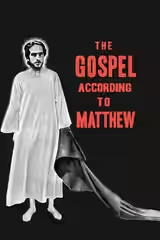
Against the screen Gospels before it, this is the modest one. Pasolini’s The Gospel According to St. Matthew (1964) was fierce and used the text alone; Zeffirelli’s Jesus of Nazareth (1977) was a pageant with a famous cast. The Chosen is a hangout show, closer in shape to a workplace drama than to a Passion play. Watch it at home, two or three episodes at a sitting, and give it until the fishermen are all in the same boat before deciding. Believers have already found it and do not need us. For everyone else, it is a gentle, talky, occasionally lovely series about twelve men who cannot agree on anything, which is a more familiar story than it sounds.