Steven Soderbergh directs, shoots and cuts this drama about a New York hospital in 1900, and it is as handsome and as bloody as television gets. Clive Owen’s genius addict is the one stock figure in the building; everyone around him is better.
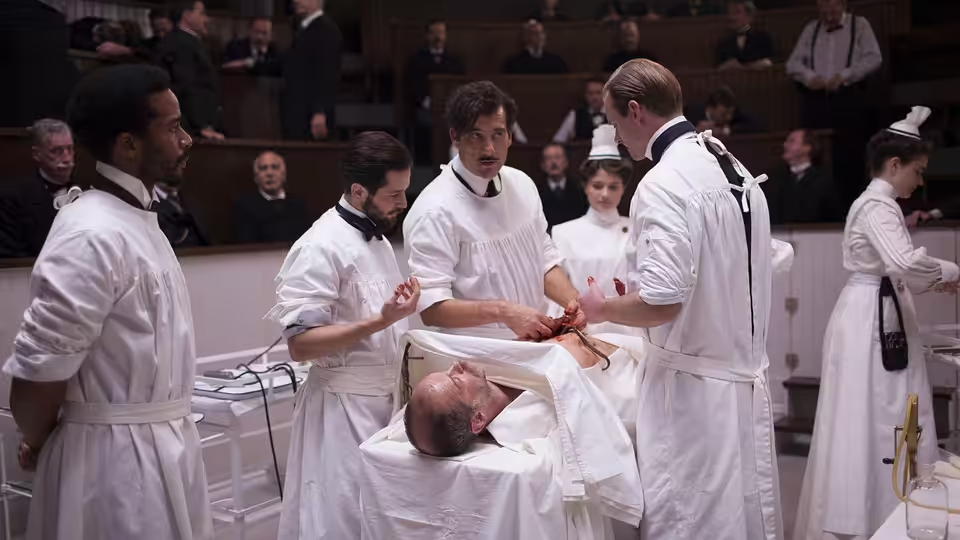
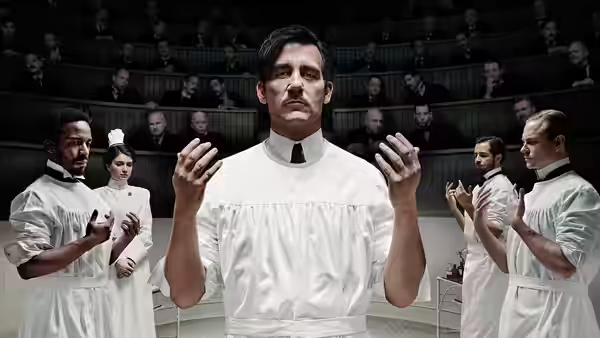
New York, 1900. The Knick is downtown, short of money and short of paying patients, and its surgeons operate in a wooden bowl of a room while students look down from the benches. Jack Amiel and Michael Begler created the series and wrote it with Steven Katz; Steven Soderbergh directed, photographed and edited all twenty episodes himself. The Knick is the best-looking thing we have seen made for television, and for most of its length it is also one of the best.
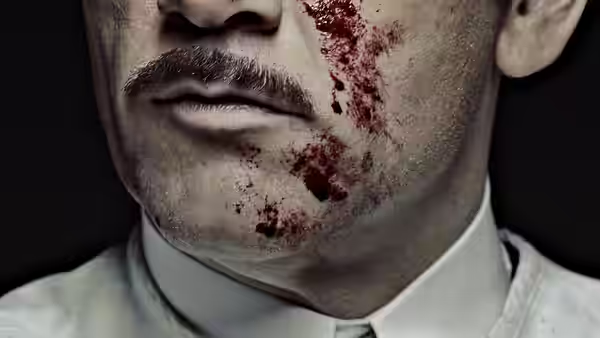
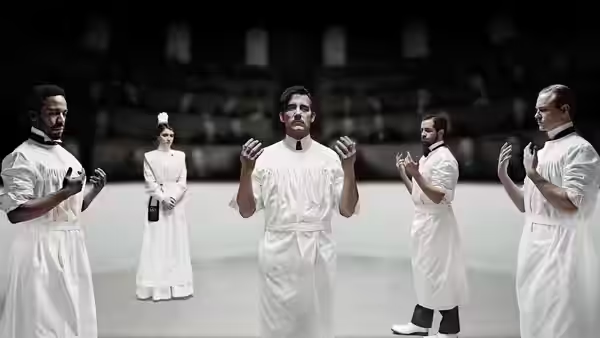
The operations are what people will talk about. Howard Cummings builds the theatre as an amphitheatre with a table in the pit, and Soderbergh takes his camera down into the pit with the surgeons, close enough that the wound fills the frame. The first, in the first hour, is a caesarean on a woman bleeding faster than anyone can work, and Thackery (Clive Owen) counts the seconds aloud while he cuts. We watched it through our fingers. We were horrified by the blood pooling under the table and by how calm everyone was about it, and then, some episodes on, we noticed we had stopped flinching and started leaning forward.
Soderbergh lights with what the hospital has. The wards are brown and yellow under gas; the theatre is white under the new electric lamps, which fail; daylight comes in high and cold. The camera is handheld and the lens is wide, so faces stretch at the edges of the frame and rooms look larger than the hospital can afford. Cliff Martinez writes the score on synthesisers, cold pulses and long held chords under 1900, and it ought to be a mistake. It is not. It says these people believed they were living in the future, and the pictures agree. Ellen Mirojnick dresses Thackery in a black frock coat and white leather shoes, and he keeps the shoes clean through everything.
Owen is the weak point, or rather Thackery is. A brilliant surgeon who injects cocaine between his toes, insults everyone and is always right is a man we have met before, and the writing takes him down a road we could have mapped after two episodes. Owen plays him fast and hard, jaw first, and is watchable throughout; he is not surprising once. The critics who found the series predictable were looking at him. They should have looked to his left.
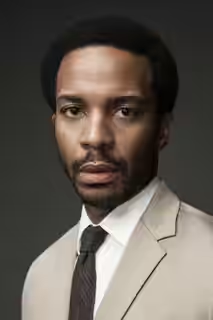
That is where Algernon Edwards (André Holland) stands, a Black surgeon trained in Europe, appointed Thackery’s deputy by the hospital’s benefactor and refused by everyone in the building. Holland plays a man who knows to the ounce how much anger he can show and spends it carefully. Kept out of the theatre in the early episodes, he opens a clinic in the basement for the patients the front door turns away, and we were angrier on his behalf than we expected to be. The series is at its best when it looks at the Knick through his eyes, and it does so more as it goes on.
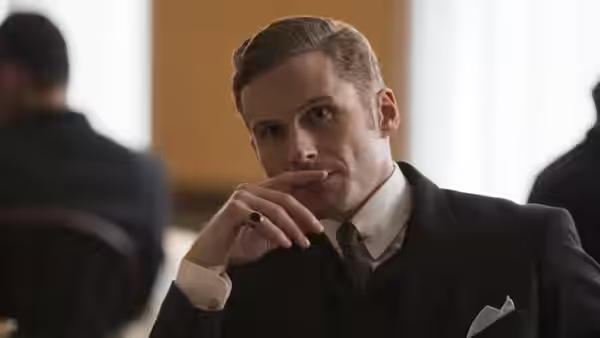
The rest of the building is well stocked. Jeremy Bobb’s Herman Barrow, the manager, steals from the hospital and owes money to worse people. Juliet Rylance’s Cornelia Robertson runs the board her father pays for and is not expected to have opinions. Eve Hewson’s Lucy Elkins, a nurse fresh from the country, becomes the object of Thackery’s attention. Chris Sullivan’s Tom Cleary drives the ambulance and fights the other drivers for the bodies, and Cara Seymour’s Sister Harriet is the nun he argues with.
The faults are in the writing. The dialogue is plainer than the pictures and sometimes says the theme aloud; people announce that they are modern. The middle of the first season slows to soap, a debt here and an affair there, and the second season takes a turn we will not describe. It ran for two seasons of ten hours and stopped, which is the right length and a shame.
Soderbergh has built something two hours could not hold: a hospital you come to know room by room. Each episode runs an hour and carries a 15. Watch it at home with the lights off, and do not eat while you do.