Sterlin Harjo’s Tulsa noir is funny, generous and easy to like, with Ethan Hawke in full flow as a man who cannot leave anything alone. The mystery is the least of it, and the middle episodes know that a little too well.
Sterlin Harjo made Reservation Dogs, a comedy about teenagers in small-town Oklahoma that was better at grief than most dramas. The Lowdown is his crime series, set in Tulsa, and it is recognisably the same hand: a place he knows, people he is fond of, and a plot he treats as a way of getting them into rooms together. We liked it a good deal. It is warm, it is funny, and for eight episodes we were happy to be lost in it. We would recommend it to anyone who enjoys a detective story more for the detective than for the solution, with the warning that the solution is not what it is best at.
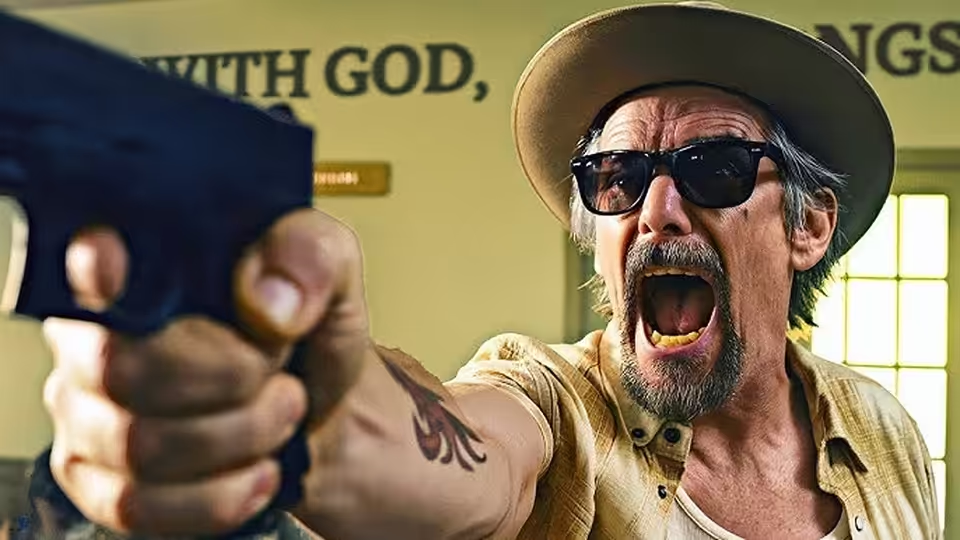
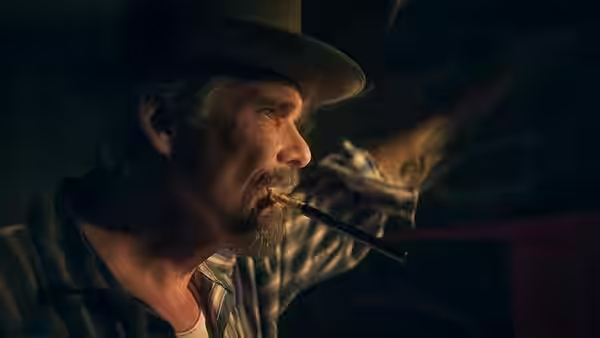
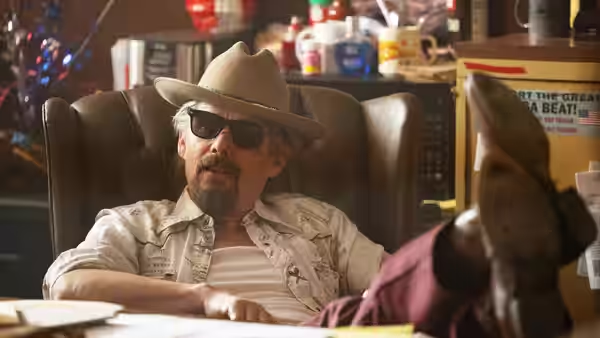
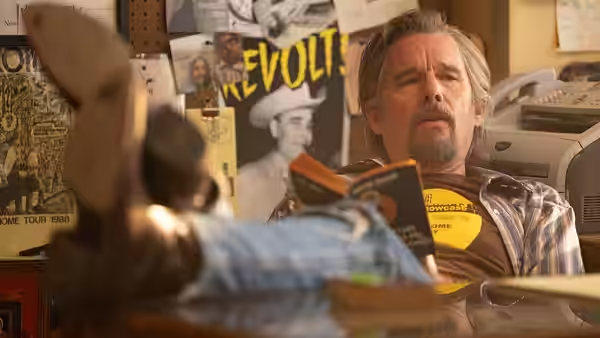
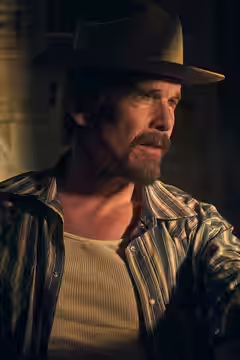
Ethan Hawke plays Lee Raybon as a man who has never once let a thought finish before saying it. He talks fast, he talks to people who have not asked, and he is right often enough to be a nuisance and wrong often enough to be a danger to himself. Hawke has always been good at earnest men, and here he adds a manic edge, all elbows and pointing, that makes Lee funny without making him a joke. We laughed out loud, more than once, at nothing more than the sight of him walking into a building he had plainly been asked to stay out of. The character believes in a free press and the public record in a way that ought to be corny and is not, because Hawke plays the belief as a compulsion rather than a virtue.
Around him Harjo has built a town. Keith David’s Marty is the steady one, a man who has learned to say no and be ignored, and David gives every line a weight that makes Lee’s chatter funnier by contrast. Jeanne Tripplehorn plays Betty Jo Washberg with a stillness that keeps us guessing about what she knows. Tim Blake Nelson’s Dale is gone before the story starts, but Nelson makes him a whole person in the fragments we are given. Scott Shepherd’s Allen Murphy is the series’ one properly frightening presence, a quiet man who does not need to raise his voice. Tracy Letts, Macon Blair, Michael Hitchcock and Cody Lightning fill the edges, and Kaniehtiio Horn gets more from Samantha’s exasperation than the part strictly contains.
What moved us, and we did not expect it in a show this jokey, are the scenes where Lee stops talking. They are few, and most of them happen at home rather than out in the city, with the people who have to live with him and have run out of patience. In one of them Samantha simply waits for him to finish, and he does, and we found our throat had tightened. That is where the series shows what it is really about: a man who has found a way to be useful to strangers because he does not know how to be useful at home.
The craft is confident. Harjo directs alongside Macon Blair and Danis Goulet, and the three of them agree on a look: daylight Tulsa, low brick buildings, wide streets with nobody on them, and interiors, the bookshop above all, crowded to the ceiling with the stuff of other people’s lives. Gina Sansom’s editing lets scenes run past the point where a network drama would cut, so that conversations have time to go wrong. The writers’ room includes Walter Mosley, and it shows in the dialogue, which is dense with the way people actually talk when they are being evasive.
The trouble is the middle. The mystery of who wanted Dale Washberg dead is thin, and the fourth, fifth and sixth episodes wander off after side characters and local colour in a way that is pleasant and not much more. Harjo likes an oddball, and by the halfway point there are more of them than the story can use; a few land, several are simply there. We were never bored, but we did notice the plot being put down and picked up again. The show’s certificate is 15, and it is honest: there is violence, and it hurts, but Harjo is more interested in the aftermath than the act.
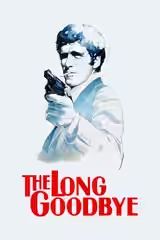
The obvious comparison is The Long Goodbye, another film about a man out of step with his city who keeps asking after a dead friend nobody else misses. The Lowdown is not as sharp as that, and it does not want to be. It would rather sit with you on the porch. Watch it an episode or two at a time, in the evening, and let it take its own pace.