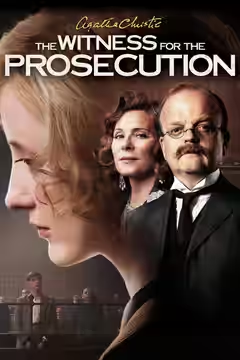
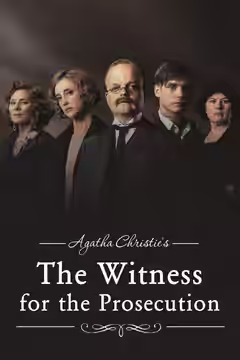
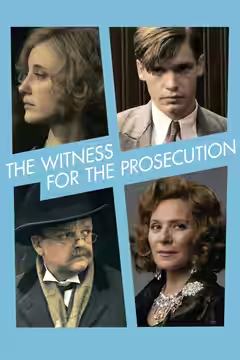
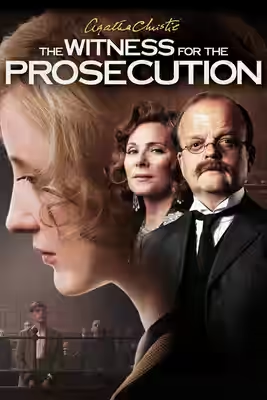
Toby Jones gives Sarah Phelps’s Agatha Christie adaptation a sadness that matters as much as the mystery. It’s a gripping two-part drama, though Julian Jarrold’s determined bleakness occasionally makes the going harder than it needs to be.
Sarah Phelps’s The Witness for the Prosecution is gripping, well acted and sometimes too determined to make us miserable. Director Julian Jarrold treats this two-part Agatha Christie adaptation as a chance to make us care about people we cannot readily judge. There is pleasure in following a mystery whose characters matter even while we have reservations about them. The performances justify the severity, although an evening in their company is unlikely to count as relaxation.
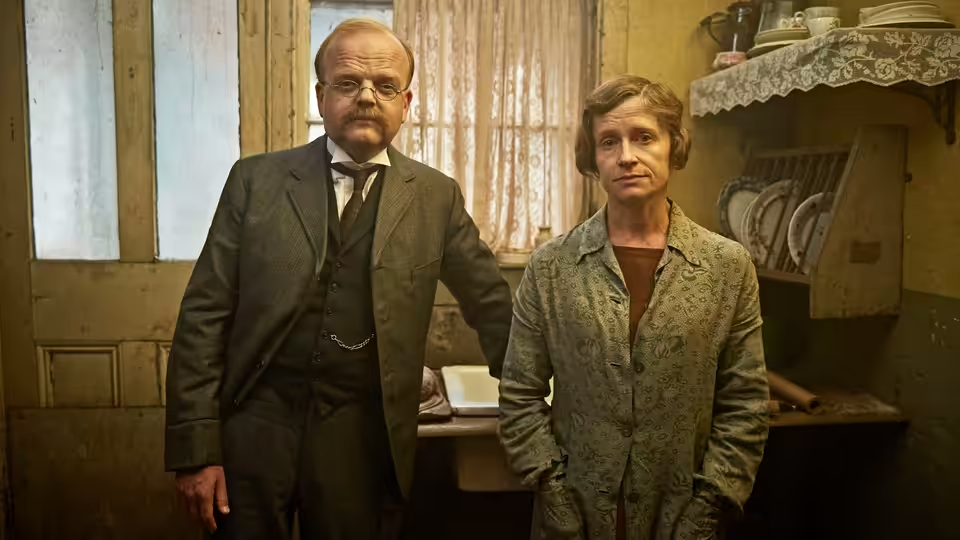
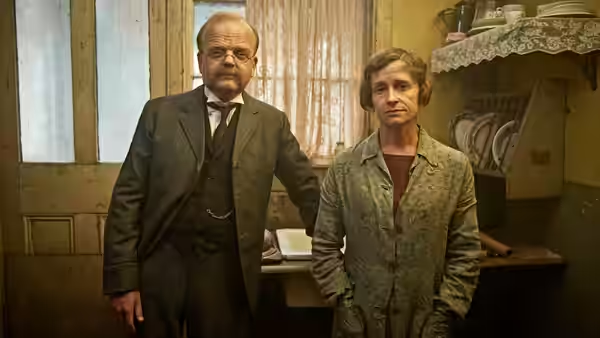
Toby Jones is the main reason it works. As John Mayhew, he makes unhappiness look tiring, and there is something painful about watching a face that seems to have so little rest in it. We were moved by that exhaustion: his performance makes us worry about Mayhew without asking us to stop questioning him. He keeps the drama close to an individual person when the surrounding bleakness threatens to make everyone seem equally wretched.
Kim Cattrall’s Emily French gives the drama another much-needed source of feeling. There is tenderness in the performance, and she lets it show without making a special occasion of it. That matters in an adaptation so ready to dwell on unhappiness: a character can be vulnerable without becoming a demonstration of how cruel life is. She makes Emily worth attending to in her own right, and the drama benefits from allowing that interest in a person to take precedence over the puzzle.
Julian Jarrold’s direction is attentive to atmosphere, sometimes almost to a fault. Felix Wiedemann’s photography gives the drama a forbidding look, and that severity suits the material; the images offer little encouragement to settle back and enjoy the surroundings. Paul Englishby’s music fits the sombre treatment, although the performances need little help in establishing the mood. The craft is persuasive, but an occasional easing of the pressure would allow the actors’ quieter work more room.
That sameness is the chief weakness. Sarah Phelps and Julian Jarrold are so committed to taking the story seriously that the darkness can begin to feel compulsory, leaving too little room for a change of emotional pace. Two episodes give the performances room to settle, but there are stretches when the atmosphere seems to be doing work already done by the actors. A change of emphasis would make the painful moments more forceful.
As a crime drama, it understands the appeal of watching people whose motives remain difficult to assess. The writing keeps us uncertain without making the characters feel like they exist solely to conceal information, and the performances encourage us to care about more than getting the answer right. The series remains entertaining despite its severity. That matters in a genre where the prospect of an explanation can sometimes become the only reason to keep watching.
Allow the two episodes enough attention for the acting, rather than treating them as a puzzle to solve while doing something else. The shifts in sympathy are part of the pleasure, and hurrying towards an answer would miss them. Choose it when there is no requirement that an evening’s mystery should leave everyone feeling better.