Marvel’s animated anthology rewrites its own films one decision at a time, and about a third of the rewrites are worth the trouble. The T’Challa-as-Star-Lord episode is the one to keep; much of the rest is a familiar fight in a fresh costume.
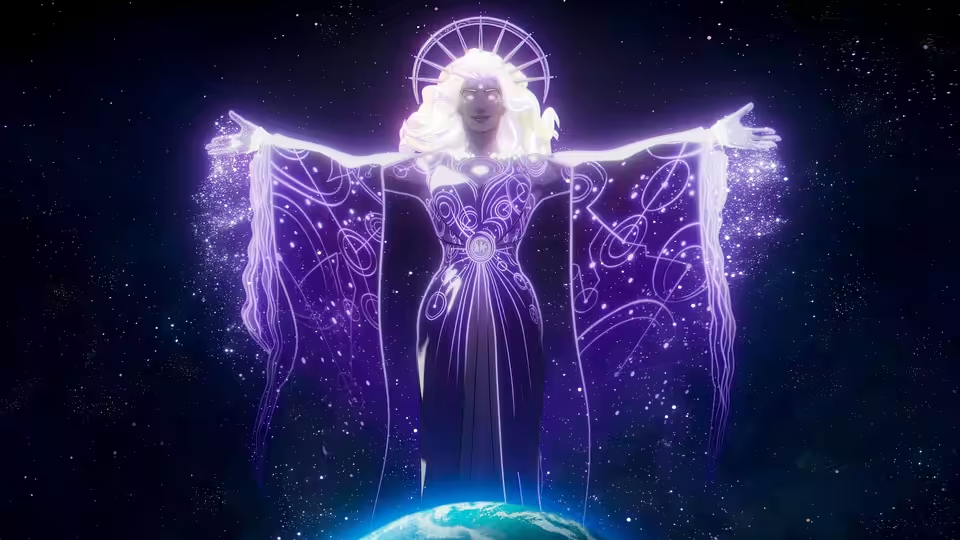
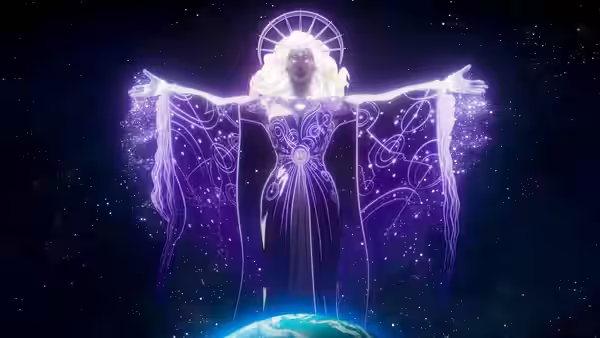
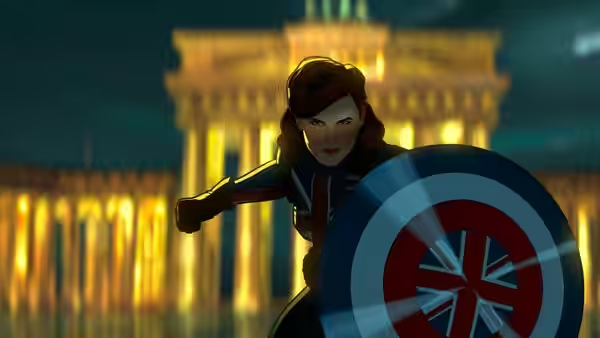
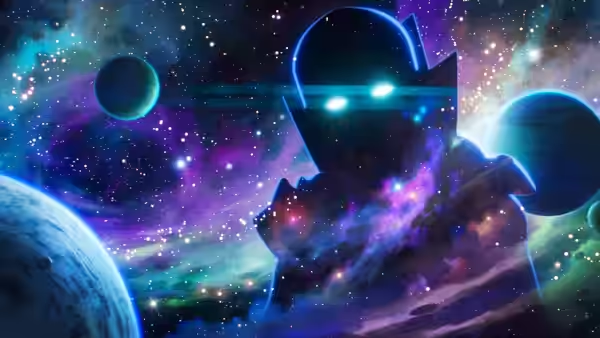
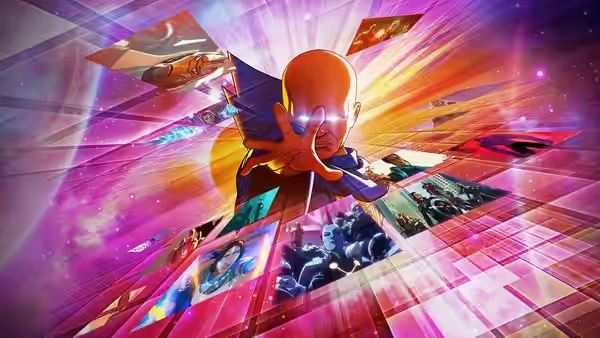
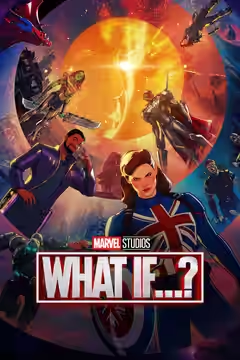
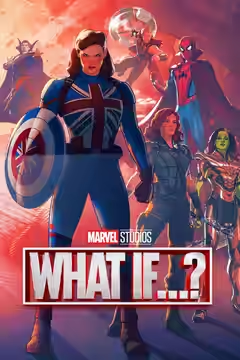
Each episode of What If…? opens the same way. The Watcher (Jeffrey Wright), a hooded giant with a voice like a cathedral organ, looks down on the multiverse he has sworn not to touch, picks a moment from one of the Marvel films, and asks what would have happened had it gone the other way. Peggy Carter takes the serum instead of Steve Rogers. A Ravager ship collects the wrong boy from Earth. That is the game, and across 26 episodes and three seasons the writers A.C. Bradley, Matthew Chauncey and Ryan Little, with directors Bryan Andrews and Stephan Franck, play it well perhaps eight or nine times. The rest is the same film with the names changed and a fight at the end.
The second episode is the reason to watch, and we had not expected it to be. T’Challa is taken by the Ravagers instead of Peter Quill and grows up to be a Star-Lord who steals for the poor and talks his enemies into surrender. He is voiced with such easy warmth that the galaxy rearranges itself around his decency, and even Thanos (Josh Brolin) has retired to grow vegetables. It moved us more than a half-hour cartoon about a space pirate had any right to. Part of that is the voice, and part is the writing, which for once asks its question properly and follows the answer to the end.
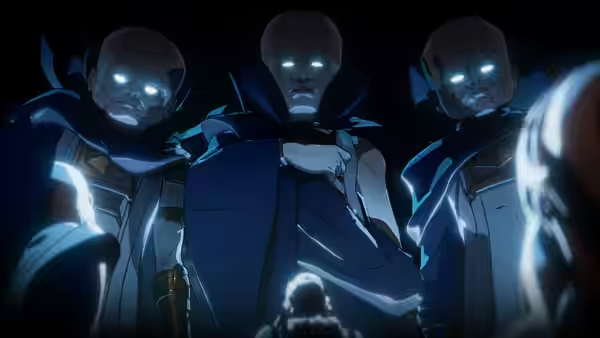
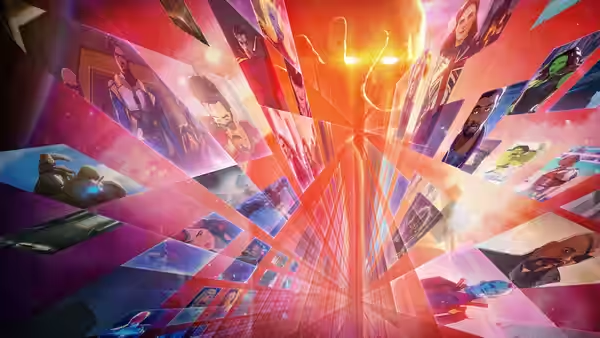
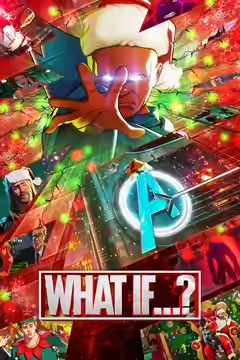
The animation, under production designer Paul Lasaine, is cel-shaded: flat blocks of colour with hard black outlines over painted backgrounds, so the characters look like the actors traced with a thick pen and set down on a matte painting. In motion it is two different things. The action, and there is a great deal of it, has real swing, bodies arcing through the frame and freezing in comic-panel poses; the conversations are stiff, mouths moving while the rest of the face waits its turn. Laura Karpman and Nora Kroll-Rosenbaum score it for full orchestra and brass, and their main theme, a rising fanfare that ends on something like a question mark, is a proper tune, which Marvel television has not always managed.
The trouble is the shape. Editors Graham Fisher, Joel Fisher and Anton Capaldo-Smith cut every episode to a little over half an hour, and the writers spend the first ten minutes reminding us of the film being altered and the last ten on a battle, which leaves roughly ten for the actual thinking. Motives are announced in a line. Wright’s narration does the plotting the pictures have no time for. Halfway through the first season we were bored, and then mildly cross about it, because the idea underneath is good and it was being spent on set pieces we had already seen with better faces.
The back half of the first season takes a turn we will not describe. The second and third seasons lean into serialising the anthology and are better for it. The second includes an episode told in Mohawk, about a new heroine called Kahhori, that owes nothing to any existing film and is the freshest thing the series does. Wright, given more to do than narrate, is good: sorrowful, amused, and audibly tempted.
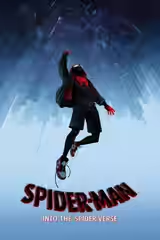
Set against Spider-Man: Into the Spider-Verse (2018), which let its animators invent a way of drawing rather than a way of copying, this is timid; the style exists to keep the faces recognisable, nothing more. Set against Marvel’s own record it is about par, a series that plays with the toys without risking breaking one.
Watch the first two episodes, in order. If the second does not take, nothing later will; if it does, skip about, because these are anthologies and the running thread can look after itself. It carries a 12 certificate, and the episodes are short enough that a bad one costs you little.