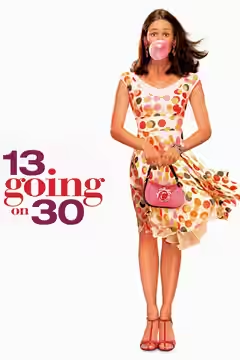
A thirteen-year-old wakes up in a thirty-year-old’s life, and Jennifer Garner plays the join between the two so well that the film barely needs a second idea. It is just as well, because it has not brought one. Slight, sweet and worth a Sunday evening.
Gary Winick’s comedy begins in 1987 with a thirteen-year-old who wants to be thirty, and grants the wish before the titles have settled. The premise is Big with the sexes swapped and the gap widened, and the writers, Josh Goldsmith, Cathy Yuspa and Rita Hsiao, know it and do not pretend otherwise. What they have made is a pleasant, slight, good-hearted film with one real asset and not much around it. The asset is Jennifer Garner, and she is enough to make it worth an evening.
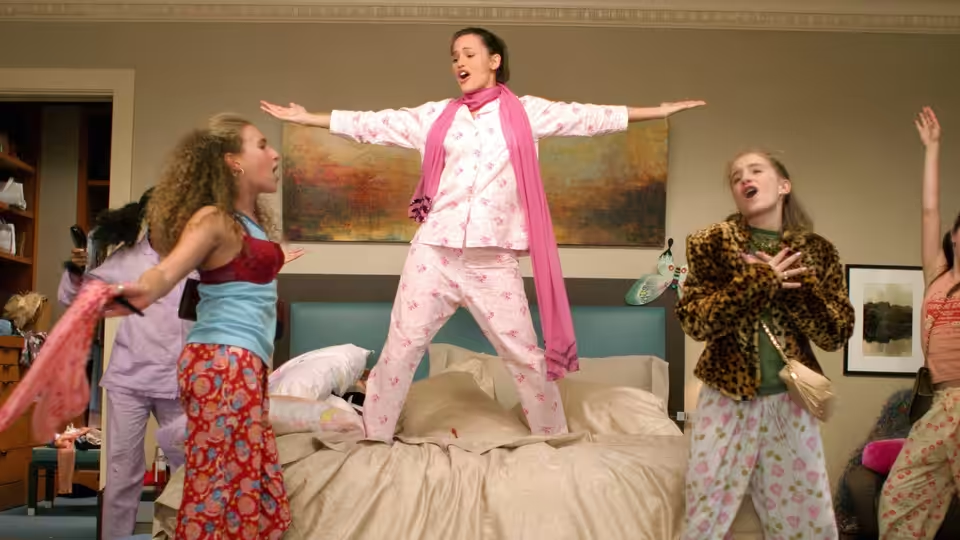
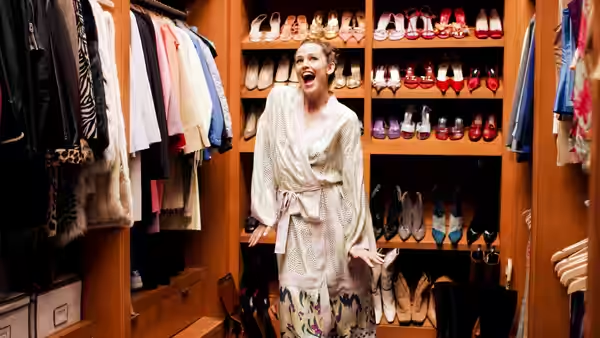
Garner plays a child in a woman’s body without the obvious shortcuts. She does not do a baby voice or mug. She walks slightly too fast, sits with her knees pressed together as if at a school desk, and when a grown man kisses her she goes rigid and then looks for somewhere to wipe her mouth. The best of it is in the eyes: a thirteen-year-old’s delight at a lift, a limousine, a wardrobe full of clothes, with a thirteen-year-old’s panic arriving half a second behind. Winick knows what he has; the camera rarely leaves her.
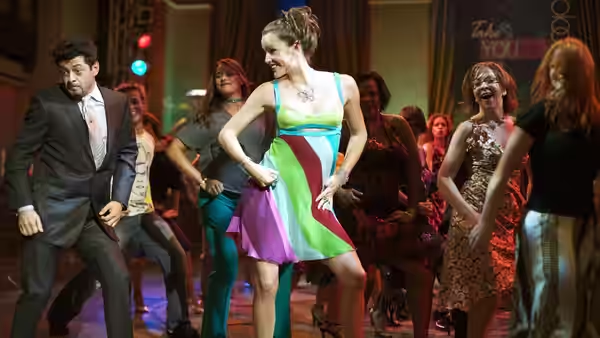
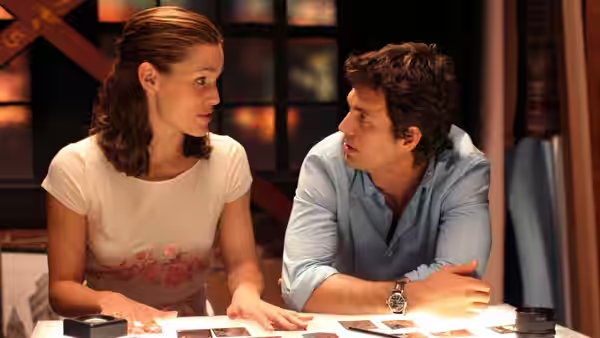
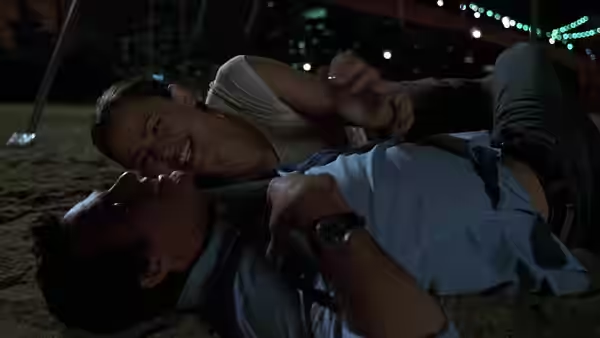
Mark Ruffalo, as the grown Matt, has the thankless half of the romance. He is the sad, reasonable adult while she bounces off the furniture, and he plays it with a slouch and a half-smile that suggest a man who gave something up long ago. Their scenes together are the film’s warmest. Judy Greer, as Lucy, delivers the office cruelties with relish and is given a third of what she could manage. Andy Serkis, as the editor Richard Kneeland, is the surprise: he plays the boss as flustered and oddly kind, and he dances.
The craft is competent and anonymous. Don Burgess lights Manhattan like an advertisement for Manhattan and shoots 1987 in a warmer, browner light that reads as memory. Garreth Stover gives the Poise offices glass walls and Jenna’s flat the look of a show home nobody has lived in, which is the point. Susie DeSanto’s costumes do the real work of marking the gap, putting the grown Jenna in the colours and ruffles a teenager would pick from a grown-up’s rail. Theodore Shapiro’s score is bright and forgettable and gets out of the way of the pop songs. Susan Littenberg cuts briskly and keeps it to 98 minutes, and it still sags in the middle.
The sag is the magazine plot. Poise is losing readers and Jenna must save it with a redesign, and it takes up most of the second half and is thin. The film also cannot decide what it thinks of the adult Jenna. It wants us to find her career, her flat and her boyfriend empty, and also to enjoy the lift and the limousine and the clothes, and does both without noticing the contradiction. Most critics have let this pass as froth. A few have not, and they have a point: a film whose lesson is that a grown woman was happier at thirteen should have thought about what it was saying.
And yet. There is a party at which nobody is dancing, and Jenna, with nothing else to try, has the DJ put on Michael Jackson’s Thriller and starts the routine alone, until Matt joins her and the floor fills. We grinned through all of it, at Garner’s commitment and at the pleasure of a film letting a happy thing run its full length. Later she turns up at her parents’ house at night and climbs into their bed, and it moved us more than a film this light had any business doing, because Garner plays it as a frightened child and Kathy Baker, half asleep, plays it as a mother who does not need to ask.
Big (1988) used the child in the adult’s body to look at the adults, and Tom Hanks made the grown-ups around him look faintly mad. Winick’s film never gets there; its adults are mostly unkind, and its lesson is mostly be nicer. Watch it on a Sunday, with someone who remembers 1987, and do not expect it to survive much thinking afterwards. Garner will. It carries a 12A, and she carries the rest.