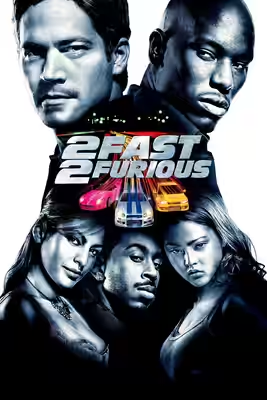
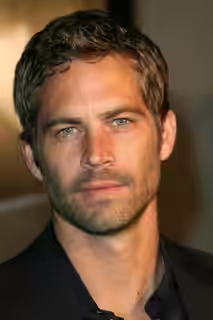
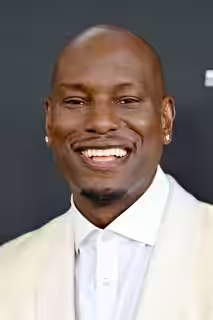
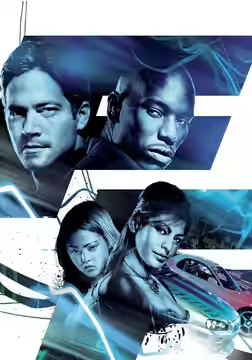
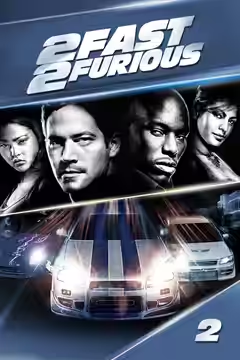
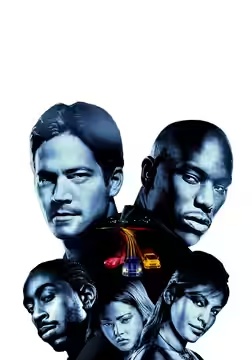
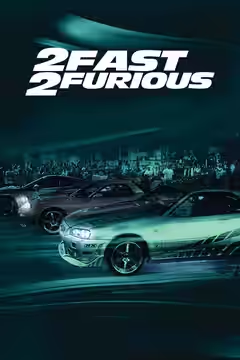
John Singleton’s racing sequel has an engaging double act in Paul Walker and Tyrese Gibson, but a routine crime plot. The races and the humour make it worth considering, provided suspense is not the priority.
2 Fast 2 Furious is decent entertainment for a racing audience, though the crime story does little to earn anyone else’s attention. John Singleton has a useful pair of leads and a willingness to let the action look faintly ridiculous. We do not need a film like this to be solemn, or even particularly plausible. We do need the scenes between races to keep us interested, and here they depend too heavily on actors making familiar material seem worth another visit.
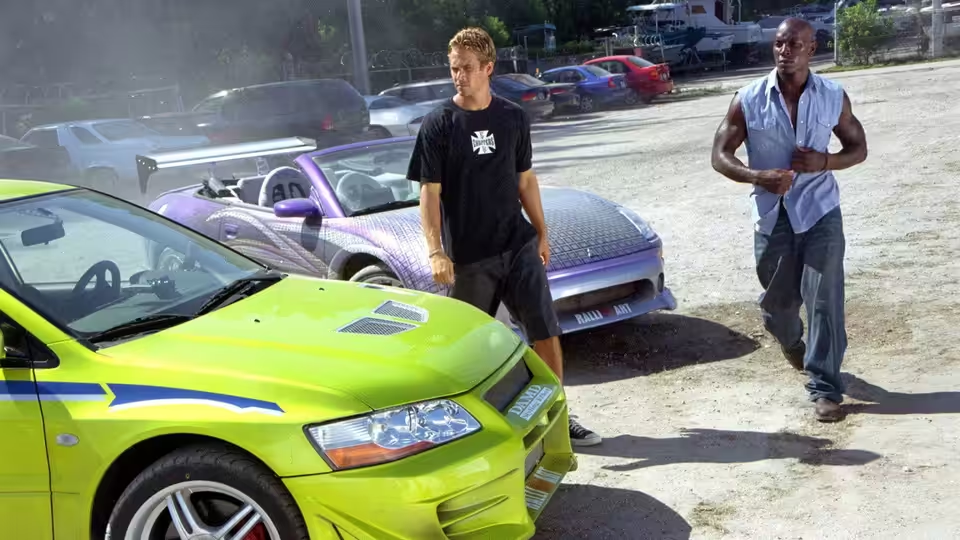
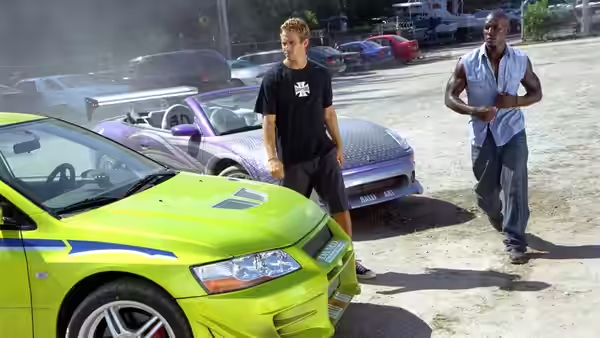
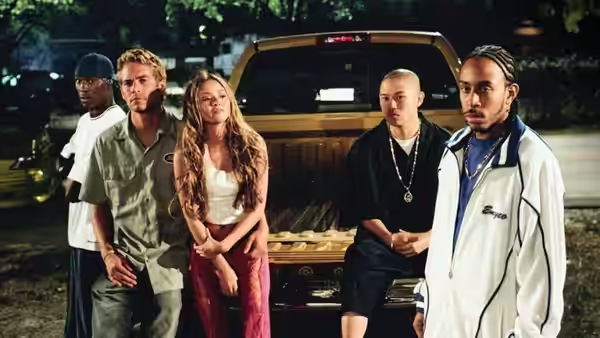
Paul Walker and Tyrese Gibson are the reason that sometimes works. Their Brian O’Conner and Roman Pearce have enough ease together to make the partnership engaging without requiring much help from the plot. We laughed at Roman Pearce’s irreverence; Tyrese Gibson gives the double act a comic looseness that the criminal business badly needs. There is feeling in the performance as well as cheek, and Paul Walker gives his partner room rather than competing for every bit of attention.
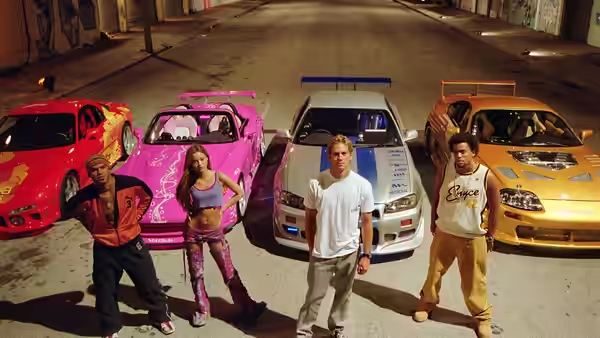
Matthew F. Leonetti’s cinematography is most persuasive around the cars, where the camera’s movement makes the speed feel like something worth watching. The racing gets room to develop, and its willingness to overdo things is part of the pleasure. Bruce Cannon and Dallas Puett edit these stretches with enough energy to sustain that enjoyment. The rhythm is much less secure when the film returns to its crime story, which repeatedly makes us impatient for another race.
David Arnold’s score helps keep the racing buoyant, although its encouragement cannot make the less lively passages compelling. Keith Brian Burns’s production design fares less well in our memory: the cars register more firmly than the places around them. That is a reasonable priority for this film, but the surroundings could use more character. There is enough to look at without much to make us curious about these people’s lives when they are not driving.
Derek Haas and Michael Brandt’s screenplay is the chief limitation, leaning on crime-thriller habits that already feel overworked. Its predictability would matter less if the dialogue consistently had the life that Tyrese Gibson brings to it. Cole Hauser is useful as Carter Verone, bringing charm to the menace and giving the villain some appeal beyond his function in the plot. Even so, the criminal intrigue is unlikely to hold anyone who has no interest in the racing.
The film’s self-awareness is a useful advantage in a genre that can become tiresomely solemn about speed. At 108 minutes, it asks for a manageable slice of an evening, although the business connecting the races could still be leaner. We would choose it for the leads and the driving, with expectations kept firmly at the level of a disposable diversion. If the cars do not interest us, there is little reason to wait for the crime plot to improve.